Week 4-1. Neural Networks
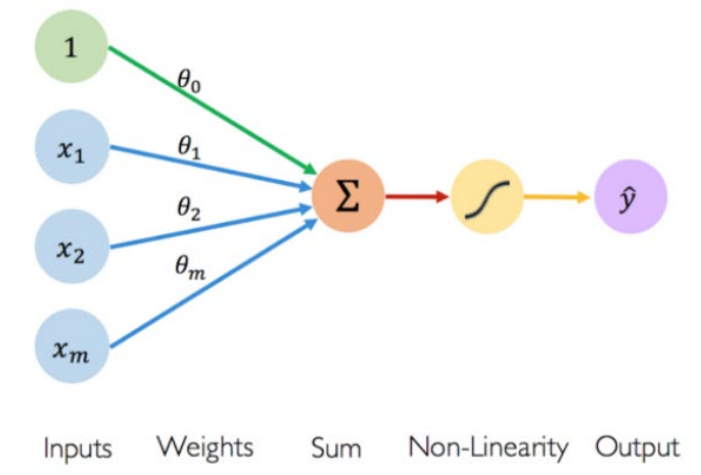
- Neuron unit
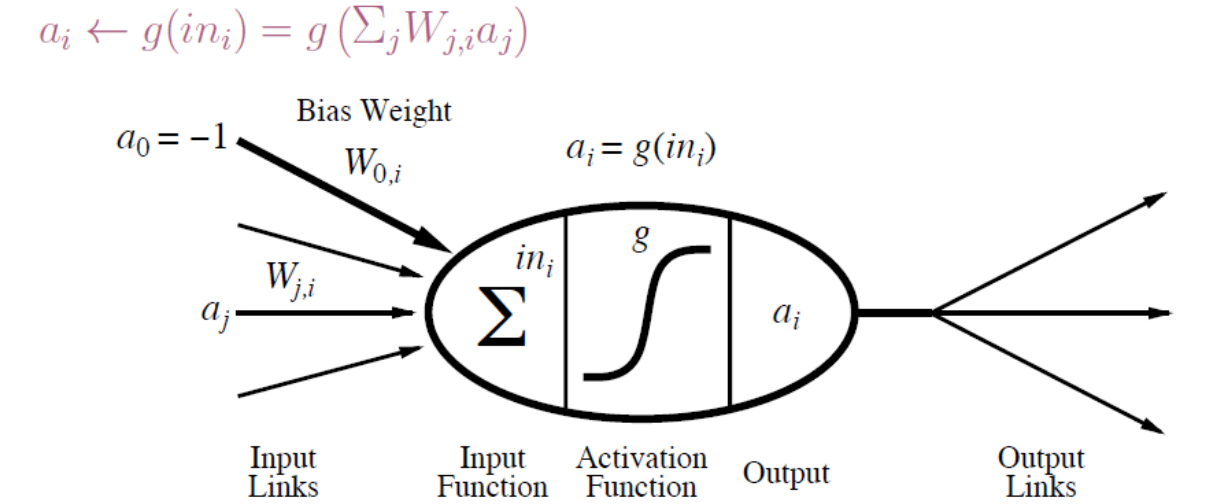
- activation functions
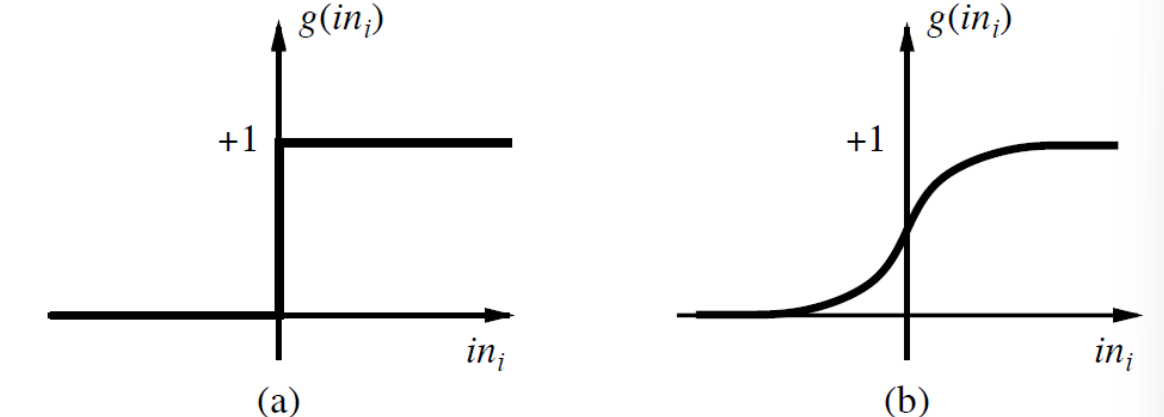
(a) step/threshold function, (b) sigmoid function
Changing the bias weight moves the threshold location
Network structures: Feed-forward networks
1. Single-layer Perceptrons
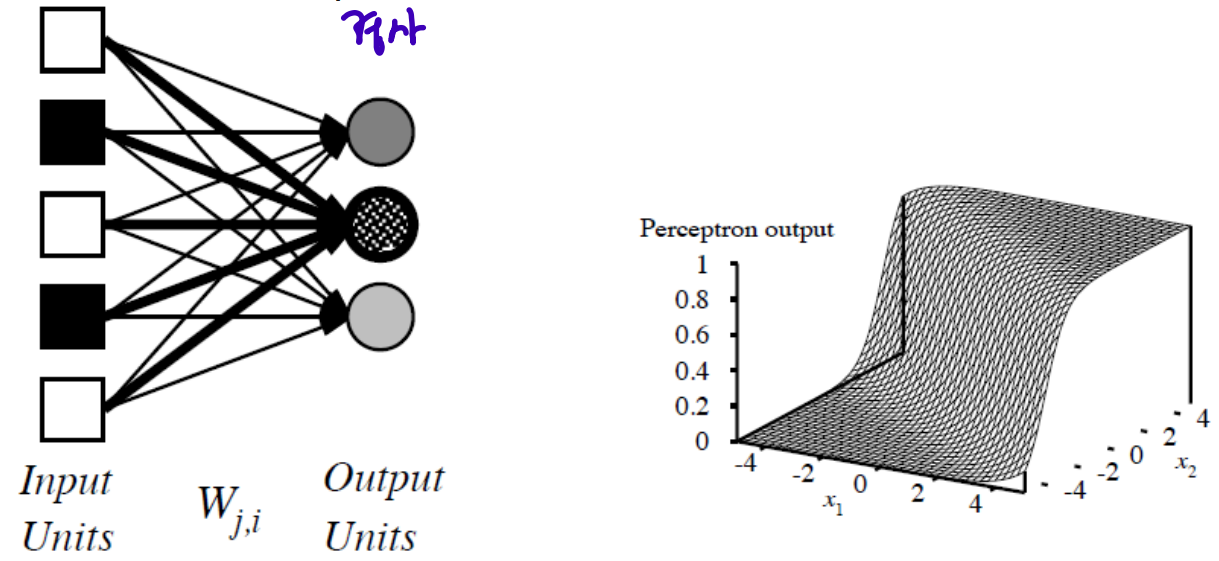
use a step/sigmoid function as activation function
output units all operate separately-no shared weights
adjusting weights changes the cliff's location, orientation, and steepness(경사)
- Perceptron learning: Linearly-Separable Functions
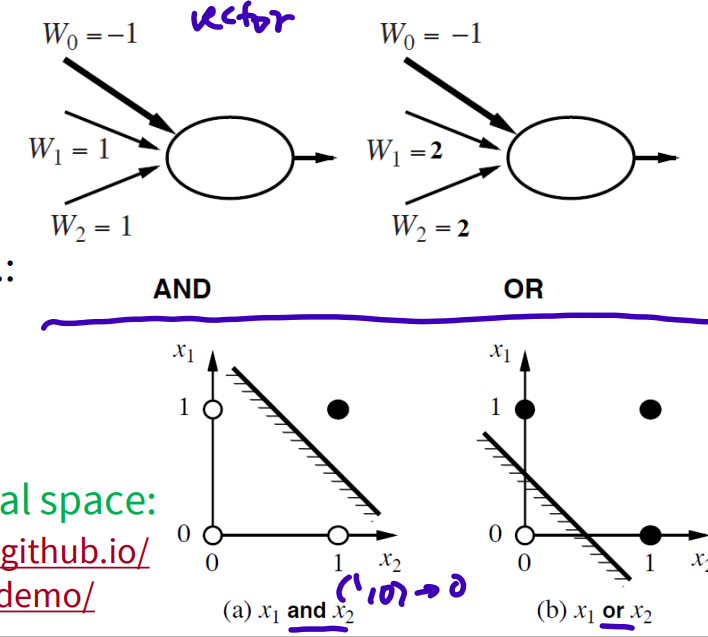
can represent AND, OR, NOT, majority, etc.. but not XOR (2-dimensional space)
-> 1
-> 0
= 0 or 1
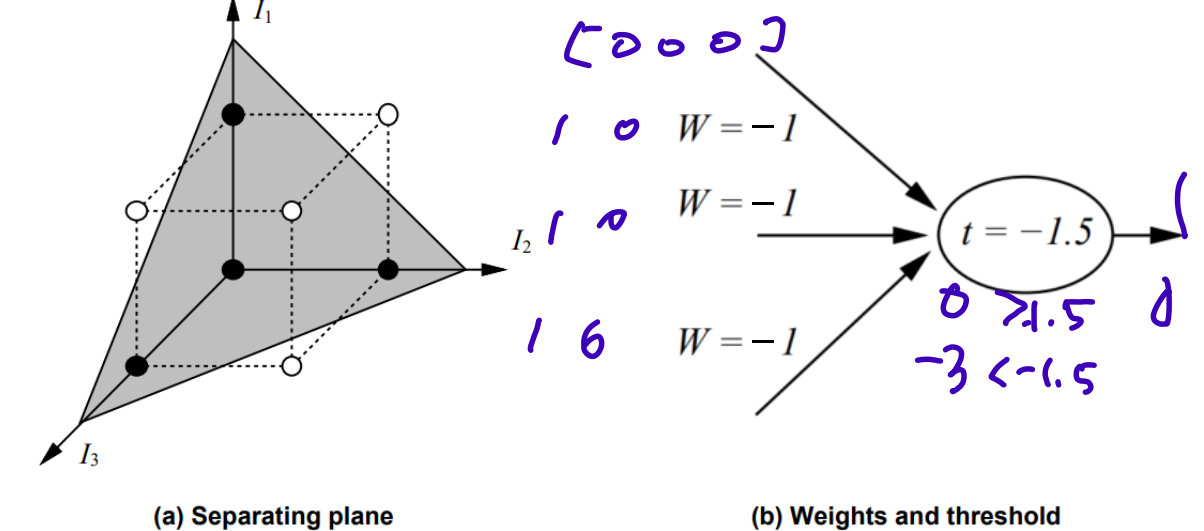
3-dimensional space: the minority function- return 1 if 1s < 0s; return 0 otherwise
2. Multi-layer Perceptrons
the number of layers: counted except the input layer
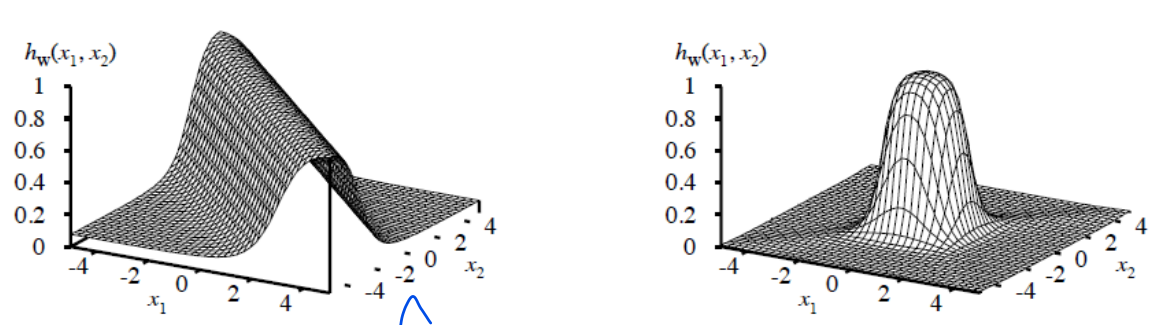
combine threshold functions-ridge-bump (능선/봉우리-혹)
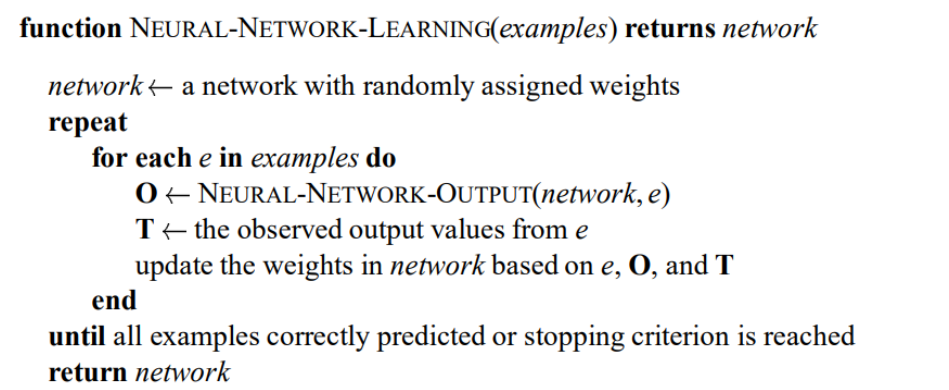
- Learning with NNs
Recurrent networks
directed cycles with delays, internal state
Week4-2 Neural Networks: Activation function, Building networks
Activation functions
must be non linear, differencialable/ better zero centered(bounded)
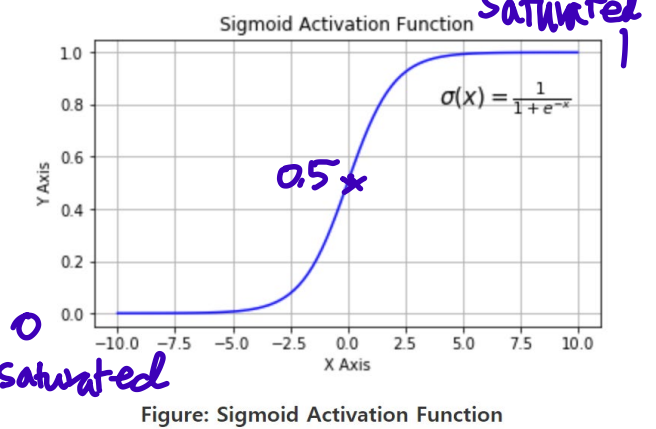
1. Sigmoid
drawbacks: Vanishing gradient, not zero centered, computationally expensive
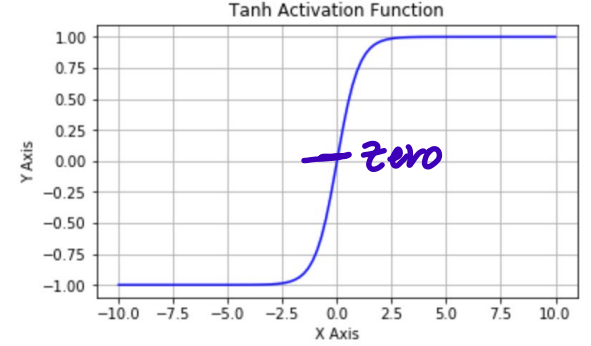
- Tanh
Zero-centered & squashed
Vanishing gradient
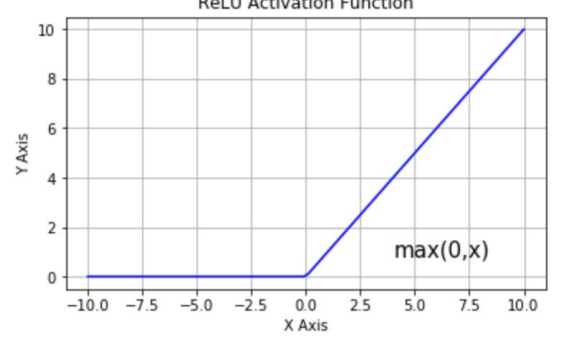
- ReLU (Rectified Linear Unit)
Not zero-centered, vanishing gradient when x < 0
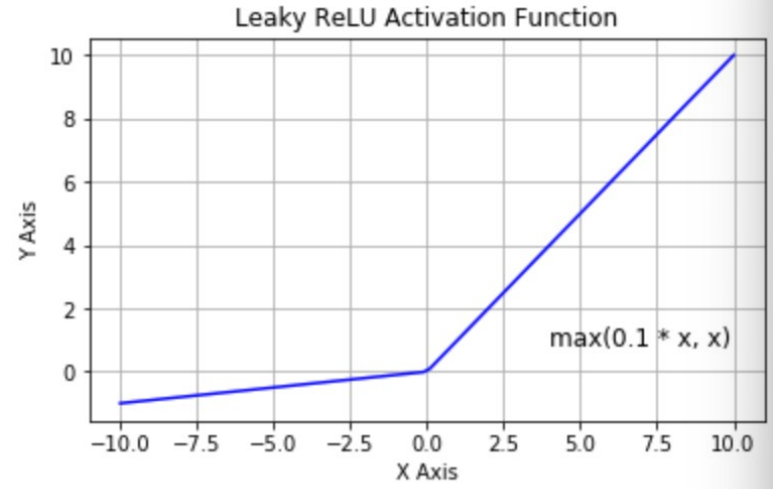
- Leaky ReLU
Building a Neural Net
1. # of hidden layers (depth)
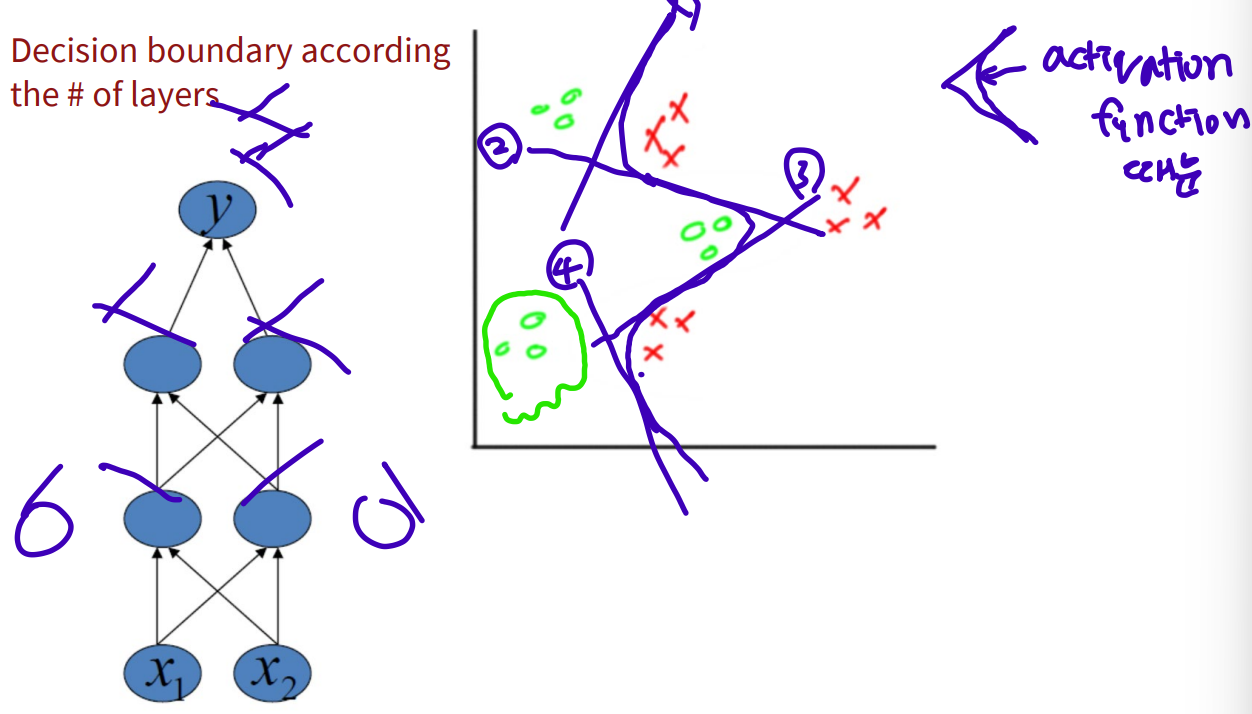
Decision boundary according to the number of layers
1 hidden layer: boundary of convex region
2 hidden layer: combinations of convex region
2. # of units per hidden layer (width)
size of hidden layer D, size of input M
D = M
D < M: encoded, feature extraction, classification
D > M: optimal, diverse features, can be overfitting
3. Types of activation function (nonlinearity)
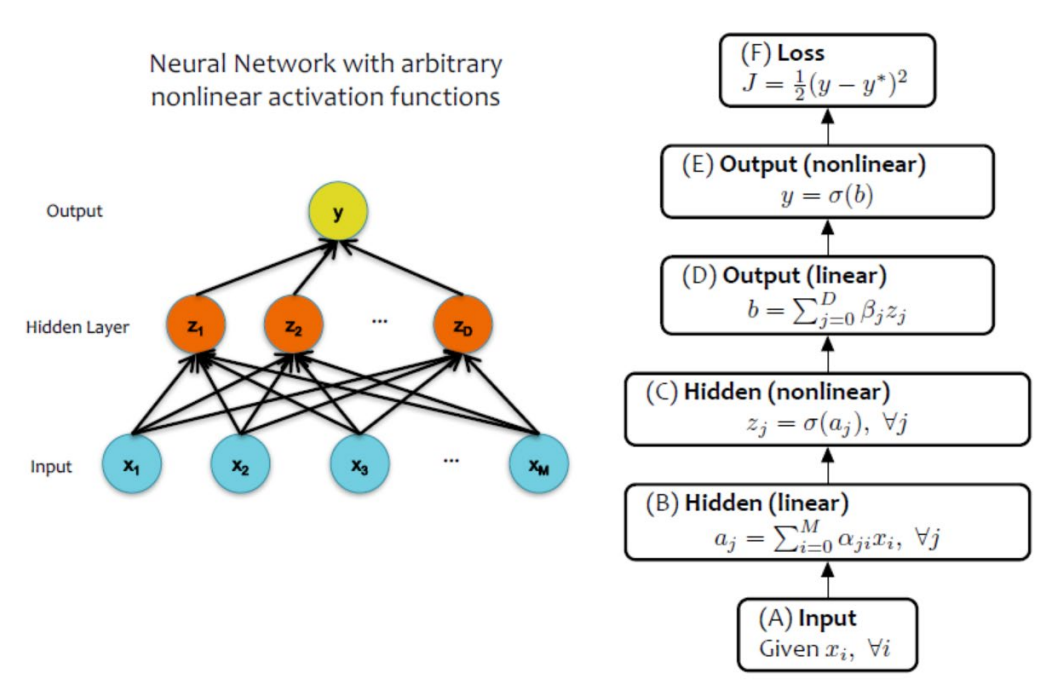
4. Form of objective function
Regression: same objective as Linear Regression, quadratic loss (mean squared error)
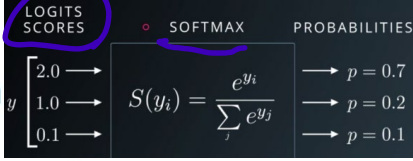
Classification: same objective as Logistic Regression, cross-entropy (negative loglikelihood), softmax layer
Lecture Week 5-1. Neural Networks: Back-propagation
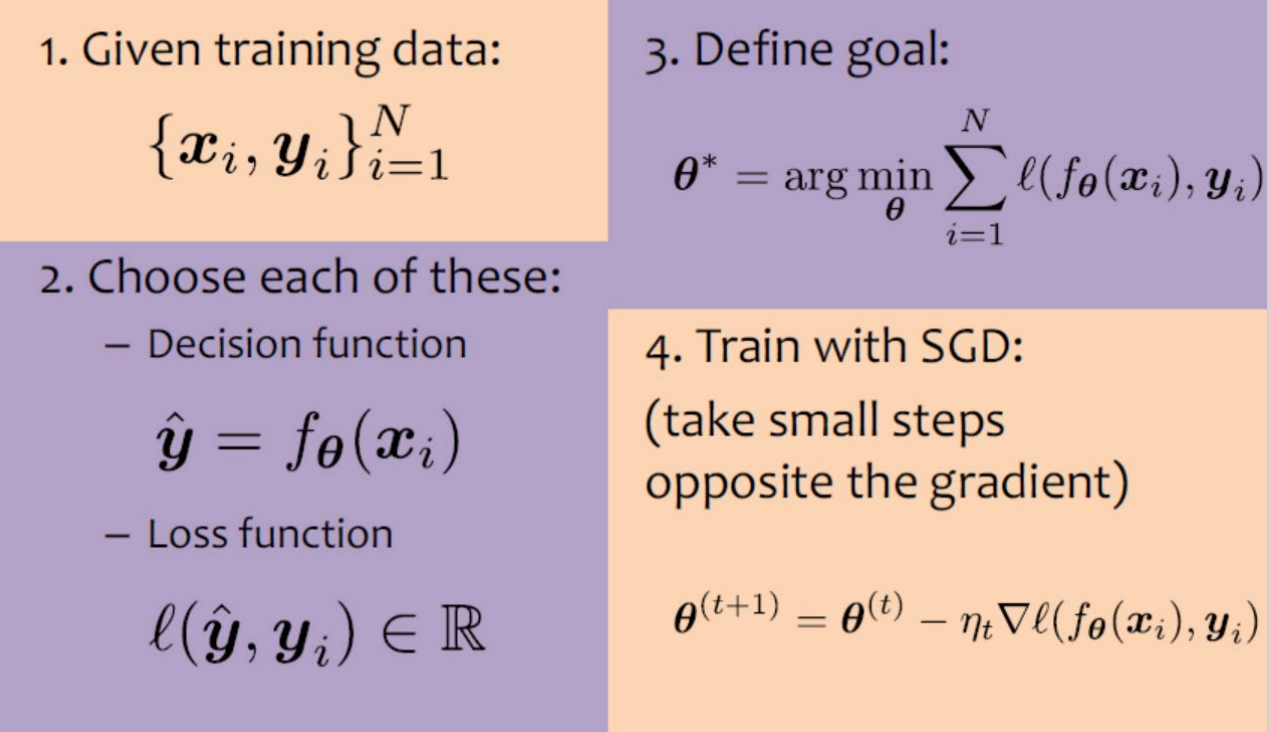
Recall gradient descent algorithm
Forward- & Back-propagation
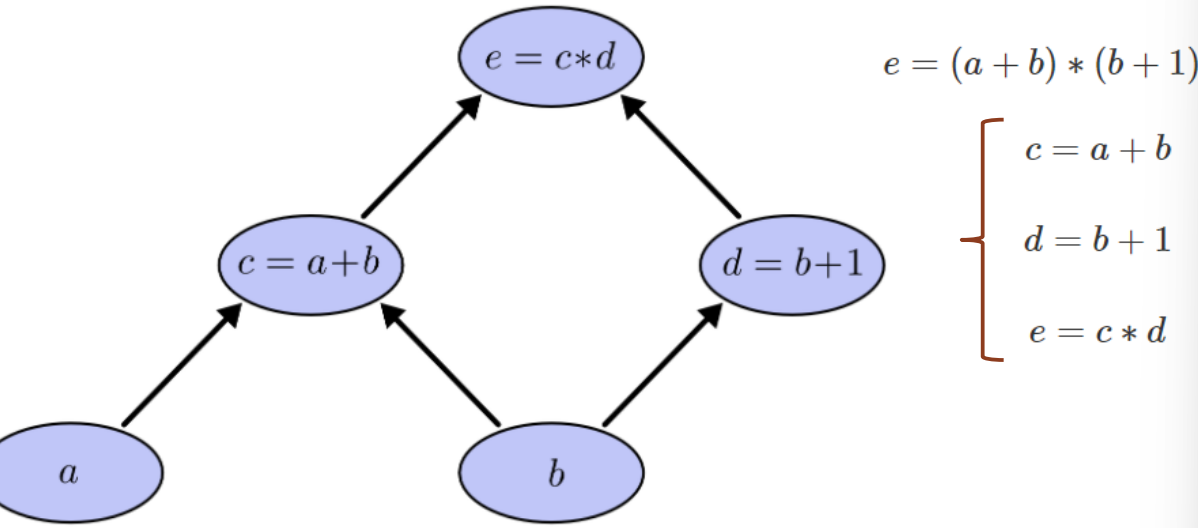
- Computational graph
nodes correspond to operations or variables
- Functions as boxes
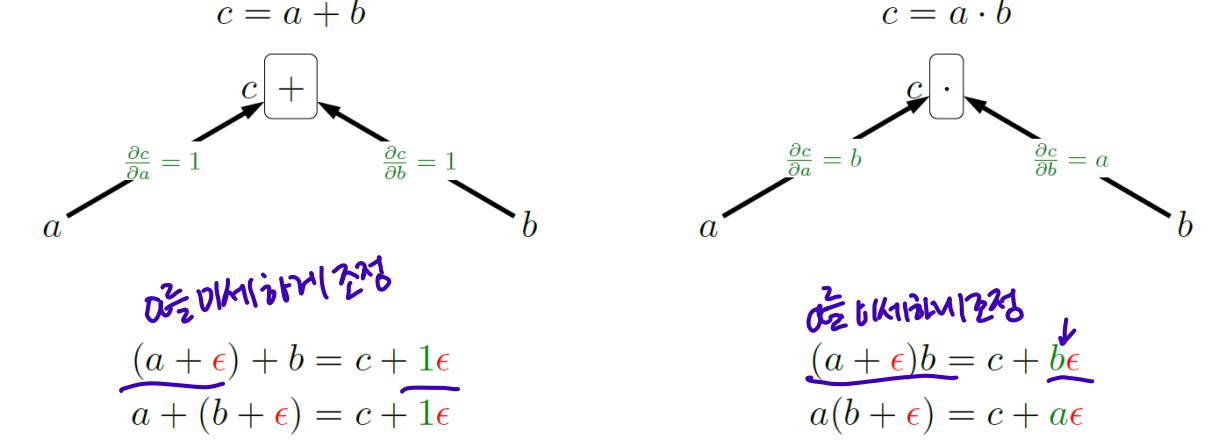
(a + ) -> c + gradient*
Linear classification with hinge loss (linear problem)
- find loss function and its gradients (setting)
(margin < 1)
margin = if margin >= 1, 0
Two-layer neural networks
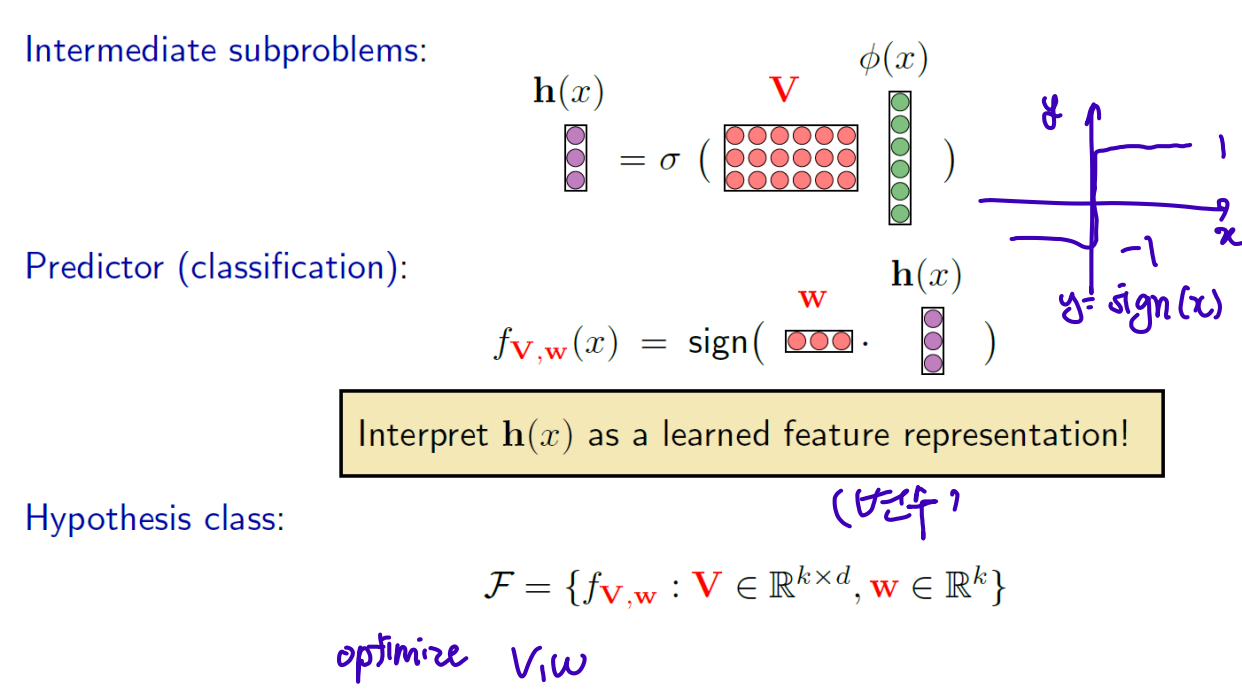
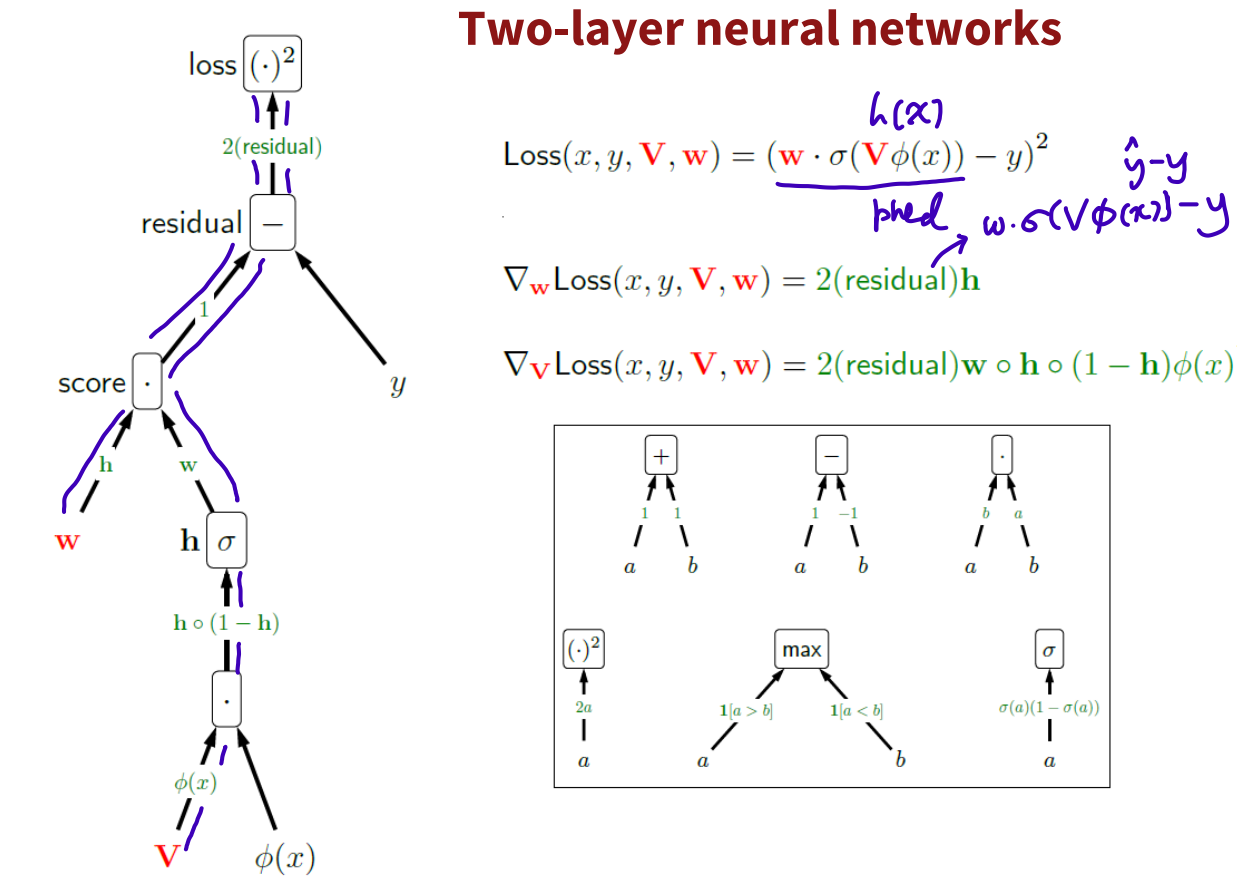
Backpropagation
1. Backpropagation for Logistic regression model or 1-layered Neural Network Model
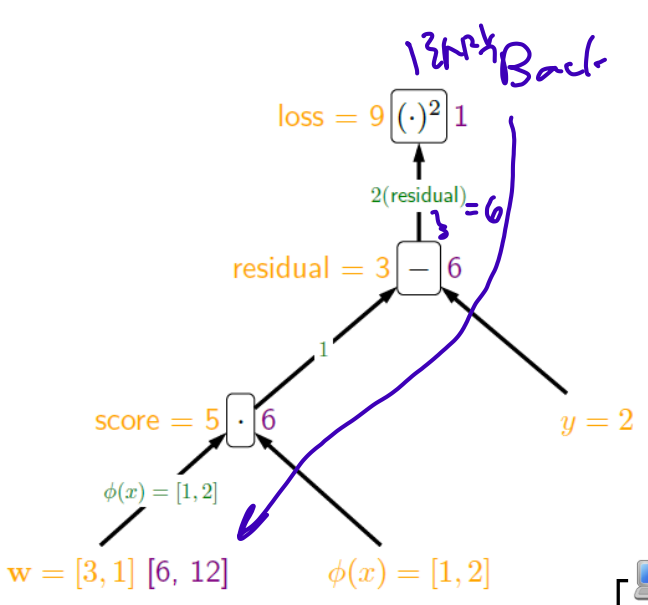
orange: forward calculation
purple: back 1 -> 1 * 2(residual) = 6 -> 6 * 1 = 6 -> 6 * [1,2] = [6,12]
old * gradient
- Derive the formula for gradient descent algorithm
Cost Function
->
2. Backpropagation for 2-layered Neural Network
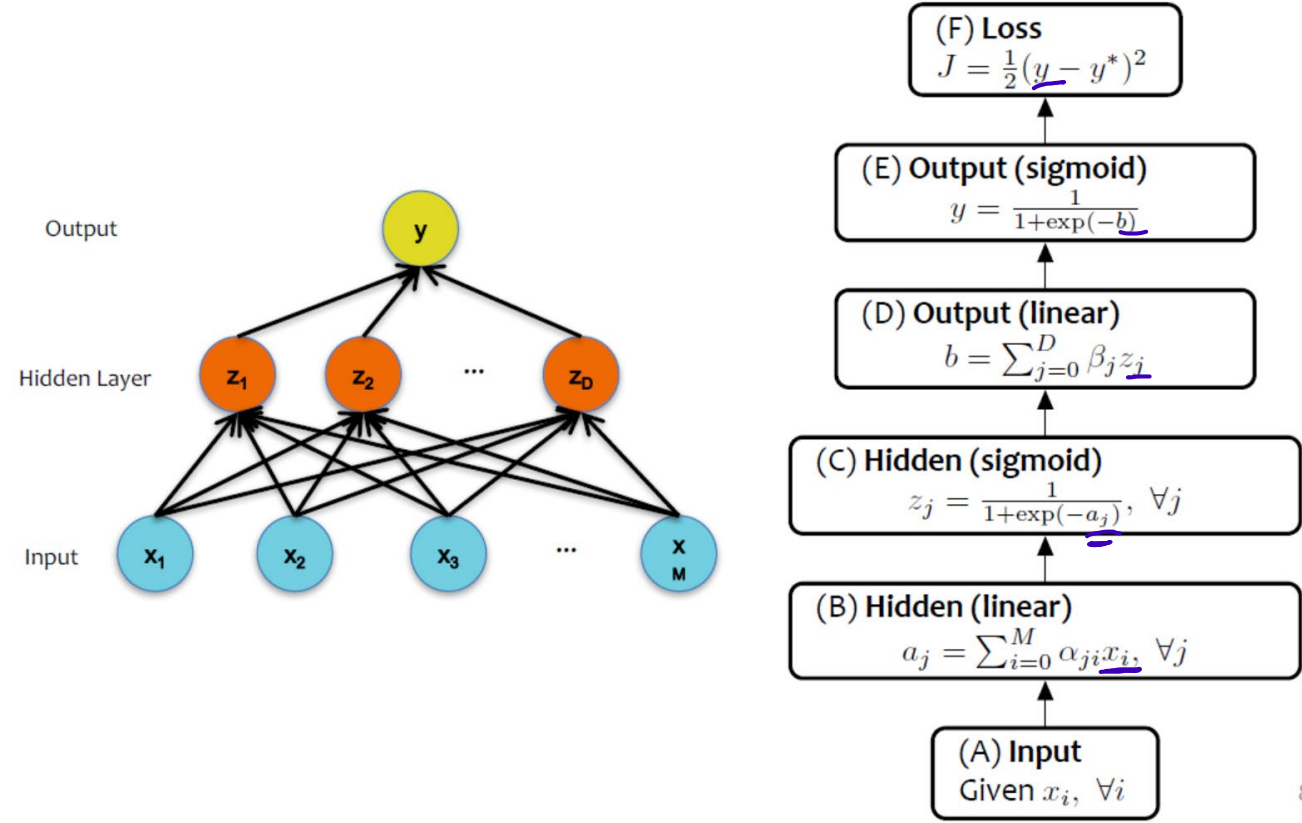
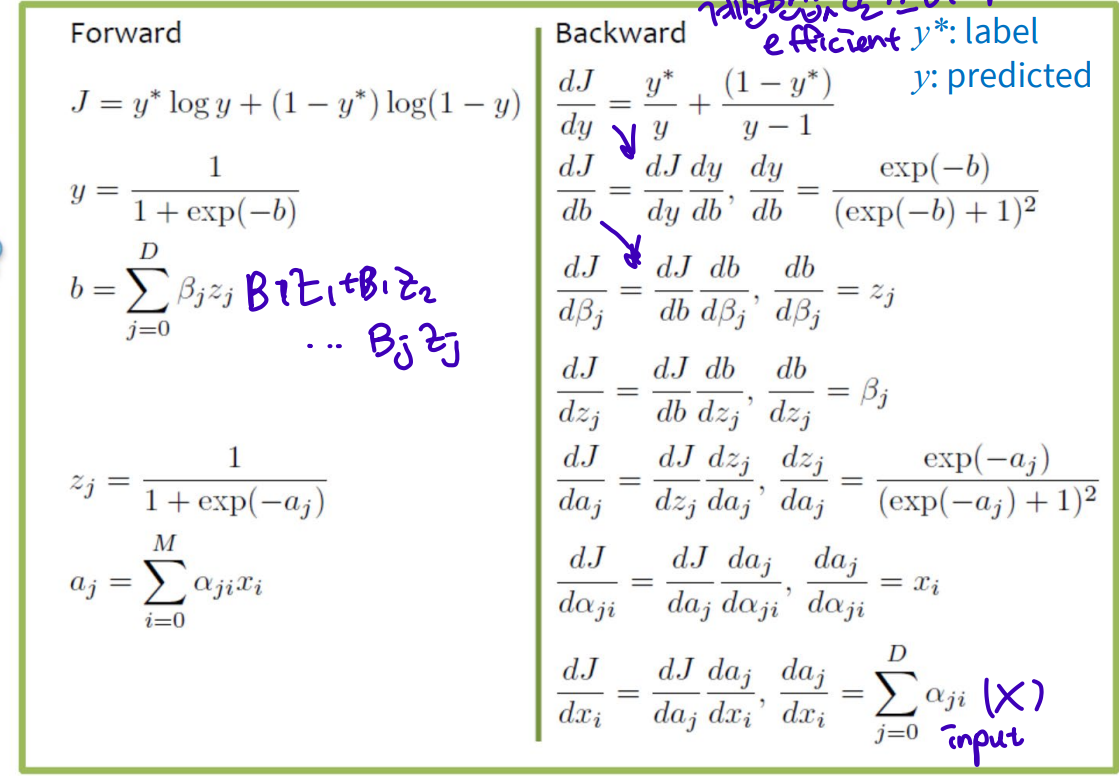
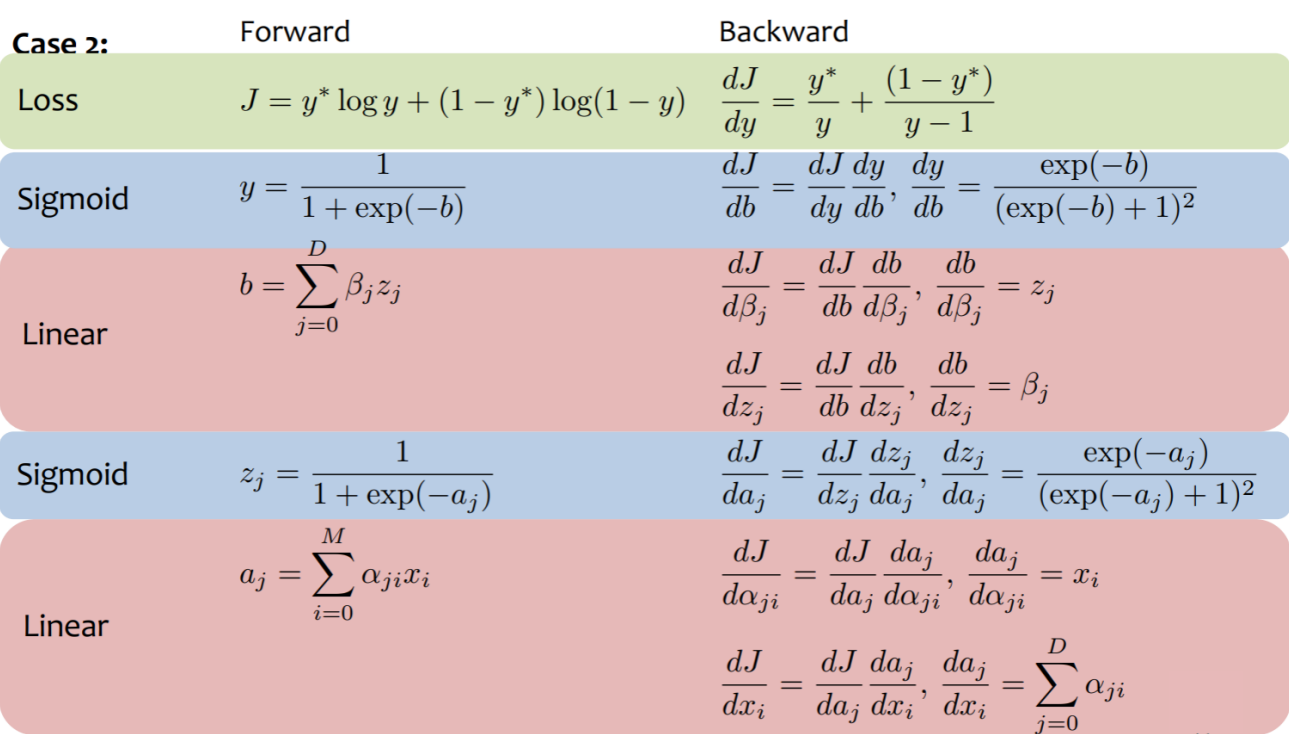
Lecture Week 7-1. Neural Network: Practice building Neural Networks w/MNIST
MNIST number classification
:Mixed National Institute of Standards and Technology database
0-9 handwritten digit recognition
train:test = 6:1
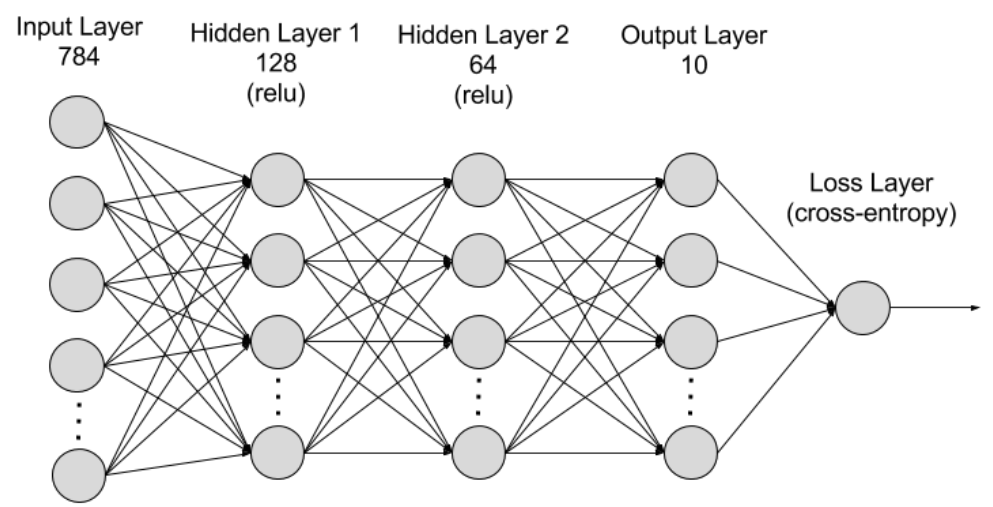
Multilayer Perceptron network architecture for MNIST for today's practice
Data Normalization/ Feature Scaling: Data Preprocessing
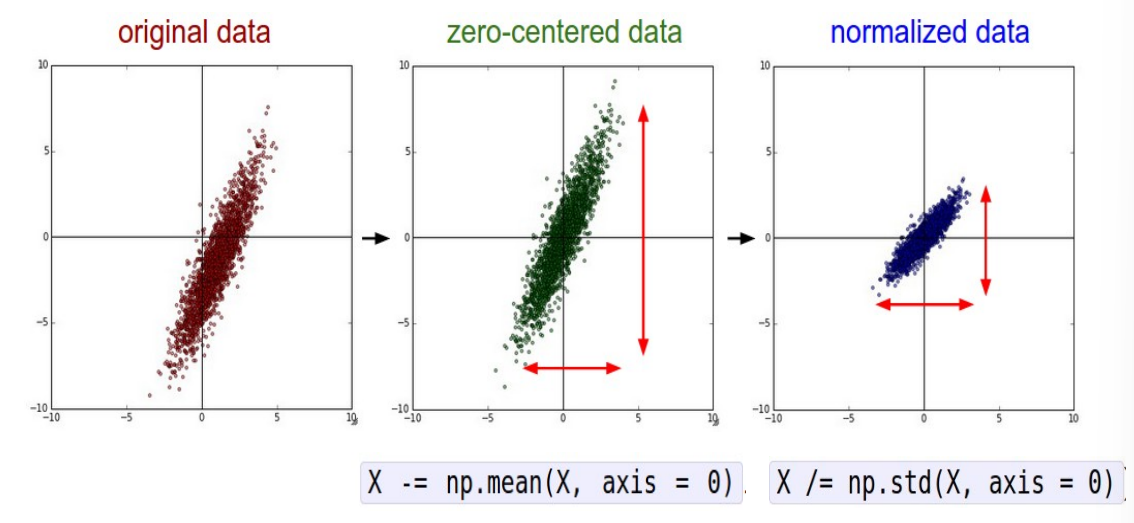
Advantages: classification loss becomes less sensitive to small changes in weights; easier to optimize
Mini-batch SGD
after creating the mini-baches of fixed size, in one epoch:
1. Pick a mini-batch (100)
2. Feed it to Neural Network
3. Calculate the mean gradient of the mini-batch
4. update the weights using the mean gradient
5. Repeat steps 1-4 for the mini-batches
: balance between the robustness of SGD and the efficiency of BGD
smaller batch size -> more updates, more time, lower speed
very large batch size can yield wore performance
Cross-entropy loss for classification
-
Binary cross-entropy loss
: predicted probability for class i, : true probability for class i -
Cross-entropy loss for multi-class classification
If target = 1, the loss is 0 when the prediction is 1 and loss is infinity when the prediction is 0
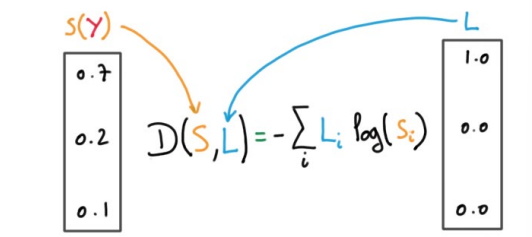
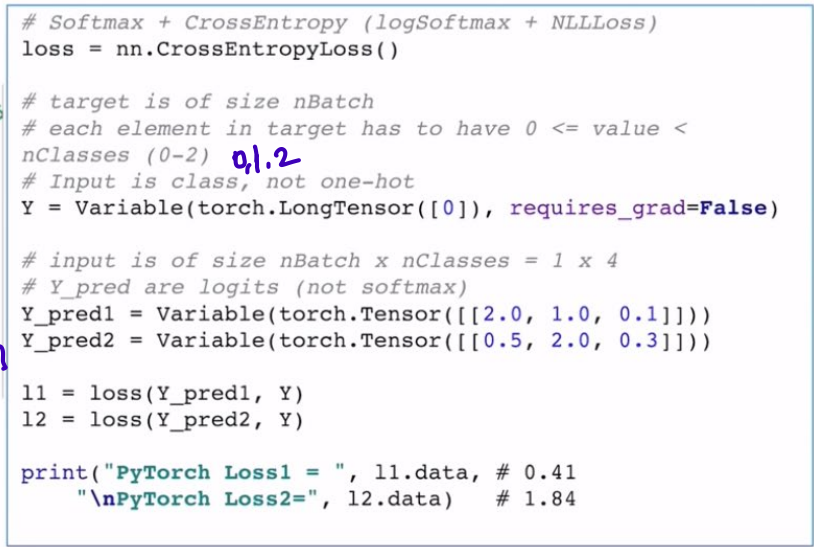
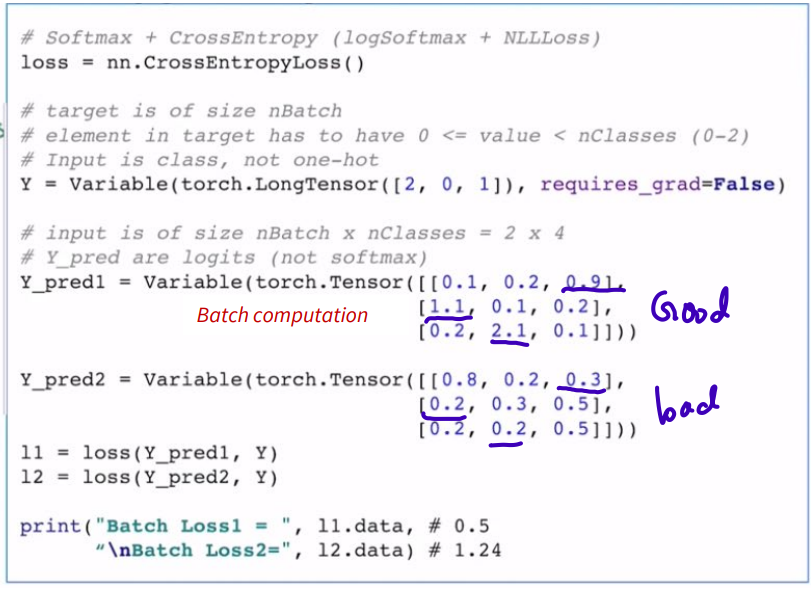
- Cross-entropy in PyTorch
combine nn.LogSoftmax() and nn.NLLLoss()
recall softmax: for j = 1, ..., K.
recall cross-entropy:
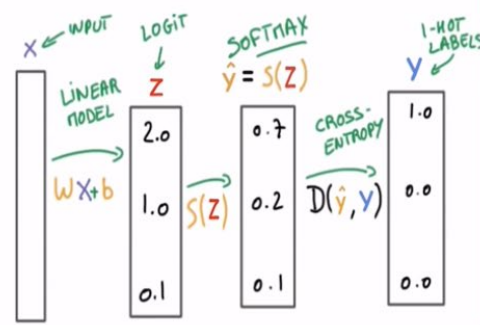
??
Traning, Validation, Test Set
- Train data
- Validation data: use training error and validation error to determine when to stop to prevent overfitting (early stopping)
- Test data: measure the generalization ablility of a machine learning algorithm. never seen during the training process