timer_alarm(int ticks)
주어진 시간(ticks) 이후에 프로세스를 깨우는 시스템콜
PintOS는 바쁜 대기 알람을 사용한다.
목표
devices/timer.c에 정의된 timer_sleep()을 다시 구현하기
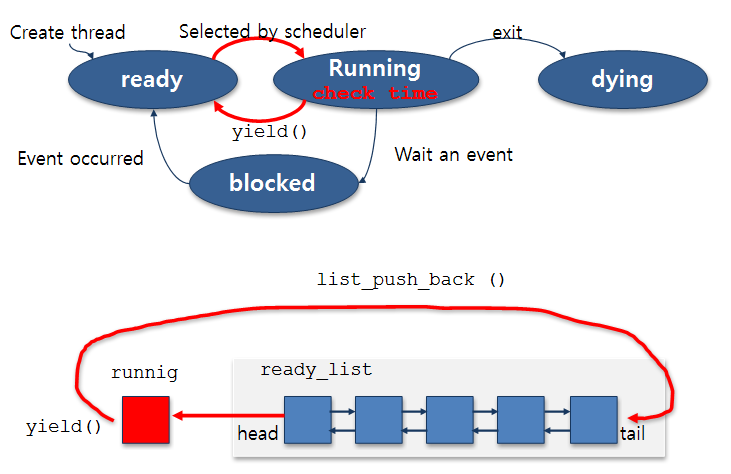
PintOS에서는 제공된 코드는 Busy-waiting(바쁜대기)를 수행하는 코드다. 즉, 현재 실행중인 스레드를 주어진 조건이 맞을 때 까지 반복적으로 다른 스레드에게 CPU를 양보하여 주어진 틱 동안 실행을 일시 중단하는 방식으로 구현되어있다.
비효율적인 Busy-waiting이 아닌 sleep-awake방식으로 바꿔서 구현하는게 alarm-clock의 목표인데 여기서 Busy-waiting과 sleep-awake방식에 대해 알아보자
Busy waiting
-
프로세스가 다른 프로세스에게 CPU를 양보하지 않고 계속 조건이 맞을 때 까지 확인하는 방식을 말한다.
-
이러한 방식은 CPU 자원을 낭비하고, 다른 스레드가 실행되는 기회를 줄여 성능 저하가 발생할 수 있다.
Sleep-Awake
- 프로그램이 대기하는 동안 CPU를 사용하지 않고 일정 시간이 지난 후에 다시 CPU를 사용할 수 있도록 프로그램은 대기 상태에 들어간다.
- 이 방식은 Busy waiting 방식에 비하여 CPU 자원을 절약할 수 있다.
그렇다고 무조건 Busy-waiting이 사용되지 않는건 아니다.
1. 대기하는 시간이 매우 짧고, 컨텍스트 스위칭으로 인한 오버에드가 대기 시간 보다 큰 경우
2. 빠른 반응이 필요한 실시간 시스템에서, 조건이 빠르게 충족될 것으로 예상되는 경우에 사용된다.
각 방식의 장단점을 따져 적절한 상황에 쓰는 것이 중요하다.
non-Busy-waiting
busy-waiting이 아닌 방식은 non-busy-waiting이라고 하는데 이 방식은 대기 시간이 길어 CPU를 양보하는게 효율적이거나, 대기 시간을 예측할 수 없는 경우에 사용한다. 위에 sleep-Awake방식이 non-busy-waiting 방식이다.
공부하면서 이슈
-
내가 busy-waiting은 CPU를 반납하지 않고 조건을 계속 확인하여 컨텍스트 스위칭이 일어나지 않는건데 PintOS에서는 현재 스레드의 조건이 맞을 때까지 계속 CPU를 양보해서 내가 아는 것과 괴리가 있어 받아 들이기 까지 꽤 많은 시간이 걸렸다.
-
나중에 찾아보니 PintOS에서의 busy-waiting 구현 방식은 전통적인 바쁜대기와는 차이점이 있다고한다.
수정해야할 파일
- threads/thread.*
- devices/timer.*
해결해야할 문제 코드
void timer_sleep (int64_t ticks)
{
	int64_t start = timer_ticks ();

	ASSERT (intr_get_level () == INTR_ON);
	while (timer_elapsed (start) < ticks)
		thread_yield ();
}- 이 함수는 주어진 시간(ticks)동안 스레드를 일시정지하는 시스템콜이다.
- 현재 timer_ticks와 주어진 ticks를 비교해서 도달하지 않은 경우 thread_yield ()를 호출하여 다른 스레드에게 CPU를 양보한다.
- ticks에 도달할 때 까지 계속 양보하여 비교하는 것은 큰 비효율을 발생시키고 이를 해결하는 것이 이번 과제의 목표이다.
해결방안
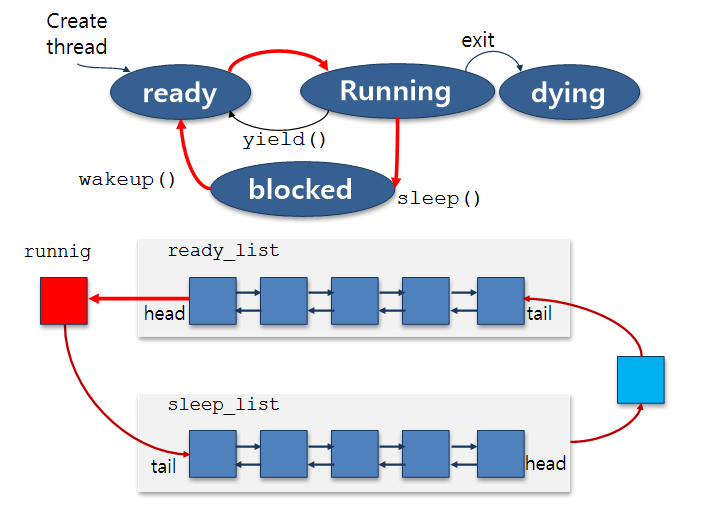
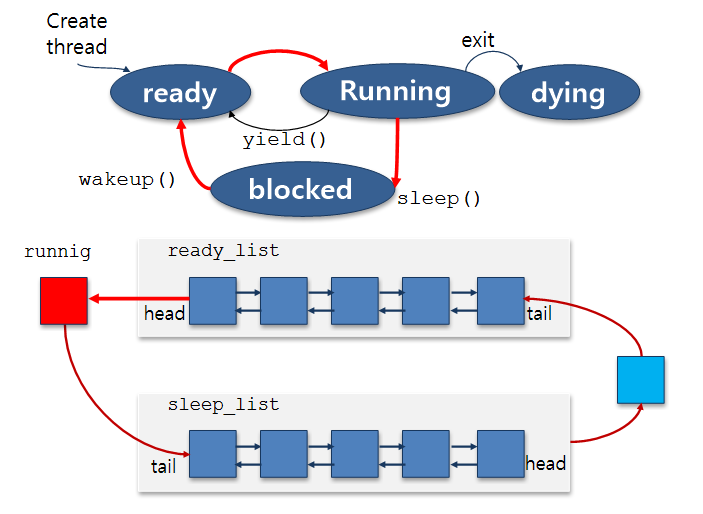
- 스레드가 tick에 도달하지 않는 경우 바로 readylist로 넣는 것이 아니라 sleeplist를 만들어서 각 틱마다 깨어날 수 있는 스레드를 선택해서 readylist넣는 방법
- 이 방식은 아직 깰 시간이 아닌 스레드를 깨우지 않아 cpu를 효율적으로 사용할 수 있다.
1) sleepList 선언 및 초기화
 static struct list sleep_list;

 thread_init (void) {
 ...

 	list_init (&sleep_list);

 ...
 }
2) 구조체 필드 추가
struct thread {
...

	int64_t wake_up_tick;

...
}
- 타이머 인터럽트 핸들러를 통해서 매 틱마다 깨워야할 스레드를 확인할 수 있는 변수를 추가한다.
3) 스레드 재우기 로직 변경
timer_sleep
void
timer_sleep (int64_t ticks) {
	int64_t start = timer_ticks ();

	ASSERT (intr_get_level () == INTR_ON);
	// while (timer_elapsed (start) < ticks)
	// 	thread_yield ();
	thread_sleep (start + ticks);
    // 현재 시각 (start) + 잠들 시간 (ticks)
}
thread_sleep
void thread_sleep(int64_t ticks)
{
	struct thread *curr = thread_current();
	enum intr_level old_level;

	ASSERT(curr != idle_thread);

	old_level = intr_disable();
	curr->wakeup_ticks = ticks;
	list_insert_ordered(&sleep_list, &curr->elem, cmp_thread_ticks, NULL);
	thread_block();
	intr_set_level(old_level);
}
thread_block (void)
void thread_block (void) {
	ASSERT (!intr_context ());
	ASSERT (intr_get_level () == INTR_OFF);
	thread_current ()->status = THREAD_BLOCKED;
	schedule ();
}- 현재 스레드가 유휴 스레드가 아닌경우, 호출 스레드의 상태를 차단(blocked)으로 변경하고, 깨울수 있도록 local tick을 저장, 해당 스레드를 대기(sleep) 큐에 넣는다"
- 필요할 때 전역 tick을 업데이트하고
? 스캔시간을 단축, schedule()을 호출 - 스레드 목록을 조작할 때 인터럽트를 비활성화하기
cmp_thread_ticks
    // 두 스레드의 wakeup_ticks를 비교해서 작으면 true를 반환하는 함수
    bool cmp_thread_ticks(const struct list_elem *a, const struct list_elem *b, void *aux UNUSED)
    {
    	struct thread *st_a = list_entry(a, struct thread, elem);
    	struct thread *st_b = list_entry(b, struct thread, elem);
    	return st_a->wakeup_ticks < st_b->wakeup_ticks;
    }
4) 재운 스레드 깨우기 로직 추가
timer_interrupt
static void
timer_interrupt (struct intr_frame *args UNUSED) {
	ticks++;
	thread_tick ();
	thread_wake_up (ticks);
}- 매 틱(tick)마다, sleep queue를 확인하여 깨워야 할 스레드가 있는지 검사하고, 해당 스레드를 깨우는 함수를 호출
- 타이머 인터럽트가 발생할 때마다 실행되며, sleep queue에 있는 스레드들 중에서 현재 시간(틱)에 맞춰 깨워야 할 스레드를 찾아 준비 상태로 전환시키는 작업
thread_wakeup
void thread_wakeup(int64_t os_ticks)
{
	if (list_empty(&sleep_list))
		return;
	struct thread *t;
	enum intr_level old_level;

	old_level = intr_disable();
	while (!list_empty(&sleep_list))
	{
		t = list_entry(list_front(&sleep_list), struct thread, elem);
		if (t->wakeup_ticks > os_ticks)
			break;
		list_pop_front(&sleep_list);
		list_insert_ordered(&ready_list, &t->elem, cmp_priority, NULL);
		t->status = THREAD_READY;

	}

	intr_set_level(old_level);
}
여기서 깨우고 준비리스트에 삽입할 때 우선순위 별로 준비 리스트에 오름차순으로 정렬해주면 우선순위 순서대로 실행된다.
cmp_priority
bool cmp_priority(const struct list_elem *a, const struct list_elem *b, void *aux UNUSED)
{
	struct thread *st_a = list_entry(a, struct thread, elem);
	struct thread *st_b = list_entry(b, struct thread, elem);
	return st_a->priority > st_b->priority;
}구현 목록알람 시계 구현 결과
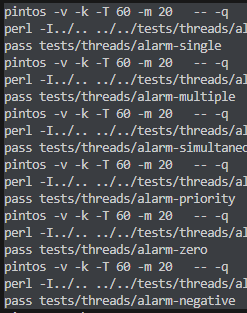
위의 코드에서 우선 순위별로 readylist에 삽입해주면 alarm관련 테스트는 모두 통과할 수 있다!!
수정해야할 파일
- threads/thread.*
- devices/timer.*
수정 메소드
- timer_sleep()
- 블록 상태를 도입해서 timer_sleep 새로 만들기 -> 'blocked'로 변경하고 sleep queue에 넣기
- thread.h thread 구조 수정: int64_t Type -> 깨어날 시간 저장
- timer_interrupt
- 슬립리스트랑 글로벌틱체크
- 일어날 스레드 찾기
- 필요한경우 레디큐로 이동
- 글로벌틱 업데이트
- thread_init
- timer_sleep()
- timer_interrupt()
추가
-
static struct list sleep_list; 선언
-
list_init (&sleep_list); 초기화
-
각각의 스레드에 깨어나는 시간저장
-
thread_sleep
- 유휴스레드가 아닌경우 BLOCKED로 변경
- localtick 저장
- 전역 tick update
- schedule() 호출
- 목록 조작시 인터럽트 활성화 비활성화
-
thread-wakeup
- 슬립큐에서 제거 후 레디큐삽입
- 수정전 활성화 비활성화
-
스레드가 가진 틱의 최소값을 저장하는 함수
-
틱의 최소값을 반환하는 함수