1.1 인터넷이란?
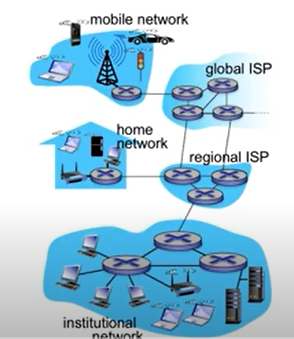
nuts and bolts
Network
- Billions of conected computing devices :
- hosts = end systems(computer, smart phone)
- running network apps
- Communication links
- fiber, copper, radio, satellite
- transmission rate : bandwidth
- pocket switches: forward packets
- routers and switches
-
internet: network of net work
-
protocols: control sending, receiving
-
internet standards
service view
- infrastructure that provides services to app
- provides programming interface to app
1.2 protocol
- Protocol
: 네트워크 엔티티 간에 주고받는 메시지의 형식, 순서, 전송 및 수신에 대하여 수행을 정의내린 것을 말함.- 인터넷의 모든 통신 활동은 표준화된 프로토콜에 의해 관리됨.
- 인간의 대화(프로토콜) : 질문 → 대답 처럼
컴퓨터 네트워크 프로토콜 : TCP → TCP → GET 등의 약속된 규칙이 바로 프로토콜
1.3 network
-
network edge
- host: clients and servers
- servers often in data centers
-
access network
- wired, wireless communication links
-
network core
- interconnected routers
- network of networks
1.4 Access network
종류는 여러개
- bandwidth (대역폭)
- shared or dedicated? (공용인지 전용인지)
두 가지가 중요
Digital Subscriber Line(DSL)
-
전화선을 통해 인터넷을 연걸(dedicated함)
-
기존의 전화선을 사용하기 떄문에 비용감소
-
전반적인 성능이 떨어지고 upstream, downstreamr간의 성능이 차이남 (up < down)
cable network
- 기존의 케이블선 활용(shared)
- 여러개의 케이블선 중 몇개를 데이터 전송용으로 사룔 함
- frequency division multiplexing(뭘까 이게)
- HFC : 광 동축 케이블 같이 사용 upstream, downstreamr간의 성능이 차이남 (up < down)
home network
- 가정 내의 여러 기기를 연결해서 네트워크를 구성
- 이 홈 네트워크 장치를 통해 헤드엔드 또는 중앙 사무실로 인터넷이 연결됨.
enterprise network
- 기업, 대학 등에서 사용.
- 이더넷(Ethernet)을 주로 사용 : 유선 엑세스
- 성능이 좋음
wireless access
- shared
- LAN -> 근거리
- 3G, 4G, 5G -> 원거리
Host: sends packets of data
- packets of length L bits: 데이터를
L비트의 packet들로 짜름 - transmit packet into access network at transmission rate R: packet을 R의 속도로 엑세스 네트워크에 보냄
Physical media
- twisted pair : 두 개의 구리선을 꼬아둠(평행하게 두면 자기장의 영향을 받기 떄문)
- coaxial cable : 동심원이 같은 두 개의 구리선이 있음 -> 양방항 통신, 여러개의 채널
- fiver optic cable : 광 케이블 -> 성능이 굉장이 높고 에러가 적음, 전기, 자기장에 의한 노이즈가 없음
- radio : 전파를 이용 -> 선이 없음, 반사가 되거나 간섭이 있음(주변 환경에 영향을 받는다)
1.5 network core
-> 연결되어있는 라우터들의 집합
packet-switching
- store and forward : 전체 패킷이 라우터에 저장 된 후 다음 목적지로 이동함
- qieiong delay and loss: 큐에 들어가서 기다리는 것, 큐가 꽉차 패킷이 손실될 수 있음
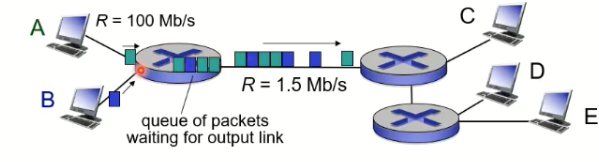
routing and forwarding
-> 네트워크 코어의 핵심 기능
- routing : 여러 라우터의 협력으로 경로 설정
- forwarding : 하나의 라우터 내부에서 헤더를 통해 경로 설정
circuit switching
- 여러개의 링크를 미리 할당하는 방벙
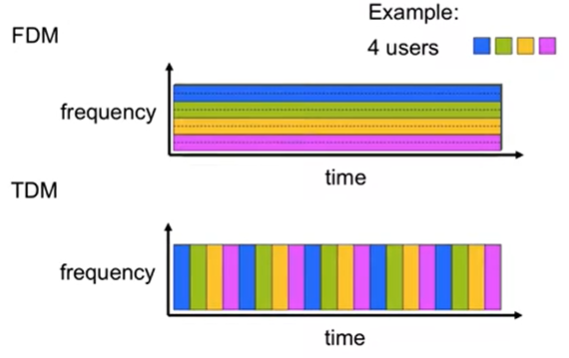
packet vs circuit
packet switching
- 대역폭을 미리 할당하지 않음.
- bursty data(확 몰렸다가 안몰렸다가 하는 데이터) 전송에 적합.
- store-and-forward
: 패킷을 보낼 때 라우터의 큐에 들어가서 앞에서부터 순차적으로 패킷이 전송됨. 라우터의 메모리가 초과되면 패킷 딜레이 및 손실이 발생할 수 있음. - 이렇게 보면 패킷 스위치가 패킷이 손실되기 쉬울 것 같지만 실제로는 그렇지 않음. 실제 사용자들은 계속해서 데이터를 전송하지 않고 일정 시간만 데이터를 전송하기 때문. 게다가 손실이 되더라도 목적지에서 TCP 프로토콜이 복구시켜줌.
curcuit switching
- 딜레이가 거의 없게 느껴지는 성능
- 음성, 데이터를 전달하기 전에 선동작(call setup)(경로 결정, 대역폭 할당)이 필요.
- 특정 사용자가 종료시까지 하나의 대역폭을 데이터 전송에 상관없이 점유함.
- 효율성은 떨어지지만 성능은 좋음.
- 전통적으로 오디오/비디오 어플리케이션 사용의 대역폭 보장.
internet structure
수억개의 엑세스 ISP, 이들을 연결하는 global ISP(라우터 뭉치), 이 글로벌 ISP를 연결하는 IXP(Internet exchange point)와 링크, 각 나라 및 지역에서 사용하는 네트워크, 구글이나 마이크로소프트 같은 기업의 자체 네트워크 망도 있음.
_1.6 delay, loss, throughput
delay
-
queueing delay : 큐에 쌓여서 대기하는 시간
-> 1초당 페킷 도착 개수 * 페킷 크기 / banwidth
-> 0에 가까울수록 딜레이가 없다, 1이 넘어가면 무한대임(처리 < 들어오는 수) -
processing delay : 아웃풋 결정, 에러 체크하는 시간
-
propagation delay : 물리적 거리의 길이 / 전송 속도
-
transmission delay : packet length / link bandwidth
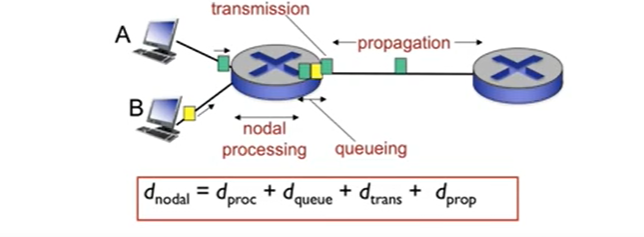
transmission -> 비트를 링크로 올리는 시간
propagation -> 그 비트를 전송하는 시간
loss
큐에 도착하는 패킷이 전송하는 패킷보다 많을때 로스가 일어남, 이전노드나 출발지에서 재전송할 수 도 있고 안 할 수도있다(통화)
Throughput
작은 통로에 속도가 맞추어짐
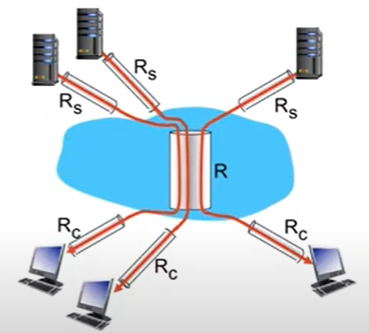
R = 코어부분(통신사가 설치하는 경우)
layer
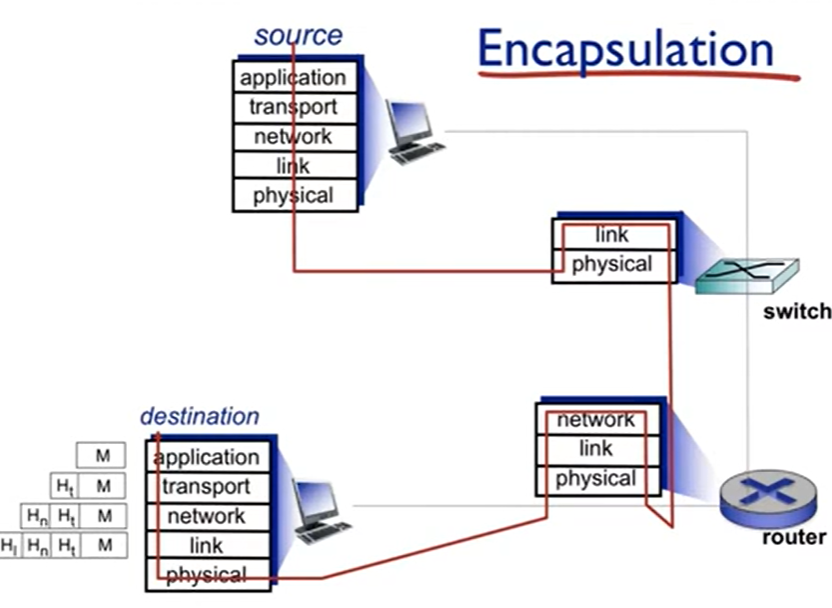
순방향으로 헤더를 붙여서 보내고 역방향으로 해석함

KMU SW