Why Are Self-Custodial Cards Becoming a Core Need in White-Label Neo Banking Apps?
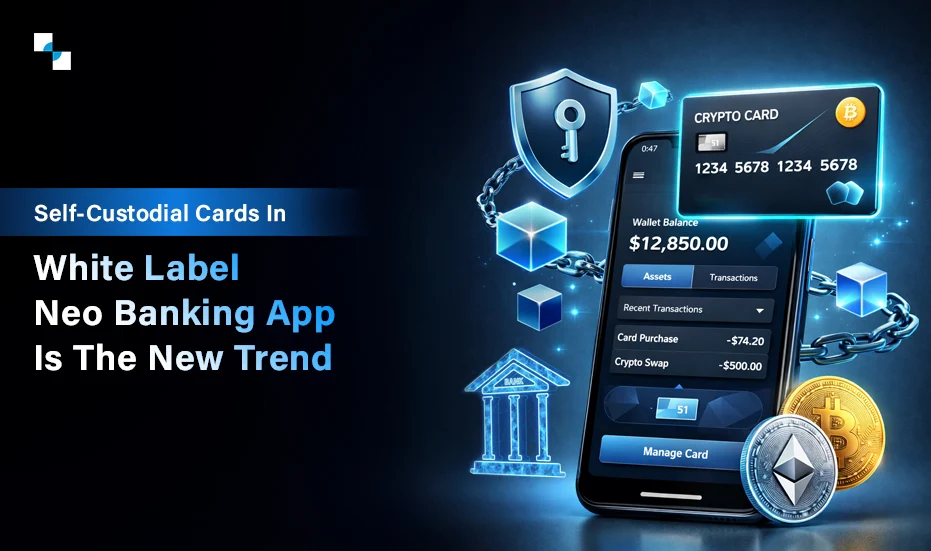
The next wave of crypto neo banking will not be defined by how fast money moves alone. It will be defined by who controls it, how securely it travels, and how elegantly it fits into daily spending. That is exactly why self-custodial crypto cards are moving from a niche idea to a serious product expectation. In a market where tokenization is now a central security layer in digital payments and where major networks continue to push secure token-based experiences at scale, the combination of self-custody and card usability is becoming far more than a trend. It is becoming a structural advantage.
For users, this model promises control without friction. For enterprises and investors, it opens a cleaner path to trust, retention, and product differentiation. A self-custodial cryptocurrency wallet means the user holds the private keys and does not rely on a third party to secure the assets. At the same time, tokenized payment layers help keep sensitive card details out of direct exposure. That mix is exactly why self-custodial cards fit so naturally into a white-label neo-banking app.
What Are Self-Custodial Cards?
Self-custodial cards are payment cards connected to a wallet or account structure where the user retains direct control over the underlying assets or access keys. The crypto virtual card becomes the spending layer, while custody remains with the user. In simple terms, the card is the interface, not the owner. That distinction matters because it gives users more control over their funds while still letting them spend in familiar card rails.
In a white-label neo banking app, this model can be built as part of a branded financial experience where the platform handles the journey, the issuer and network handle card acceptance, and the user keeps ownership of the wallet layer. It is a cleaner answer to modern users who expect both autonomy and convenience.
Self-Custodial Card Vs. Crypto Virtual Cards
Aspect Self Custodial Cards Crypto Virtual Cards
Control layer User keeps control of the wallet or keys The platform often manages the card layer and funding flow
Core idea Spend while keeping custody Spend from a digital card representation
Security model User ownership plus tokenized payment flow Usually issuer-led or platform-led security model
Best for Users who want control and transparency Users who want quick digital spending access
Product position More advanced, trust-led neo banking layer Simpler entry-level spending product
The real difference is not only technical but also philosophical. A virtual crypto card gives access to spending, while a self-custodial card gives access to spending without surrendering ownership.
How Does a Self-Custodial Card Work?
A self-custodial card connects a user-controlled wallet to the card payment system without handing over ownership of the underlying assets. In a self-hosted wallet model, the user controls the private keys, while the card program provides the wallet with a usable spending layer.
Discover how businesses are integrating self-custodial crypto cards to deliver seamless payments, enhanced privacy, and next-generation financial experiences.
https://www.antiersolutions.com/blogs/why-are-self-custodial-cards-becoming-a-core-need-in-white-label-neo-banking-apps/