How to Scope a Custom CRM Budget in India: A Practical Checklist
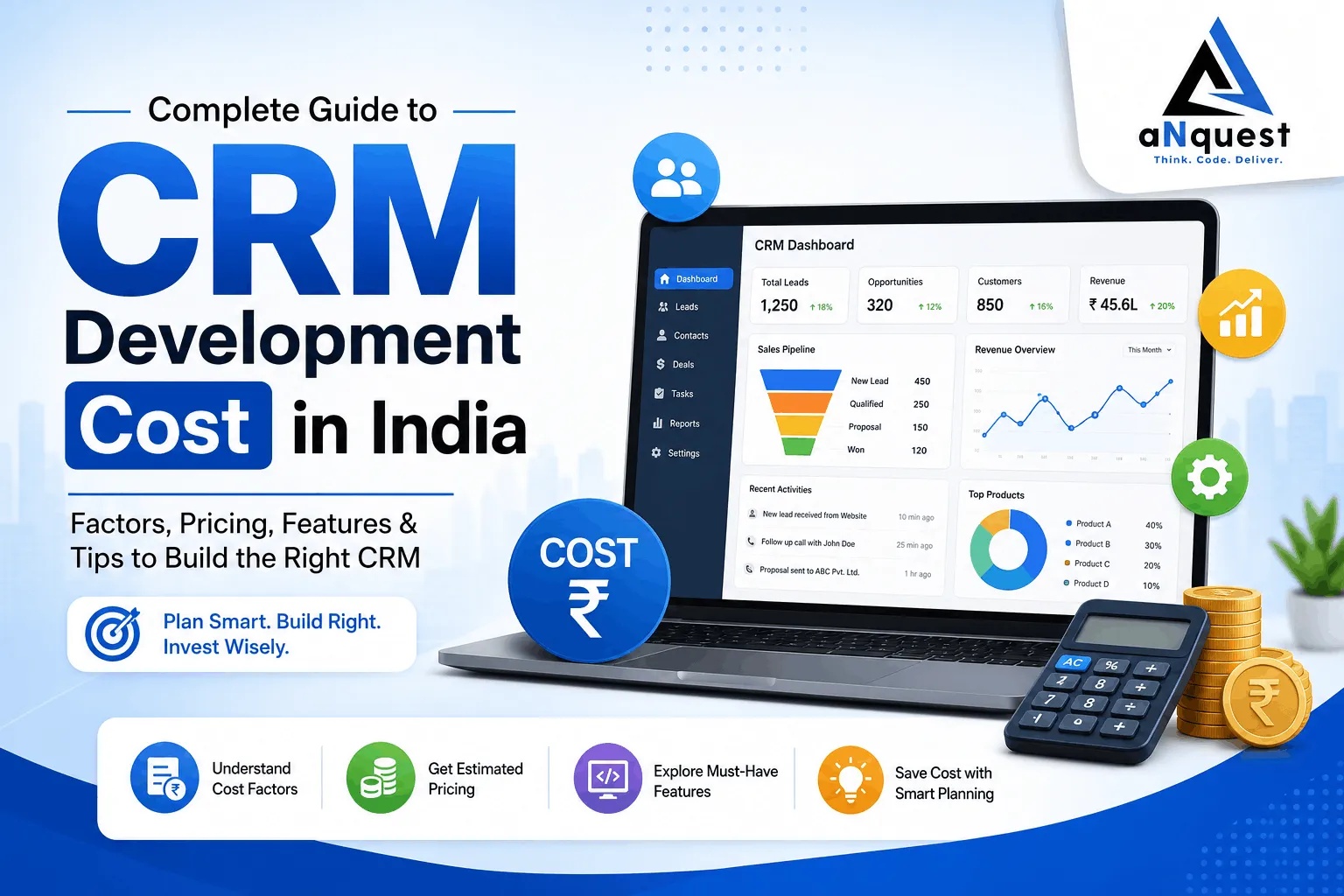
"CRM" can mean a simple contact tracker or a multi-team platform with automation and integrations. Published estimates reflect that spread. Basic builds start around ₹3 lakh, enterprise builds run ₹15 lakh and above, and some multi-region projects are quoted far higher. Hourly rates vary widely too. One guide puts Indian teams at $20–30 per hour, while another says $50–100, so compare scope, not just rates.
For a full walkthrough, see this guide to CRM development cost in India.
Step 1: List modules, not features
Write down what the CRM must do on day one.
| Module | Ask yourself |
|---|---|
| Lead capture | Which channels feed it: website, WhatsApp, calls, ads? |
| Pipeline | How many stages? Who moves a lead forward? |
| Follow-ups | Which reminders and messages can be automated? |
| Reporting | Which three numbers does management check weekly? |
| Roles | Who can view, edit, or export data? |
Each row becomes a line item in the quote. If a vendor can't price per module, ask why.
Step 2: Identify integrations early
Integrations cause more budget surprises than screens do. List every tool the CRM must talk to: telephony, WhatsApp, email, accounting, ERP, payment gateway. Confirm whether each has a usable API before you commit.
Step 3: Decide web, mobile, or both
A responsive web app covers most teams. A native mobile app can add roughly 50–80% to the base cost, so confirm your field team really needs one before it goes into the first release.
Step 4: Budget beyond the build
- Support and maintenance: commonly estimated at 15–25% of annual development cost
- Training and rollout: around 8–15% of the build in one guide
- Hosting, messaging credits, and licences: recurring
- Data migration from spreadsheets: one-time but often underestimated
Step 5: Ship an MVP first
Launch core modules, collect real usage data, then fund phase two. This keeps the first spend small and tells you which advanced features are worth paying for.
Build vs buy: a quick rule
- Under five users, standard process: use an off-the-shelf CRM.
- Larger team, unusual workflow, or sensitive data: price a custom build.
- Over several years, per-user SaaS fees can add up past a one-time build.
Quote-comparison checklist
- Module-wise pricing
- Delivery timeline for the first usable version
- Code and database ownership in writing
- Post-launch support terms and cost
- Integration list with per-item pricing
conclusion:
Scope drives cost. Write your modules and integrations down first, ask every vendor to price the same list, and plan support from day one. The numbers above are indicative, so use them to sanity-check quotes, not to replace them.