Geosynthetics in Modern Infrastructure Development
Infrastructure development is the backbone of economic growth. Roads, railways, embankments, airports, and urban expansion projects all rely on strong and stable foundations. However, many construction projects face challenges such as weak soil conditions, erosion, water drainage issues, and structural instability.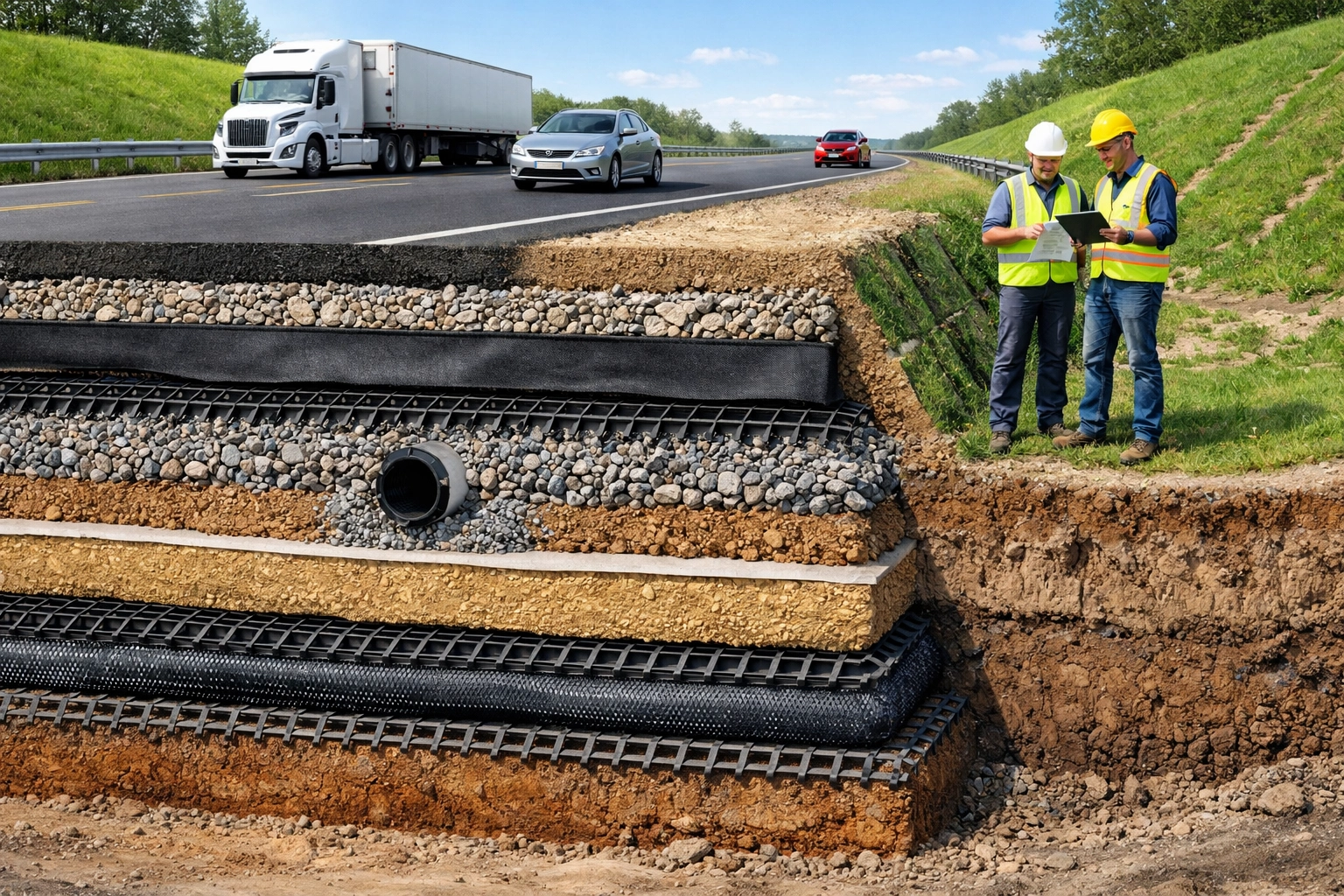
To overcome these challenges, engineers increasingly rely on geosynthetics—advanced materials designed to enhance soil performance and infrastructure durability.
Companies like A&T Engineering Private Limited are playing a significant role in delivering innovative geosynthetic solutions that support modern infrastructure projects worldwide.
In this article, we explore how geosynthetics are transforming civil engineering and why they are becoming essential in infrastructure development.
Understanding Geosynthetics
Geosynthetics are synthetic materials used in civil engineering to improve soil stability, drainage, filtration, reinforcement, and protection. These materials are typically made from polymers and are designed to interact with soil, rock, or other geotechnical materials.
They are widely used in infrastructure projects because they provide:
Improved soil strength
Enhanced drainage performance
Reduced construction costs
Faster project completion
Increased structural lifespan
The growing demand for sustainable and durable construction has made geosynthetics a critical component in modern engineering practices.
Types of Geosynthetics Used in Construction
Several types of geosynthetics are used in civil engineering projects, each serving a specific purpose.
1. Geogrids
Geogrids are used for soil reinforcement. They help distribute loads and improve the bearing capacity of weak soils.
Common applications include:
Road and highway construction
Railway ballast reinforcement
Embankments
Retaining structures
By reinforcing soil layers, geogrids significantly reduce pavement deformation and improve overall stability.
2. Geotextiles
Geotextiles are permeable fabrics used for separation, filtration, and drainage. They allow water to pass through while preventing soil particles from mixing.
Key uses include:
Road subgrade stabilization
Drainage systems
Erosion control
Canal lining
Geotextiles also help extend the life of pavements by preventing soil contamination.
3. Geocells
Geocells are three-dimensional honeycomb structures used to confine soil and improve load distribution.
They are particularly useful in:
Slope protection
Soil stabilization
Road construction over weak soil
Erosion control
Geocells provide high structural stability and prevent soil movement even in steep slopes.
4. Drainage Geocomposites
Efficient drainage is crucial in infrastructure projects to prevent water accumulation and structural damage.
Drainage geocomposites combine multiple geosynthetic layers to create effective water flow channels. These systems are commonly used in:
Landfills
Retaining walls
Tunnels
Railway systems
They help control water pressure and protect structures from long-term damage.
Applications of Geosynthetics in Infrastructure
Geosynthetics have revolutionized the way engineers approach construction challenges. Their applications extend across multiple infrastructure sectors.
1. Road and Highway Construction
Road construction often involves building over weak or unstable soil. Without reinforcement, pavements may experience cracking, rutting, and settlement.
Geosynthetics help:
Improve load distribution
Stabilize subgrade layers
Reduce maintenance costs
Extend pavement lifespan
This results in more durable and cost-efficient road infrastructure.
2. Railway Infrastructure
Railway tracks require strong and stable ballast layers to support heavy loads and continuous vibrations.
Geosynthetics improve railway performance by:
Reinforcing ballast layers
Preventing soil contamination
Enhancing drainage
Reducing track settlement
These benefits lead to lower maintenance requirements and improved railway safety.
3. Slope Protection and Erosion Control
Soil erosion is a major issue in infrastructure projects, especially on steep slopes and embankments.
Geosynthetic erosion control systems help stabilize soil and support vegetation growth. This approach not only protects slopes but also promotes environmentally sustainable infrastructure.
4. Landfill Engineering
Landfills require advanced containment and drainage systems to prevent environmental contamination.
Geosynthetics are used to:
Control leachate movement
Provide filtration and drainage
Protect geomembrane liners
Improve landfill stability
These solutions ensure environmentally safe waste management.
5. Reinforced Soil Structures
Reinforced soil walls and embankments are increasingly used in infrastructure projects because they offer flexibility and cost efficiency.
Geosynthetic reinforcement improves structural strength and allows engineers to construct higher and more stable embankments even on weak soils.
Benefits of Using Geosynthetics in Infrastructure Projects
The use of geosynthetics provides several advantages that make them essential in modern construction.
Cost Efficiency
Geosynthetics reduce the need for expensive soil replacement and heavy construction materials, significantly lowering project costs.
Faster Construction
Because they are lightweight and easy to install, geosynthetics help speed up construction timelines.
Environmental Sustainability
Geosynthetics reduce the use of natural resources and support environmentally friendly engineering solutions.
Improved Structural Performance
They enhance soil stability, prevent erosion, and improve drainage, which ultimately increases the lifespan of infrastructure projects.
The Future of Geosynthetics in Infrastructure
As infrastructure demands grow globally, geosynthetics will continue to play a crucial role in civil engineering. With advancements in material technology and design methods, these solutions are becoming even more effective and versatile.
Infrastructure projects today require innovative engineering approaches that balance performance, sustainability, and cost efficiency. Geosynthetics provide the ideal solution for achieving these goals.
Organizations such as A&T Engineering Private Limited are contributing to this transformation by offering advanced geosynthetic products and engineering expertise for infrastructure development.
For more insights into geosynthetic solutions and infrastructure engineering, you can explore their official website:
👉 https://antinfra.com/[링크텍스트](https://antinfra.com/)