문제링크
-
https://leetcode.com/problems/group-sold-products-by-the-date/
-
https://leetcode.com/problems/find-users-with-valid-e-mails/
문제 123. Write a solution to find the second highest distinct salary from the Employee table. If there is no second highest salary, return null (return None in Pandas).
1.
select
    ifnull(
      (
        select distinct Salary
        from Employee
        order by Salary desc
        limit 1 offset 1
        ),
    null
    ) SecondHighestSalary


->offset사용

2.
SELECT max(salary) SecondHighestSalary
FROM employee
WHERE salary not in (SELECT max(salary) FROM employee);

3.
SELECT MAX(salary) SecondHighestSalary FROM Employee
WHERE salary < (SELECT MAX(salary) FROM Employee)

4.
with a as (
select id, salary, dense_rank() over(order by salary desc) rn
from Employee
)

select(
select distinct salary
from a
where rn = 2
) as SecondHighestSalary

5.
select max(salary) as SecondHighestSalary
from employee
where salary != (select max(salary) from employee)
문제 124. Write a solution to find for each date the number of different products sold and their names.
The sold products names for each date should be sorted lexicographically.
Return the result table ordered by sell_date.
1.
select sell_date, count(distinct product)num_sold,
       group_concat(distinct product)products
from Activities
group by 1
order by 1;

2.
SELECT sell_date,
			 count(distinct product) num_sold,
			 group_concat(distinct product order by product) products
FROM activities
GROUP BY 1
ORDER BY 1;

3.
SELECT
    sell_date,
    count(distinct product) as num_sold,
    group_CONCAT(distinct product order by product) as products
from Activities
group by sell_date
order by sell_date;

4.
select sell_date, count(distinct product) num_sold, group_concat(distinct product order by product) products
from Activities
group by sell_date
order by sell_date

5.
with unique_product as (
    select distinct sell_date, product
    from activities
)
select sell_date, num_sold, group_concat(product order by product) as products
from(   select *, count(product) over(partition by sell_date) as num_sold
        from unique_product
    )q1
group by sell_date
문제126. Write a solution to find the users who have valid emails.
A valid e-mail has a prefix name and a domain where:
The prefix name is a string that may contain letters (upper or lower case), digits, underscore '_', period '.', and/or dash '-'. The prefix name must start with a letter.
The domain is '@leetcode.com'.
1.
SELECT *
FROM Users
WHERE mail REGEXP '^[a-zA-Z][a-zA-Z0-9_.-]*@leetcode[.]com$';

2.
SELECT *
FROM users
WHERE mail REGEXP '^[:alpha:][a-zA-Z0-9_.-]*@leetcode[.]com$';


3.
select * from Users
WHERE mail REGEXP '^[a-zA-Z][a-zA-Z0-9_.-]*@leetcode[.]com$';

SELECT *
FROM Users
WHERE REGEXP_LIKE(mail, '^[A-Za-z]+[A-Za-z0-9\_\.\-]*@leetcode\\.com$');

4.
select user_id, name, mail
from users
where regexp_replace(replace(mail, '@leetcode.com', ''), '[0-9A-Za-z._-]', '') = '' and
      substr(mail, -13) = '@leetcode.com' and
      substr(mail, 1, 1) regexp '[A-Za-z]'

5.
# 지백
select *
from users
WHERE mail REGEXP '^[:alpha:][a-zA-Z0-9_.-]*@leetcode[\.]com$';

# []안에 있으면 문자로, 근데 .....음 \ 왜. ???? 속도 다름?

# 예지
SELECT *
FROM users
WHERE mail REGEXP '^[:alpha:][a-zA-Z0-9_.-]*@leetcode[.]com$';
사용 문법
OFFSET(): 몇번째 row부터 출력할 지. (1번째 row면 0)
Select from 테이블명 orders LIMIT 숫자(★) OFFSET 숫자(♥);
Ex) 10행씩 출력
:*select ** from member ORDERS LIMIT 10 OFFSET 0;
GROUP_CONCAT(): 여러행을 한 열로 묶어주는 함수.
기본적인 형태로 사용했을경우 문자열 사이에 쉼표(,)가 붙게된다.
REGEXP
https://schatz37.tistory.com/39
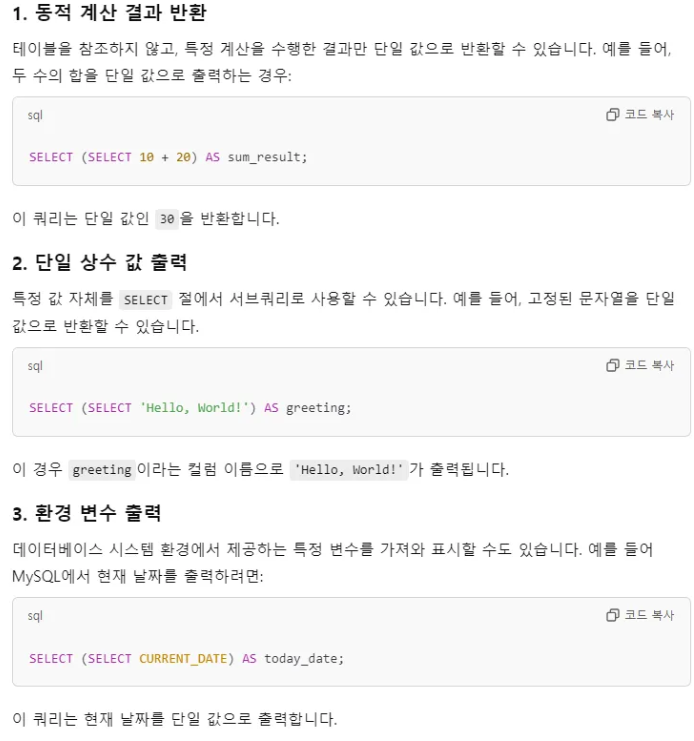
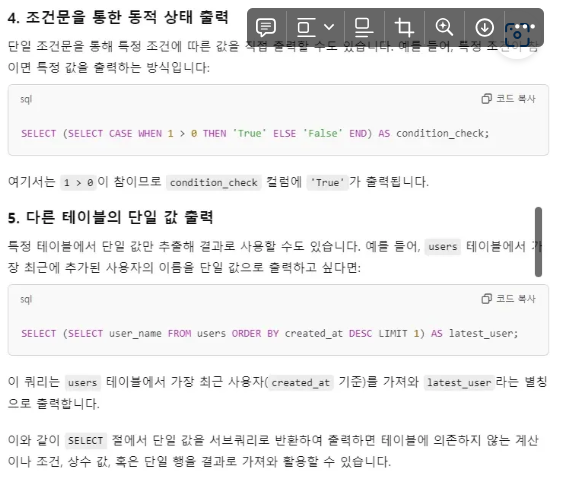
select 안에 sub-query사용하는 예시 ( select 만 )