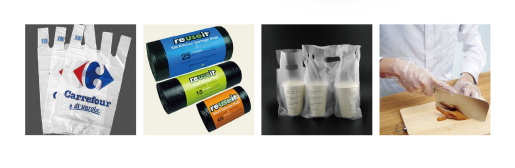
Shopping Plastic Bag Extrusion
Blown film plastic bag extrusion is a versatile and widely used process for producing plastic films, which are then converted into various types of plastic bags. These bags serve numerous applications across different industries due to their durability, flexibility, and cost-effectiveness. Here are some key applications and types of plastic bags produced using the plastic film extrusion process:
- Grocery Bags
Single-Use Bags: Commonly used in supermarkets and retail stores, these bags are lightweight and designed for single use. They are typically made from high-density polyethylene (HDPE) or low-density polyethylene (LDPE).
Reusable Bags: Thicker and more durable than single-use bags, reusable grocery bags are designed for multiple uses and are often made from LDPE or other more robust materials.
- Trash Bags
Household Trash Bags: These bags are used for collecting household waste and are available in various sizes and thicknesses. They are typically made from LDPE or linear low-density polyethylene (LLDPE) for added strength and flexibility.
Industrial Trash Bags: Designed for heavy-duty applications, these bags are thicker and more durable, suitable for industrial and commercial waste. They are often made from LLDPE or blends of different polyethylene types.
- Food Storage Bags
Ziplock Bags: These resealable bags are used for storing food items, keeping them fresh and protected from contaminants. They are usually made from LDPE or LLDPE and feature a zip closure mechanism.
Freezer Bags: Designed to withstand low temperatures, freezer bags are used for storing food in freezers. They are typically made from thicker LDPE or LLDPE to prevent freezer burn and protect the contents.
The plastic bag extruder Process
Raw material preparation: Selecting and pelleting the resin.
Feeding: Pouring pellets into the hopper and transporting them to the extruder.
Heating and melting: Melting the pellets in a heated barrel using a rotating screw.
Extrusion: Forcing the molten plastic through a die to shape it into bags.
Cooling and solidification: Cooling the extruded plastic to solidify.
Bag formation: Cutting and sealing the cooled plastic into individual bags.
Finishing and packaging: Inspecting and packaging the finished bags.
Material Selection for Plastic Bag Extrusion
1. High-Density Polyethylene (HDPE)
2. Low-Density Polyethylene (LDPE)
3. Linear Low-Density Polyethylene (LLDPE)
4.Biodegradable and Compostable Plastics