What Is a W‑2 Form | W2 Tax Form Guide 2026
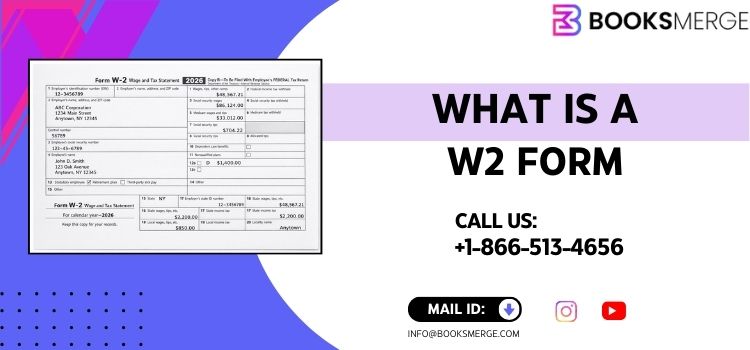
A W2 form is a U.S. tax document employers must issue showing your yearly earnings and taxes withheld so you can file accurate federal and state returns.
Understanding your W2 tax form can feel like decoding a secret IRS message. Don’t panic. It’s actually one of the most straightforward forms you’ll handle in your financial life. If you’ve ever worked a job in the United States, you’re likely going to see a W‑2. By the end of this article, you’ll know what the form is, why it matters, how it’s used, and what to do with it.
Table of Contents
-
What Is a W‑2 Form? Explained
-
Who Gets a W‑2?
-
What Is the Purpose of a W‑2 Form
-
How Is a W‑2 Used?
-
W‑2: Box‑by‑Box Highlights
-
W‑2 Deadlines and Important Dates
-
Common Mistakes and How to Avoid Them
-
Pricing and Tax Preparation Tips
-
Conclusion
-
FAQs
1. What Is a W‑2 Form? Explained
A W‑2 form, officially called the Wage and Tax Statement, is a tax form that U.S. employers prepare for employees to show how much they earned in a year and how much tax was withheld from their paychecks. So, if you’re wondering what is a W2 form, it essentially summarizes your yearly earnings and taxes for both you and the government.
Think of it this way: the W‑2 is your annual report card from the job you worked. It tells the IRS, your state, and you the exact dollar amounts for wages, Social Security, Medicare, and federal income tax withheld.
This isn’t something you create yourself. Your employer fills it out and sends one copy to you and another to the Social Security Administration (SSA). The SSA then shares data with the IRS for compliance and verification.
2. Who Gets a W‑2?
If you worked as an employee in 2025 and received wages from that job, you should get a W‑2 in early 2026. Here’s the simple rule:
-
Employees with wages and tax withholding get a W‑2 form.
-
Independent contractors typically don’t get W‑2 forms. They get a 1099‑NEC instead.
If you had multiple jobs, you’ll receive a separate W‑2 from each employer. Employers must send your W‑2 by January 31 each year. If that date falls on a weekend, the deadline shifts slightly (for example, to February 2 in 2026).
3. What Is the Purpose of a W‑2 Form?
You may ask: “What is the purpose of a W‑2 form?” Great question.
At its core:
-
It shows how much you earned from an employer during the tax year.
-
It summarizes the taxes withheld for federal, Social Security, and Medicare.
-
It helps you file your tax return accurately.
Here’s why that matters:
-
The IRS uses W‑2 data to confirm your income and taxes paid.
-
You use it to complete your federal and state tax returns.
-
It doubles as proof of income for loans, mortgages, or financial planning.
If there’s a mismatch between your tax return and your employer’s W‑2, the IRS might reach out. So accuracy isn’t just a bureaucratic preference—it’s essential to avoid notices or audits.
4. How Is a W‑2 Used?
Once you get your W‑2, what do you do with it?
Here’s a clear step‑by‑step summary:
-
Review for Accuracy: Double‑check your name, Social Security number, and amounts.
-
Use It to File Taxes: You’ll enter key numbers into your federal or state tax forms.
-
Store Copies Safely: Keep your W‑2 for at least three years, in case of IRS questions later.
-
Provide for Loans/Verification: Sometimes lenders ask for W‑2s to verify income.
You might receive multiple copies of your W‑2:
-
Copy B for federal tax returns
-
Copy 2 for state/local tax returns
-
Copy C to keep for your records.
Each copy has a purpose. Don’t throw them away after filing!
5. W‑2: Box‑by‑Box Highlights
The W‑2 form has a bunch of numbered boxes. Here’s what the key ones mean:
-
Box 1: Your taxable wages, tips, and compensation.
-
Box 2: Federal income tax withheld.
-
Box 3: Social Security wages.
-
Box 4: Social Security tax withheld.
-
Box 5: Medicare wages and tips.
These amounts help you and the government tally up what was earned and paid in taxes. If something doesn’t look right, contact your employer before filing.
Quick Note: An IRS form list is a complete collection of official tax forms issued by the IRS for reporting income, deductions, and taxes for individuals and businesses.
6. W‑2 Deadlines and Important Dates
Deadlines may seem like annoying bureaucratic checkboxes, but they’re important. Here’s what you need to know:
-
Employers must issue W‑2s by January 31.
-
If January 31 falls on a weekend (like in 2026), the deadline moves slightly forward.
-
The IRS begins accepting tax returns in late January or early February.
-
Federal tax returns are due by April 15. (This is the standard tax deadline.)
If you don’t get your W‑2 on time, check with your employer first. If they can’t help, the IRS can issue a substitute form (Form 4852) as a last resort.
7. Common Mistakes and How to Avoid Them
Here are a few real‑world mistakes people make with W‑2s and how to avoid them:
Mistake #1: Ignoring incorrect information
Fix: Review your W‑2 right away and notify your employer if something is off.
Mistake #2: Losing W‑2 copies
Fix: Always save a digital or physical backup. If needed, you can request a wage transcript from the IRS.
Mistake #3: Filing without your W‑2
Fix: Wait until you have your W‑2 or use Form 4852 only when necessary.
Accuracy matters. Even small errors can lead to IRS notices or delays in refunds.
8. Pricing and Tax Preparation Tips
Professional tax preparation can take the stress out of navigating forms like the W‑2. For many working individuals, simple tax filing software costs a modest fee, depending on complexity.
If you’re looking for tailored help, bookkeeping and tax experts at BooksMerge offer support starting around tax price levels competitive with leading firms and designed to fit budgets of small business owners and employees alike. Call +1‑866‑513‑4656 to learn more.
Smart tip: Wait for all your W‑2s before filing. If you have multiple employers or changed jobs, missing one form might lead to incomplete filing.
9. Conclusion
The W‑2 form is one of the most important tax documents an employee will encounter. From showing your earnings and how much tax was taken out to serving as proof of income, it plays a vital role in your personal tax life. It’s not confusing once you know the basics, and once you’ve handled it a couple of times, it becomes second nature.
If anything in your W‑2 doesn’t look right, don’t guess—ask your employer or a tax professional. And remember, having accurate and complete W‑2 data makes your tax filing smoother, clearer, and less stressful.
FAQ
1. What is a W2 tax form used for?
It reports your yearly wages and taxes withheld so you can file federal and state income tax returns accurately.
2. What happens if I lose my W‑2?
You can request a reprint from your employer or use the IRS wage transcript to reconstruct it.
3. Do I need a W‑2 if I worked part‑time?
Yes, if you were paid wages and taxes were withheld, you should get a W‑2.
4. Can I file taxes without a W‑2?
Only with Form 4852 as a substitute—best to get your official W‑2 first.
5. Is a W‑2 the same as a 1099?
No, W‑2 is for employees; 1099 is for independent contractors.
Read Also: Form 6765 Instructions
If you’d like help preparing your taxes or understanding your W‑2 right now, call BooksMerge at +1‑866‑513‑4656 for expert support.