UG vs PG: Which Level Should You Study Abroad?

Studying abroad can be a life-changing decision, but choosing when to go — for an undergraduate (UG) or postgraduate (PG) degree — can be just as important as choosing where and what to study. Each level comes with its own set of advantages, challenges, and long-term impacts. If you're torn between going abroad after high school or after completing your bachelor's, this guide will help you weigh your options and make an informed decision.
📘 What is UG and PG?
UG (Undergraduate): Refers to a bachelor’s degree pursued after completing high school or equivalent education.
PG (Postgraduate): Refers to master’s level education or postgraduate diplomas, pursued after completing an undergraduate degree.
🎓 UG Abroad: Pros and Cons
✅ Pros of UG Abroad
Early Exposure to Global Education: Studying abroad at a young age can help students gain international exposure, cultural adaptability, and open-mindedness.
Language & Communication Skills: Immersing yourself early helps improve your English or other foreign language proficiency.
Long-Term Networking: Starting early means building a broader, long-term international network.
More Time to Explore Career Paths: UG students often get to explore elective subjects, minors, and internships.
❌ Cons of UG Abroad
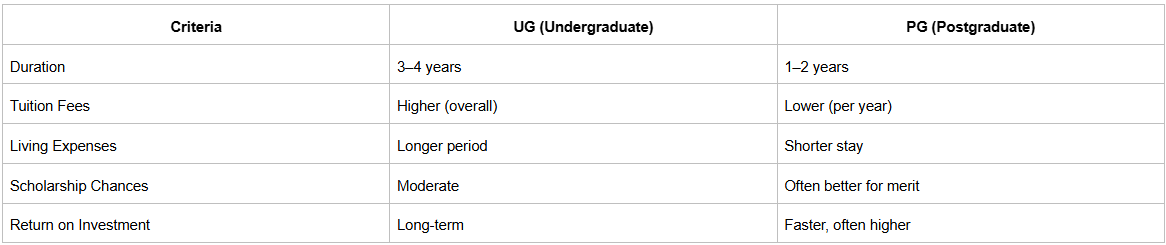
Higher Financial Burden: A 3–4 year UG program can be costly, especially when compared to shorter PG courses.
Emotional Readiness: Young students may struggle with homesickness or cultural shock.
Unclear Career Path: At 17–18, many students are still unsure of their career goals. Making such a big investment at this point can be risky.
🎓 PG Abroad: Pros and Cons
✅ Pros of PG Abroad
Specialized Knowledge: PG programs are more focused and align with career goals.
Shorter Duration: Most master’s degrees are 1–2 years, meaning lower tuition and living costs.
Stronger Resume: International PG qualifications are often highly valued by employers.
Mature Decision-Making: You’re older, more independent, and can make better academic and career choices.
❌ Cons of PG Abroad
Competitive Admissions: PG courses at top universities are harder to get into.
Visa & Work Restrictions: Some countries offer shorter post-study work visas for PG students than for UG.
Time Crunch: Less time to explore the country or engage in non-academic activities.
💰 UG vs PG Abroad: Cost Comparison
🌍 Career Opportunities and Immigration
UG graduates often start at entry-level positions and may need to pursue PG later for better roles.
PG graduates typically enter mid-level or specialized roles, especially in STEM and business fields.
Many countries like Canada, Australia, and the UK offer better immigration pathways for PG graduates, especially those who complete courses in demand.
❌ Things to Avoid When Choosing UG or PG Abroad
Following the Crowd: Don’t choose UG/PG abroad just because your friends are.
Ignoring Visa Rules: Each country has its own visa regulations — including working rights and stay-back periods.
Not Researching Course Content: The same degree title can have different syllabuses abroad.
Underestimating Costs: Budget for both tuition and living expenses.
Not Checking Language Requirements: Countries and universities may require tests like PTE, IELTS, or TOEFL.
Neglecting Scholarships: Many students miss out on financial aid due to late applications or incomplete documents.
📝 When to Choose UG Abroad
You have strong academic and language skills.
You're emotionally and mentally ready to live independently.
Your family supports the decision — both emotionally and financially.
You want to build a long-term international career.
📝 When to Choose PG Abroad
You want to specialize in a specific subject or switch careers.
You want to minimize time and cost spent abroad.
You’ve already built a base in your field and want to advance.
You're considering PR (Permanent Residency) options post-study.
✈️ Final Thoughts
Choosing between UG and PG study abroad options depends on your career goals, readiness, and financial situation. For some, early exposure through UG can be transformative. For others, a more mature and targeted PG approach delivers better returns. Either way, the experience will significantly shape your academic and personal growth.
📌 Don’t Forget Your English Proficiency Test – Try PTE
Whether you choose to study abroad for UG or PG, language proficiency is mandatory for most universities. One of the most accepted exams globally is the PTE Academic — fast, computer-based, and widely recognized by institutions in Australia, Canada, the UK, and more.
At Gurully, we offer free and expert-designed PTE mock tests to help you prepare with real exam-like practice. Whether you're applying for a UG or PG course, mastering PTE with Gurully can boost your chances of admission. Explore our PTE resources today and take the first confident step toward studying abroad!
Take a Free PTE mock Test - https://www.gurully.com/pte
Also Read:
https://substack.com/home/post/p-165855393