문제
https://www.acmicpc.net/problem/11000
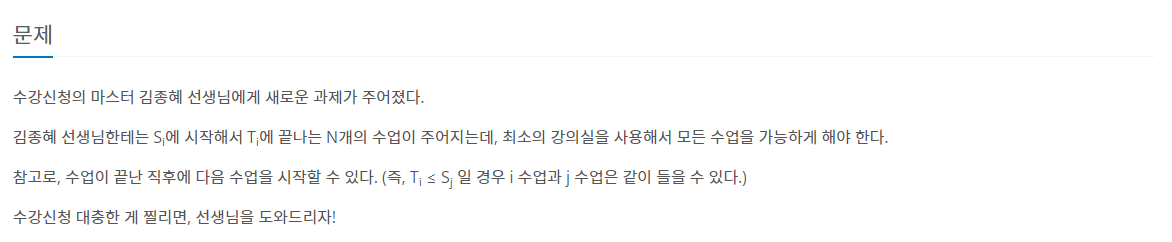
입출력
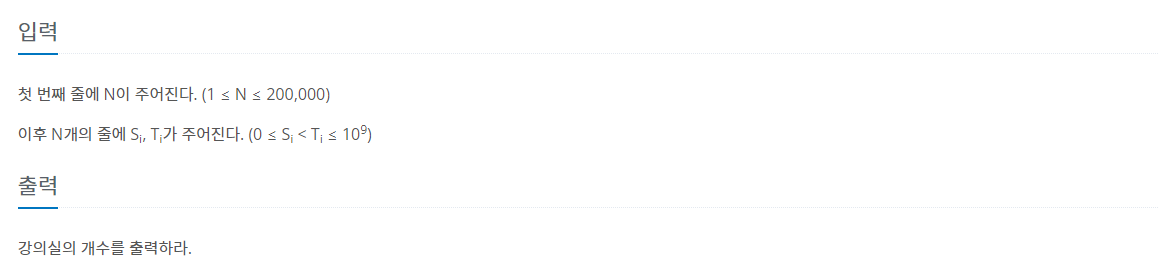
예제

태그
- 자료 구조
- 그리디 알고리즘
- 정렬
- 우선순위 큐
풀이
-
greedy를 이용한다.
-
시작시간을 기준으로 오름차순 정렬을 한다.(시작시간이 같을 경우 종료시간을 기준으로 오름차순 정렬을 한다.)
-
정렬된 배열을 돌면서 시작시간과 우선순위큐에 있는 가장 작은 값을 비교한다.
-
peek()의 값이 시작시간보다 크거나 같은 경우 poll()을 해주고 종료시간을 offer()해준다.
-
peek()의 값이 시작시간보다 작은 경우 종료시간을 offer()해준다.
-
우선순위큐에 남은 값들이 강의실의 개수이다.
코드
정답 코드
/**
 * 11000_강의실 배정
 *
 * 시작시간을 기준으로 오름차순 정렬을 한다.
 * 시작시간이 같을 경우 종료시간을 기준으로 오름차순 정렬을 한다.
 * 우선순위큐에 종료시간을 넣는다.
 * 우선순위큐의 peek()을 이용해 주어진 배열을 돌면서 비교한다.
 * peek()의 값이 다음 데이터의 시작시간보다 크거나 같은 경우 poll()을 해주고 데이터의 종료시간을 넣는다.
 * 답은 우선순위큐에 남아있는 데이터의 갯수(pq.size())이다.
 */

public class P_11000 {
    static int N;
    static Time[] input; // 주어진 시작시간, 종료시간 담는 배열
    static PriorityQueue<Integer> pq;

    public static void main(String[] args) throws IOException {
        BufferedReader br = new BufferedReader(new InputStreamReader(System.in));
        N = Integer.parseInt(br.readLine());
        input = new Time[N];
        for (int i = 0; i < N; i++) {
            StringTokenizer st = new StringTokenizer(br.readLine());
            input[i] = new Time(Integer.parseInt(st.nextToken()), Integer.parseInt(st.nextToken()));
        }

        Arrays.sort(input);

        pq = new PriorityQueue<>();
        pq.offer(input[0].e);

        for (int i = 1; i < input.length; i++) {
            // 우선순위큐에서 가장 작은 값
            int tmp = pq.peek();

            // 시작시간 < 우선순위큐의 가장 작은 값
            // 종료시간을 우선순위큐에 넣는다.
            if (input[i].s < tmp) {
                pq.offer(input[i].e);
            }
            // 시작시간 >= 우선순위큐의 가장 작은 값
            // 우선순위큐의 가장 작은 값을 빼고 종료시간을 넣는다.
            else {
                pq.poll();
                pq.offer(input[i].e);
            }
        }

        System.out.println(pq.size());
    }

    static class Time implements Comparable<Time>{
        int s; // 시작시간
        int e; // 종료시간

        public Time(int s, int e) {
            this.s = s;
            this.e = e;
        }

        // 시작시간을 기준으로 오름차순 정렬
        // 시작시간이 같을 경우 종료시간을 기준으로 오름차순 정렬
        @Override
        public int compareTo(Time o) {
            if (this.s == o.s) {
                return this.e - o.e;
            }
            return this.s - o.s;
        }
    }
}

안녕하세요