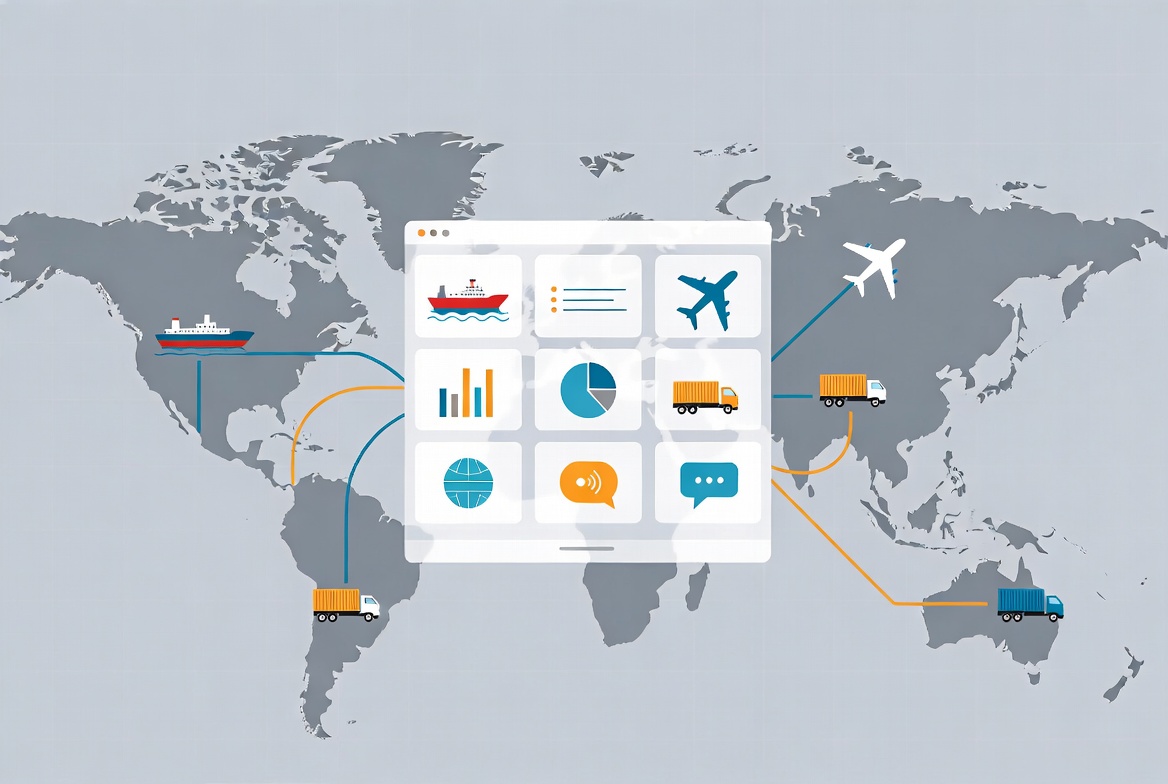
What is a Freight Management System?
A freight management system is a specialized logistics software used by freight forwarders to manage international shipments, documentation, partner coordination, and operational workflows.
It centralizes freight operations to improve shipment visibility, execution efficiency, and cross-border collaboration.
This article explains what a freight forwarding system is, how it works, and why it plays a critical role in modern logistics operations.
Definition of a Freight Forwarding System
A freight forwarding system focuses on managing the end-to-end execution of freight shipments from origin to destination.
It supports core forwarding activities such as booking, documentation handling, shipment tracking, and coordination with carriers and overseas agents.
Unlike general transportation tools, a freight forwarding system is designed for job-based, multi-leg, and cross-border logistics operations.
Key characteristics
Shipment- and job-centric management
Support for international and multimodal transport
Centralized documentation and milestone tracking
Collaboration with multiple logistics partners
How a Freight Forwarding System Works
A freight forwarding system works by standardizing freight workflows and connecting all shipment-related data into a single operational platform.
Typical workflow
Shipment or job creation
Carrier booking and transport planning
Documentation preparation and management
Shipment execution and milestone tracking
Status updates and operational reporting
This workflow reduces manual coordination and improves operational transparency across freight forwarding teams.
Types of Freight Transportation Managed by Forwarders
Freight forwarding systems are commonly used to manage different transportation modes within a single operational framework.
Road Freight
Road freight involves transporting goods via trucks or vans over land. It is commonly used for domestic and regional distribution and first-mile or last-mile delivery.
Sea Freight
Sea freight supports large-volume international cargo transported by vessels. It is a core component of global trade and long-distance logistics.
Air Freight
Air freight is used for time-sensitive or high-value cargo. Freight forwarding systems help coordinate bookings, documentation, and shipment tracking for air transport.
Why Freight Forwarding Systems Are Important
Freight forwarding systems play a critical role in modern logistics operations by improving execution efficiency and coordination.
-
Cost control
By standardizing freight workflows and reducing manual processes, forwarding systems help lower operational and coordination costs. -
Operational efficiency
Centralized shipment management allows forwarding teams to plan, execute, and monitor freight operations more efficiently. -
Reduced inventory pressure
Faster and more predictable shipment execution helps businesses reduce inventory delays and related costs. -
Improved shipment visibility
Real-time shipment tracking and milestone updates provide better operational transparency and issue resolution.
Who Typically Uses Freight Forwarding Systems?
Freight forwarding systems are commonly used by:
Freight forwarding companies
International logistics service providers
Cross-border trade operators
Logistics teams managing multi-leg shipments
These systems are especially valuable in environments involving multiple partners, transport modes, and regulatory requirements.
Many freight forwarding operations today are part of broader third-party logistics services.
In these cases, freight forwarding systems are commonly integrated into a 3PL management system to support multi-client logistics operations.
Freight Forwarding Systems and Modern Logistics Platforms
Modern logistics platforms, such as WallTech’s CargoWare, provide freight forwarding systems designed to support international logistics operations through centralized workflows, partner collaboration, and real-time shipment visibility.
Such platforms help freight forwarders standardize operations while maintaining flexibility across different markets and transport modes.
Final Thoughts
Freight forwarding systems are a foundational component of global logistics operations.
By digitizing freight workflows and improving collaboration, these systems enable logistics companies to operate more efficiently, reduce costs, and maintain visibility across complex international shipments.
For logistics teams managing cross-border freight operations, adopting a dedicated freight forwarding system is a key step toward scalable and sustainable growth.
WallTech, founded in 2011, specializes in researching, developing, and providing Logistics IT SaaS Solutions to businesses with logistics management needs.
For more information about logistics management system, please feel free to contact us!