스프링의 IoC 컨테이너는 Bean 객체들을 책임지고 의존성을 관리한다.
객체들을 관리한다는 것은 객체의 생성부터 소멸까지의 생명주기(LifeCycle) 관리를 개발자가 아닌 컨테이너가 대신 해준다는 말이다.
객체 관리의 주체가 프레임워크(Container)가 되기 때문에 개발자는 로직에 집중할 수 있는 장점이 있다.
의존성 주입
-
SpringBoot에서 Component-Scan으로 Bean 등록을 시작하는 과정
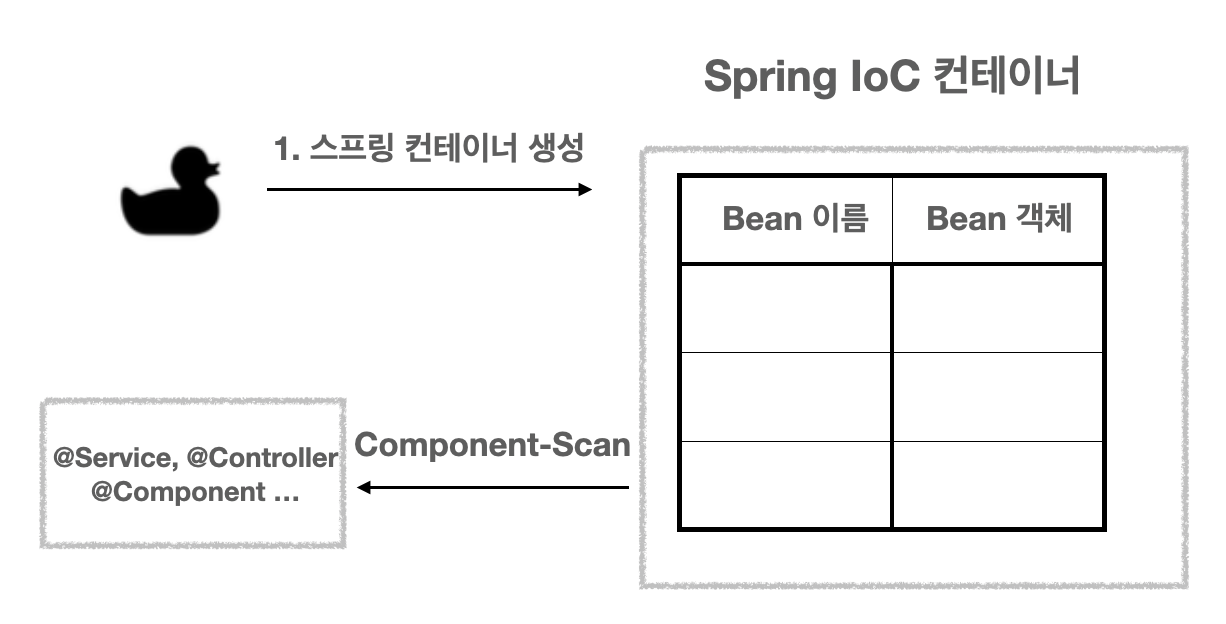
-
생성자 주입 : 객체의 생성과 의존관계 주입이 동시에 일어남
@Controller
public class SampleController {
	private final SampleService sampleService;
    public SampleController(SampleService sampleService) {
    	this.sampleService = sampleService;
	}
}
롬복 사용 시
@Controller
@RequiredArgsConstructor
public class SampleController {
	private final SampleService sampleService;
}- Setter, Field 주입 : 객체의 생성 > 의존관계 주입으로 라이프 사이클이 나누어짐
@Controller
public class SampleController {
	private SampleService sampleService;

    @Autowired
    public void setSampleService(SampleService sampleService) {
    	this.sampleService = sampleService;
	}
}
스프링 빈 이벤트 라이프 사이클
스프링 IoC 컨테이너 생성 → 스프링 빈 생성 → 의존관계 주입 → 초기화 콜백 메소드 호출 → 사용 → 소멸 전 콜백 메소드 호출 → 스프링 종료
스프링은 의존관계 주입이 완료되면 스프링 빈에게 콜백 메소드를 통해 초기화 시점을 알려주며,스프링 컨테이너가 종료되기 직전에도 소멸 콜백 메소드를 통해 소멸 시점을 알려준다.
빈 생명주기 콜백 3가지
스프링은 크게 3가지 방법으로 빈 생명주기 콜백을 관리한다.
- 인터페이스( InitializingBean, DisposableBean )
- 설정 정보에 초기화 메소드, 종료 메소드 지정
- @PostConstruct, @PreDestroy 어노테이션 지원
1. 인터페이스( InitializingBean, DisposableBean )
public class ExampleBean implements InitializingBean, DisposableBean {     @Override
	public void afterPropertiesSet() throws Exception {
    	// 초기화 콜백 (의존관계 주입이 끝나면 호출)
    }
    @Override
    public void destroy() throws Exception {
    	// 소멸 전 콜백 (메모리 반납, 연결 종료와 같은 과정)
    }
}- InitalizingBean은 afterPropertiesSet() 메소드로 초기화를 지원한다. (의존관계 주입이 끝난 후에 초기화 진행)
- DisposableBean은 destory() 메소드로 소멸을 지원한다. (Bean 종료 전에 마무리 작업, 예를 들면 자원 해제(close() 등))
단점
- InitalizingBean, DisposableBean 인터페이스는 스프링 전용 인터페이스이다. 해당 코드가 인터페이스에 의존한다.
- 초기화, 소멸 메소드를 오버라이드 하기 때문에 메소드명을 변경할 수 없다.
- 코드를 커스터마이징 할 수 없는 외부 라이브러리에 적용 불가능하다.
인터페이스를 사용하는 초기화 및 종료 방법은 스프링 초창기에 나온 방법들이며, 지금은 거의 사용하지 않는다.
2. 설정 정보에서 초기화 메소드, 종료 메소드 지정
public class ExampleBean {
	public void initialize() throws Exception {
    	// 초기화 콜백 (의존관계 주입이 끝나면 호출)
    }
    public void close() throws Exception {
    	// 소멸 전 콜백 (메모리 반납, 연결 종료와 같은 과정)
    }
}

@Configuration
class LifeCycleConfig {
	@Bean(initMethod = "initialize", destroyMethod = "close")
    public ExampleBean exampleBean() {
    	// 생략
    }
}
이 방식의 장점
- 메소드명을 자유롭게 부여 가능하다.
- 스프링 코드에 의존하지 않는다.
- 설정 정보를 사용하기 때문에 코드를 커스터마이징 할 수 없는 외부라이브러리에서도 적용 가능하다.
이 방식의 단점
- Bean 지정시 initMethod와 destoryMethod를 직접 지정해야 하기에 번거롭다.
@Bean의 destoryMethod 속성의 특징
- 라이브러리는 대부분 종료 메소드명이 close 혹은 shutdown이다.@Bean의 destoryMethod는 기본값이 inferred(추론)으로 등록 즉, close, shutdown이라는 이름의 메소드가 종료 메소드라고 추론하고 자동으로 호출해준다. 즉, 종료 메소드를 따로 부여하지 않더라도 잘 작동한다.추론 기능을 사용하기 싫다면 명시적으로 destroyMethod=""으로 지정해줘야 한다.
3. @PostConstruct, @PreDestory 어노테이션
import javax.annotation.PostConstruct;
import javax.annotation.PreDestroy;

public class ExampleBean {

	@PostConstruct
  	public void initialize() throws Exception {
  		// 초기화 콜백 (의존관계 주입이 끝나면 호출)
  	}

	@PreDestroy
	public void close() throws Exception {
		// 소멸 전 콜백 (메모리 반납, 연결 종료와 같은 과정)
	}
}
이 방식의 장점
- 최신 스프링에서 가장 권장하는 방법이다.
- 어노테이션 하나만 붙이면 되므로 매우 편리하다.
- 패키지가 javax.annotation.xxx 이다. 스프링에 종속적인 기술이 아닌 JSR-250이라는 자바 표준이다. 따라서 스프링이 아닌 다른 컨테이너에서도 동작한다.
- 컴포넌트 스캔과 잘어울린다.
이 방식의 단점
- 커스터마이징이 불가능한 외부 라이브러리에서 적용이 불가능하다.
- 외부 라이브러리에서 초기화, 종료를 해야 할 경우 두 번째 방법 즉, @Bean의 initMethod와 destoryMethod 속성을 사용하자.
[reference]
https://dev-coco.tistory.com/170

Back-End Developer