수강항목
- 객체지향 프로그래밍
- 객체와 클래스
- 클래스 상속
1. 객체지향 프로그래밍
-
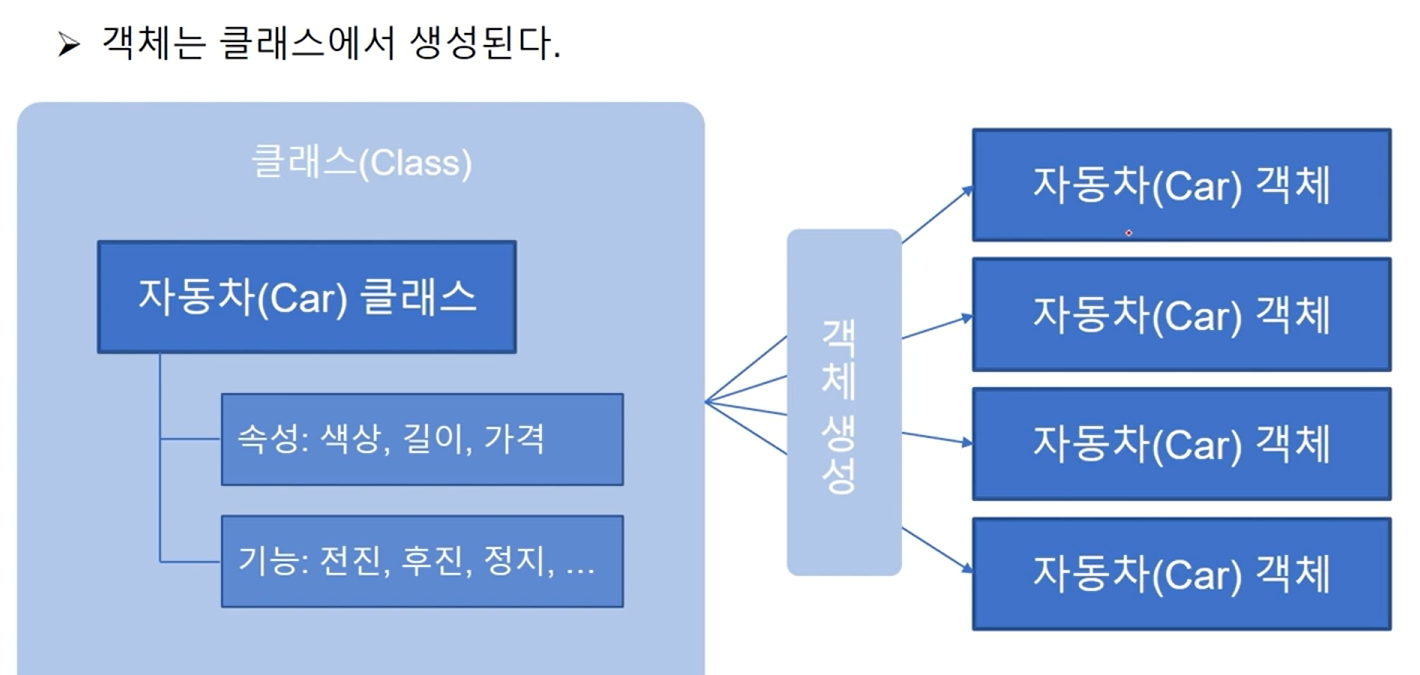
객체를 이용한 프로그램으로 객체는 속성과 기능으로 구성된다.

[출처이미지]제로베이스 취업스쿨 -
객체는 클래스에서 생성된다.
[출처이미지]제로베이스 취업스쿨 -
객체는 원하는 만큼 생성이 가능하다.
객체 사용의 장점
- 코드 재사용, 모듈화에 좋다.
2. 객체와 클래스
-
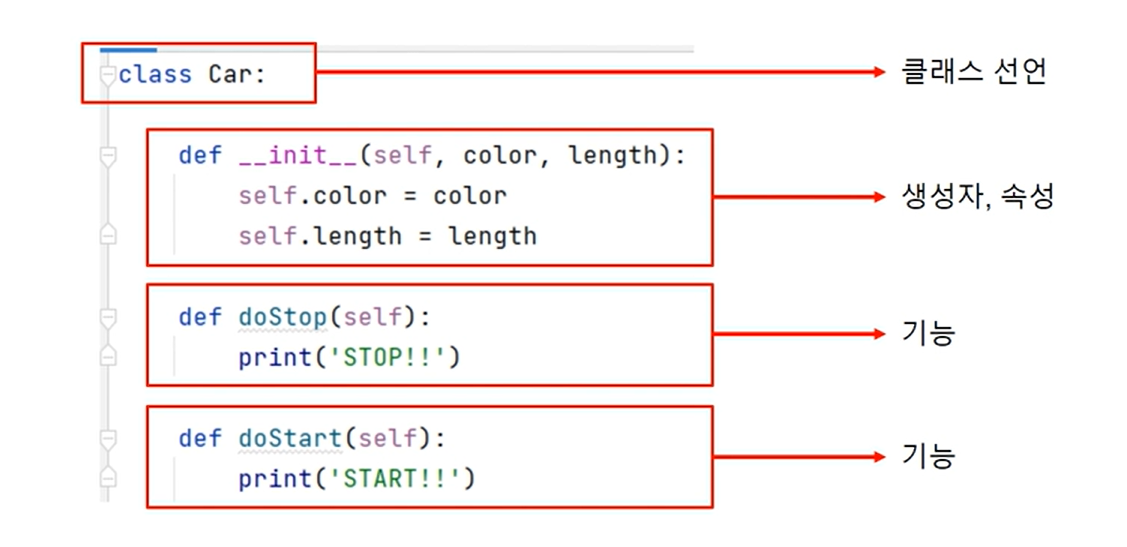
클래스는 class 키워드와 속성(변수) 그리고 기능(함수)를 이용해서 만든다.
[출처이미지]제로베이스 취업스쿨 -
클래스는 시작을 대문자로 시작한다.
-
객체는 클래스의 생성자를 호출한다.
파이썬
class Air():

    def __init__(self, color, len):
        self.color = color
        self.length = len

    def airPortInfo(self):
        print(f"self.color : {self.color}")
        print(f"self.length : {self.length}")

    def doFly(self):
        print("비행기 이륙 합니다.")

    def doStop(self):
        print("비행기 착륙 합니다.")

air1 = Air("blue", 1500)
air2 = Air("green" , 2000)

air1.airPortInfo()
air2.airPortInfo()
설명
- color와 len이라는 매개변수 생성
- self.color / self.length 로 초기화 진행
- 함수를 생성하여 기능을 만든다.
- 객체를 만들어 매개변수에 값을 넣어 기능을 사용한다.
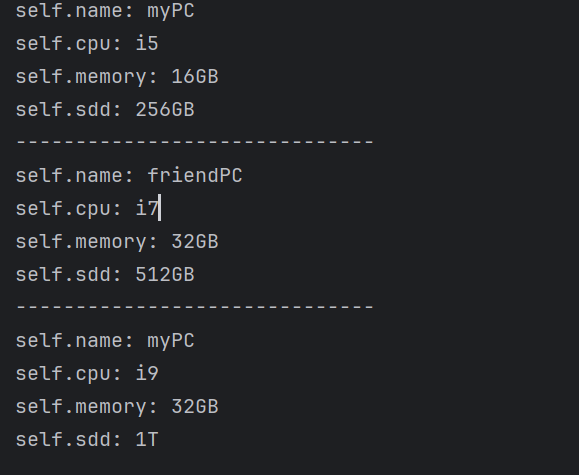
객체 속성 변경
- 객체 속성은 변경할 수 있다.
- 속성에 접근하기 위해서는 도트연산자를 이용한다.
- 속성에 접근하여 해당 속성에 값을 변경할 수 있다.
class NewGenerationPC:

    def __init__(self , name, cpu, memory, ssd):
        self.name = name
        self.cpu = cpu
        self.memory = memory
        self.ssd = ssd

    def doExcel(self):
        print("EXCEL Run!!")

    def doPotoshop(self):
        print("PHOTOSHOP RUN")

    def printPCInfo(self):
        print(f"self.name: {self.name}")
        print(f"self.cpu: {self.cpu}")
        print(f"self.memory: {self.memory}")
        print(f"self.sdd: {self.ssd}")

myPC = NewGenerationPC("myPC", "i5","16GB","256GB")
myPC.printPCInfo()

print("-" * 30)

friendPC = NewGenerationPC("friendPC", "i7","32GB","512GB")
friendPC.printPCInfo()

print("-" * 30)

myPC.cpu = 'i9'
myPC.memory = '32GB'
myPC.ssd = '1T'
myPC.printPCInfo()
출력
객체와 메모리
- 변수는 객체의 메모리 주소를 저장하고 이를 이용해서 객체를 참조한다.
class Address:

    def __init__(self, color, weight):
        self.color = color
        self.weight = weight

    def printInfo(self):
        print(f"address1 : {self.color}")
        print(f"address2 : {self.weight}")

addr1 = Address("blue",300)
addr2 = Address("green",100)
addr3 = addr1

addr1.printInfo()
addr2.printInfo()
addr3.printInfo()

print("속성 변경 후 확인")

addr1.weight = 100
addr1.color = "black"

addr1.printInfo()
addr2.printInfo()
addr3.printInfo()
출력
설명
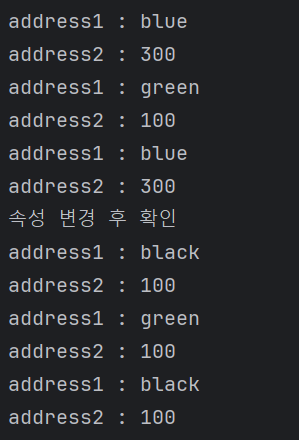
- addr3에 addr1을 대입한다.
- 예상은 객체 자체를 복사했을 거라고 했지만 사실은 주소를 기억하는 것
- 속성을 변경하면 만일 객체를 복사했다면 addr3는 변경이 안되어야 하지만 변경이 되는것을 알 수 있다.
- 객체는 메모리에 주소를 저장하기 때문이다.
- 해당 내용은 얕은복사라고도 한다.
얕은 복사
- 객체 주소를 복사하는 것으로 객체 자체가 복사되지는 않는다.
깊은 복사
- 객체 자체를 복사하는 것으로 또 하나의 객체가 만들어 진다.
class TemCls:

    def __init__(self,n,s):
        self.number = n
        self.str = s

    def printClsInfo(self):
        print(f"self.number : {self.number}")
        print(f"self.str : {self.str}")
import copy

tc1 = TemCls(10,"Hello")
tc2 = copy.copy(tc1)

tc1.printClsInfo()
tc2.printClsInfo()

print("깊은복사 ------")
tc1.number = 20
tc1.str = "bye"

tc1.printClsInfo()
tc2.printClsInfo()
출력
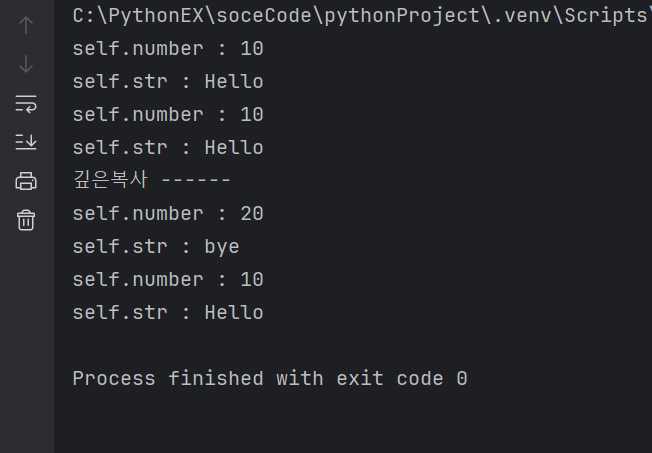
설명
- 얕은 복사는 메모리에 주소를 가져와 사용
- 깊은 복사는 객체 자체를 복사하여 새로운 주소를 할당받는것이다.
- 사용하기위해서는 import copy 외부모듈을 불러와 copy.copy()를 사용하여 객체를 복사
- tc1에 속성을 변경하고 확인 하니 얕은복사와 다르게 tc1만 변경된 것을 확인할 수 있다.
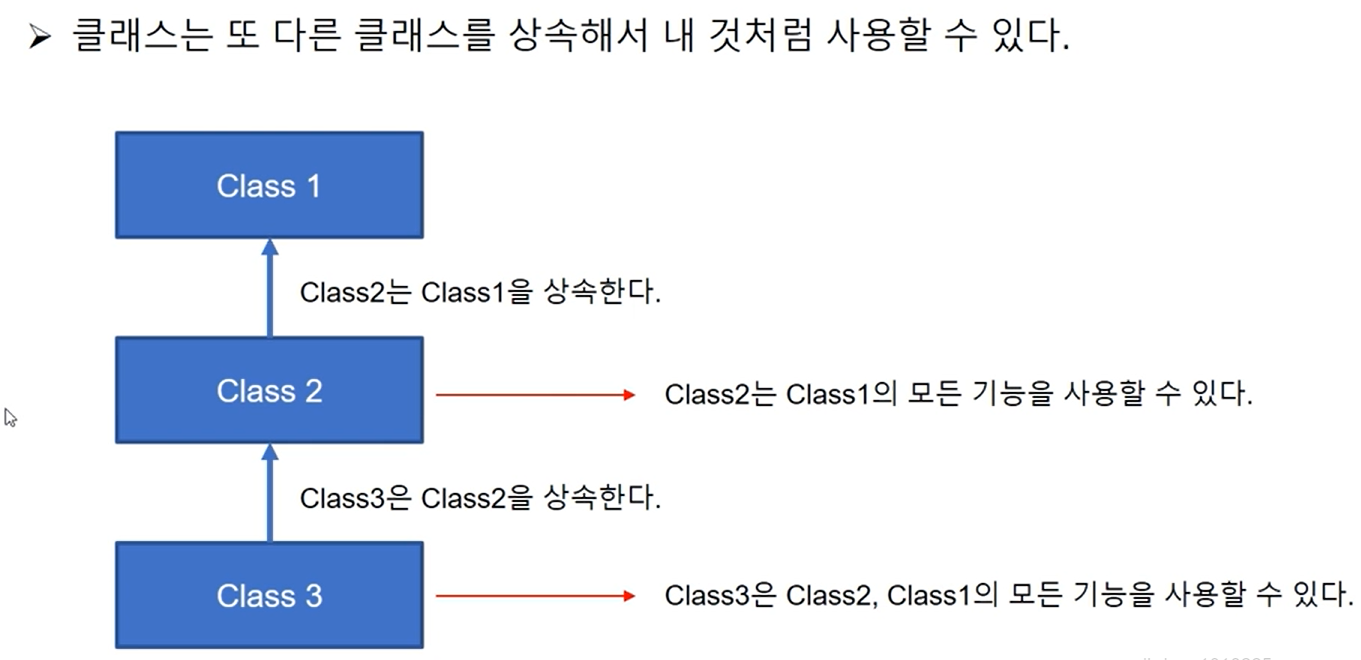
3. 클래스 상속
[출처이미지]제로베이스 취업스쿨
파이썬
class NormalCar:
    def drive(self):
        print("[NormalCar] drivee() called!!")
    def back(self):
        print("[NormalCar] back() called!!")

class TurboCar(NormalCar):
    def turbo(self):
        print("[TurboCar] turbo() called!!")

myTurboCar = TurboCar()

myTurboCar.turbo()
myTurboCar.drive()
myTurboCar.back()
출력
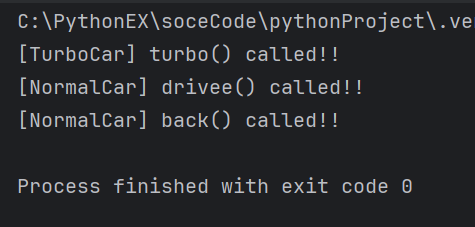
설명
- 클래스를 두개 만든다.
- 함수를 생성한다.
- 두번 째 클래스에 첫번째 클래스를 상속한다.
- 두번째 클래스 변수에 담아 사용한다.

데이터분석공부중