최소 신장 트리 적용하기
이제 최소 신장 트리에 대해 이해했다면, 실제 문제를 풀면서 학습할 차례다.
위 문제를 여러 알고리즘으로 풀면서 익혀보자.
먼저 떠올린건 크루스칼이었다. 상대적으로 구현이 쉬우므로 먼저 구현했다.
- 크루스칼
import java.io.*;
import java.util.*;

public class Main {
    static class Edge implements Comparable<Edge> {
        int src, dst, cost;

        public Edge(int _src, int _dst, int _cost) {
            src = _src;
            dst = _dst;
            cost = _cost;
        }

        public int compareTo(Edge e) {
            return cost - e.cost;
        }
    }

    static class UnionFinder {
        int[] parent;
        int[] rank;

        public UnionFinder(int n) {
            parent = new int[n + 1];
            rank = new int[n + 1];
            for (int i = 0; i <= n; i++) {
                parent[i] = i;
                rank[i] = 0;
            }
        }

        public int find(int x) {
            if (parent[x] != x) {
                parent[x] = find(parent[x]);
            }
            return parent[x];
        }

        public void union(int x, int y) {
            int xroot = find(x);
            int yroot = find(y);

            if (xroot == yroot)
                return;

            int cmp = compareRank(xroot, yroot);
            if (cmp < 0) {
                parent[xroot] = yroot;
            } else if (cmp > 0) {
                parent[yroot] = xroot;
            } else {
                parent[yroot] = xroot;
                rank[xroot]++;
            }
        }

        public int compareRank(int x, int y) {
            return rank[x] - rank[y];
        }
    }

    public static void main(String[] args) throws Exception {
        BufferedReader br = new BufferedReader(new InputStreamReader(System.in));

        int N = Integer.parseInt(br.readLine());

        PriorityQueue<Edge> pq = new PriorityQueue<>();
        for (int i = 0; i < N; i++) {
            int cost = Integer.parseInt(br.readLine());
            pq.add(new Edge(N, i, cost));
        }

        for (int i = 0; i < N; i++) {
            String[] tokens = br.readLine().split(" ");
            for (int j = i + 1; j < N; j++) {
                pq.add(new Edge(i, j, Integer.parseInt(tokens[j])));
            }
        }

        int answer = 0;
        UnionFinder uf = new UnionFinder(N);
        while (!pq.isEmpty()) {
            Edge edge = pq.poll();
            int xroot = uf.find(edge.src);
            int yroot = uf.find(edge.dst);

            if (xroot != yroot) {
                answer += edge.cost;
                uf.union(xroot, yroot);
            }
        }

        System.out.println(answer);
    }
}
단순 알고리즘 구현이 아닌, 별도의 루트노트를 가정하여 간선을 추가하는 방식으로 풀 수 있다.
또한 코드에서 간선 중심으로 작성되어있는 것을 볼 수 있다.
다음은 프림으로 풀어보자. 프림은 노드 중심이므로, 별도의 루트를 시작점으로 제시하면 된다.
- 프림
import java.io.*;
import java.util.*;

public class Main {
    static class Edge implements Comparable<Edge> {
        int node, cost;

        public Edge(int _node, int _cost) {
            node = _node;
            cost = _cost;
        }

        public int compareTo(Edge e) {
            return cost - e.cost;
        }
    }

    public static void main(String[] args) throws IOException {
        BufferedReader br = new BufferedReader(new InputStreamReader(System.in));
        int N = Integer.parseInt(br.readLine());

        List<Edge>[] graph = new ArrayList[N + 1];
        for (int i = 0; i <= N; i++) {
            graph[i] = new ArrayList<>();
        }

        for (int i = 1; i <= N; i++) {
            int cost = Integer.parseInt(br.readLine());
            graph[0].add(new Edge(i, cost));
            graph[i].add(new Edge(0, cost));
        }

        for (int i = 1; i <= N; i++) {
            String[] tokens = br.readLine().split(" ");
            for (int j = 1; j <= N; j++) {
                int cost = Integer.parseInt(tokens[j - 1]);
                if (i != j) {
                    graph[i].add(new Edge(j, cost));
                }
            }
        }

        boolean[] visited = new boolean[N + 1];
        PriorityQueue<Edge> pq = new PriorityQueue<>();
        pq.add(new Edge(0, 0));
        int totalCost = 0;

        while (!pq.isEmpty()) {
            Edge curr = pq.poll();
            int node = curr.node;
            int cost = curr.cost;

            if (visited[node])
                continue;
            visited[node] = true;
            totalCost += cost;

            for (Edge next : graph[node]) {
                if (!visited[next.node]) {
                    pq.add(new Edge(next.node, next.cost));
                }
            }
        }

        System.out.println(totalCost);
    }
}
실전성을 떨어진다고 하지만, 배운김에 보루프카도 적용해보자.
- 보르푸카
import java.io.*;
import java.util.*;

public class Main {
    static class Edge {
        int src, dst, cost;

        public Edge(int _src, int _dst, int _cost) {
            src = _src;
            dst = _dst;
            cost = _cost;
        }
    }

    static class Boruvka {
        int[] parent;

        public Boruvka(int n) {
            parent = new int[n + 1];
            for (int i = 0; i <= n; i++) {
                parent[i] = i;
            }
        }

        public int find(int x) {
            if (parent[x] != x) {
                parent[x] = find(parent[x]);
            }
            return parent[x];
        }

        public boolean union(int x, int y) {
            int xroot = find(x);
            int yroot = find(y);

            if (xroot == yroot)
                return false;
            parent[yroot] = xroot;
            return true;
        }
    }

    public static void main(String[] args) throws IOException {
        BufferedReader br = new BufferedReader(new InputStreamReader(System.in));
        int N = Integer.parseInt(br.readLine());

        List<Edge> edges = new ArrayList();

        for (int i = 1; i <= N; i++) {
            int cost = Integer.parseInt(br.readLine());
            edges.add(new Edge(0, i, cost));
        }

        for (int i = 1; i <= N; i++) {
            String[] tokens = br.readLine().split(" ");
            for (int j = 1; j <= N; j++) {
                if (i != j) {
                    int cost = Integer.parseInt(tokens[j - 1]);
                    edges.add(new Edge(i, j, cost));
                }
            }
        }

        int tot = 0;
        Boruvka bv = new Boruvka(N);
        int components = N + 1;

        while (components > 1) {
            Edge[] minEdge = new Edge[N + 1];

            for (Edge e : edges) {
                int u = bv.find(e.src);
                int v = bv.find(e.dst);

                if (u == v)
                    continue;

                if (minEdge[u] == null || minEdge[u].cost > e.cost) {
                    minEdge[u] = e;
                }
                if (minEdge[v] == null || minEdge[v].cost > e.cost) {
                    minEdge[v] = e;
                }
            }

            for (int i = 0; i <= N; i++) {
                Edge e = minEdge[i];
                if (e != null && bv.union(e.src, e.dst)) {
                    tot += e.cost;
                    components--;
                }
            }
        }

        System.out.println(tot);
    }
}
세 알고리즘의 결과는 위에서 부터 보르푸카, 프림, 크루스칼의 순서로 아래와 같이 나타난다.
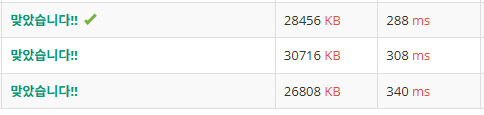
보르푸카의 실전성은 떨어지지만 성능적인 면에서 우수한 점이 돋보인다고 할 수 있다.