Decoding IP65 and IK10: The Science Behind High-Impact LED Bulkhead Protection
When people shop for LED bulkhead lights, the conversation almost always drifts toward two short codes: IP65 and IK10.
They look simple, yet they quietly decide whether a fixture survives years of moisture, dust, vibration, and accidental—or intentional—impact.
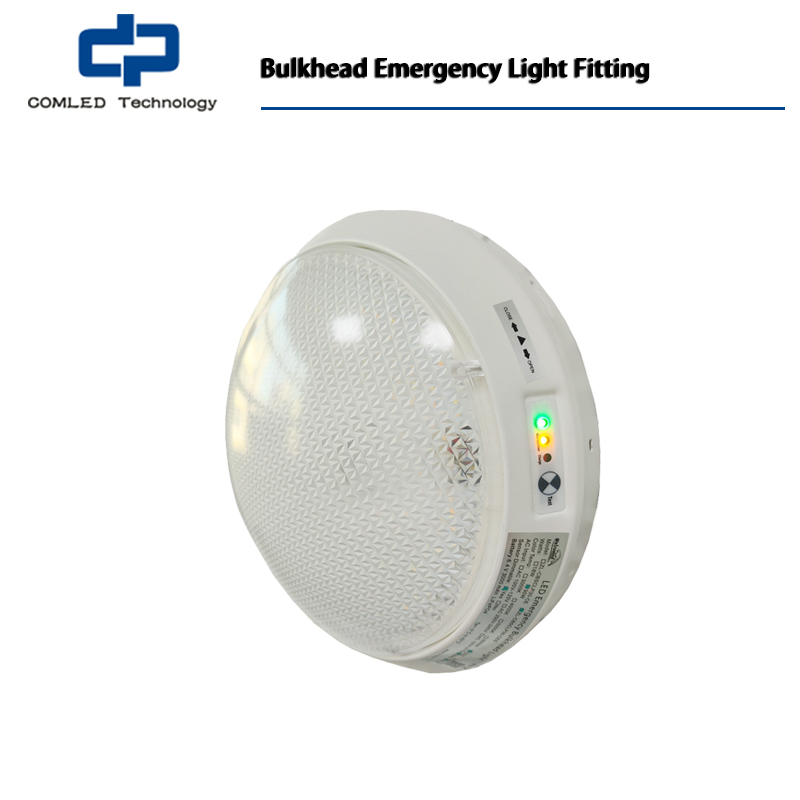
This article takes those codes apart, not as abstract standards, but as practical engineering choices that matter on real projects. If you’re specifying, purchasing, or customizing LED bulkhead fixtures, this is the context that turns labels into confident decisions.
Why IP65 and IK10 Matter in LED Bulkhead Applications
Bulkhead lights rarely live in friendly places.
They sit in corridors, stairwells, parking structures, warehouses, and service areas where water splashes, dust floats, and equipment bumps into walls.
In these environments, brightness alone means very little.
Protection ratings define whether the light keeps working after years of abuse—or becomes a maintenance problem.
That’s why IP65 and IK10 often appear together in professional LED bulkhead specifications.
Understanding IP Ratings in LED Bulkhead Lights
IP stands for “Ingress Protection.”
In plain terms, it measures how well a fixture keeps unwanted things out.
An IP rating always has two numbers. Each one answers a different question.
What IP65 Really Means for LED Bulkhead Protection
The first digit, 6, is about solid particles.
It indicates complete protection against dust ingress. Even fine particles cannot enter the enclosure in a way that affects performance.
The second digit, 5, focuses on liquids.
It confirms that the LED bulkhead can withstand water jets from any direction without internal damage.
Together, IP65 tells you the fixture is sealed tightly enough for humid, dusty, and wash-down environments, without needing extra covers or protective housings.
IP65 vs Lower IP Ratings: Practical Differences
A bulkhead rated IP44 may survive light splashes, but it is not designed for persistent moisture.
IP54 improves dust resistance, yet fine particles can still creep in over time.
IP65 is the threshold where long-term reliability changes.
Seals, gaskets, cable entries, and housing joints are all engineered with continuous exposure in mind, not occasional accidents.
The Engineering Behind IP65 LED Bulkhead Construction
Achieving IP65 is not a single component decision.
It’s a system-level design.
High-quality LED bulkhead fixtures typically rely on precision-molded housings, continuous silicone or rubber gaskets, and controlled fastening torque to avoid micro-gaps.
Even the cable entry and wiring terminals are part of the IP equation, not afterthoughts.
What IK Ratings Mean in LED Bulkhead Lighting
While IP deals with what tries to get inside, IK ratings deal with what hits the outside.
IK measures resistance to mechanical impact.
Think accidental knocks from carts, tools, ladders—or deliberate vandalism.
IK10 Explained: High-Impact Protection in Real Terms
IK10 is the highest standard defined for impact resistance.
It means the fixture can withstand a 20-joule impact without losing functionality or safety.
To visualize it, imagine a heavy object striking the bulkhead with force equivalent to a strong, deliberate blow.
An IK10-rated LED bulkhead is built to absorb that energy, not crack under it.
Why IK10 Is Critical for LED Bulkhead Fixtures
Bulkhead lights are often wall-mounted at reachable height.
That makes them vulnerable.
In stairwells, public access areas, and industrial corridors, impact resistance directly affects service life.
A cracked diffuser doesn’t just look bad—it compromises IP protection and electrical safety.
IK10 ensures the housing and diffuser work as a single protective shell.
Materials That Enable IK10 LED Bulkhead Performance
IK10 performance doesn’t come from thickness alone.
It comes from material behavior.
Impact-resistant polycarbonate diffusers, reinforced housings, and controlled flexibility allow the fixture to dissipate energy instead of shattering.
This balance between rigidity and resilience is where experienced LED bulkhead design shows its value.
How IP65 and IK10 Work Together in LED Bulkhead Design
IP65 and IK10 are not isolated features.
They reinforce each other.
A fixture that resists impact but cracks under stress loses its water seal.
A well-sealed light that shatters on impact fails just as quickly.
When both ratings are engineered together, the result is a bulkhead light that stays sealed, stable, and safe even after repeated abuse.
Common Misconceptions About IP65 and IK10 LED Bulkheads
One common mistake is assuming all IP65 lights are impact resistant.
They are not.
Another is thinking IK10 only matters in public areas.
In industrial settings, accidental impacts are often more frequent than vandalism.
Protection ratings should match the environment, not assumptions.
Choosing IP65 IK10 LED Bulkhead Lights for Your Project
When specifying LED bulkhead fixtures, look beyond the headline numbers.
Check how the housing is constructed, how the diffuser locks into place, and how wiring is sealed.
These details determine whether IP65 and IK10 remain valid after years of use, not just on a test bench.
Customization options such as sensor control or emergency backup should also integrate seamlessly without compromising protection.
Long-Term Value of IP65 IK10 LED Bulkhead Fixtures
Higher protection ratings reduce downtime, maintenance visits, and replacement costs.
Over the life of a project, this reliability often outweighs the initial investment.
For facilities managers and procurement teams, IP65 and IK10 are less about compliance and more about predictability.
Final Thoughts: Turning Ratings into Reliable Lighting
IP65 and IK10 are not marketing buzzwords.
They are condensed summaries of real engineering decisions inside an LED bulkhead light.
Understanding what sits behind those codes helps you specify fixtures that last, perform consistently, and protect both people and property.
In demanding environments, that knowledge is what turns lighting from a recurring issue into a solved problem.