1. 인터페이스 지원 - QuerydslPredicateExecutor
2. Querydsl Web 지원
3. 리포지토리 지원 - QuerydslRepositorySupport
4. Querydsl 지원 클래스 직접 만들기
1. 인터페이스 지원 - QuerydslPredicateExecutor
공식 URL: https://docs.spring.io/spring-data/jpa/docs/2.2.3.RELEASE/reference/html/#core.extensions.querydsl
repository 에 interface 상속

테스트 코드
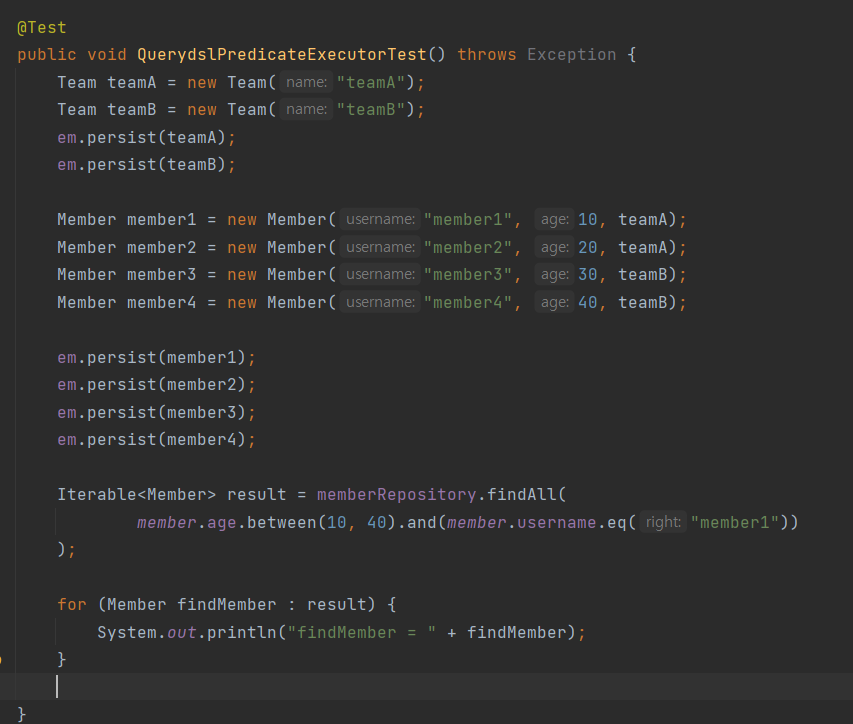
한계점
조인X (묵시적 조인은 가능하지만 left join이 불가능하다.)
클라이언트가 Querydsl에 의존해야 한다. 서비스 클래스가 Querydsl이라는 구현 기술에 의존해야 한다.
복잡한 실무환경에서 사용하기에는 한계가 명확하다.
참고: QuerydslPredicateExecutor 는 Pagable, Sort를 모두 지원하고 정상 동작한다.
2. Querydsl Web 지원 (샘플코드 X)
공식 URL: https://docs.spring.io/spring-data/jpa/docs/2.2.3.RELEASE/reference/html/#core.web.type-safe
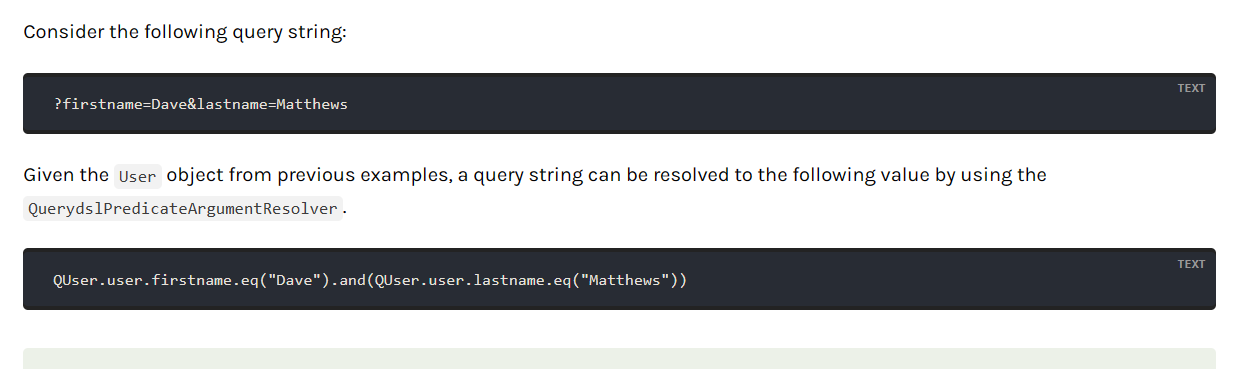
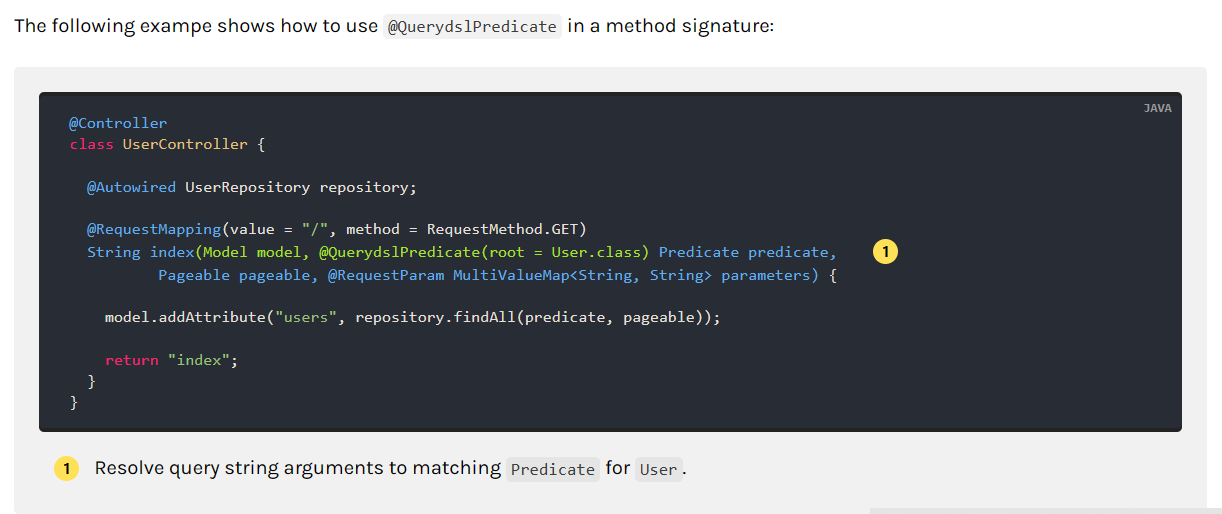
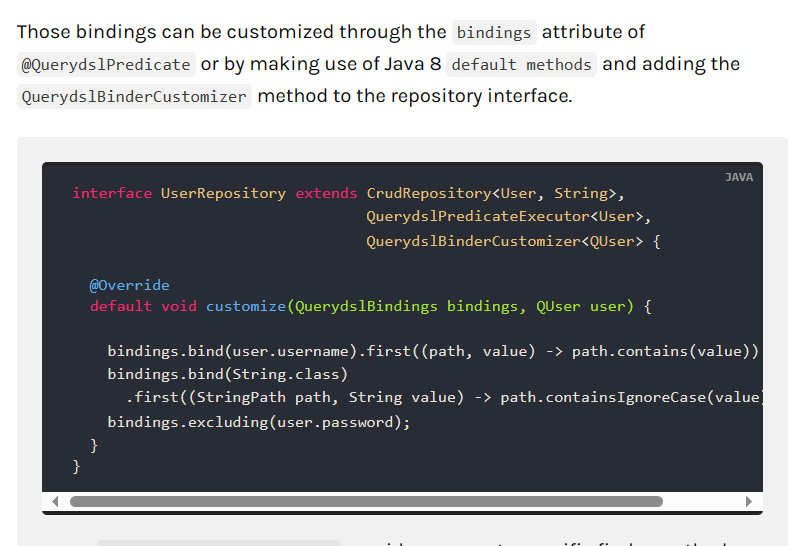
한계점 ( 단점이 너무 명확)
단순한 조건만 가능
조건을 커스텀하는 기능이 복잡하고 명시적이지 않음
컨트롤러가 Querydsl에 의존
복잡한 실무환경에서 사용하기에는 한계가 명확
3. 리포지토리 지원 - QuerydslRepositorySupport
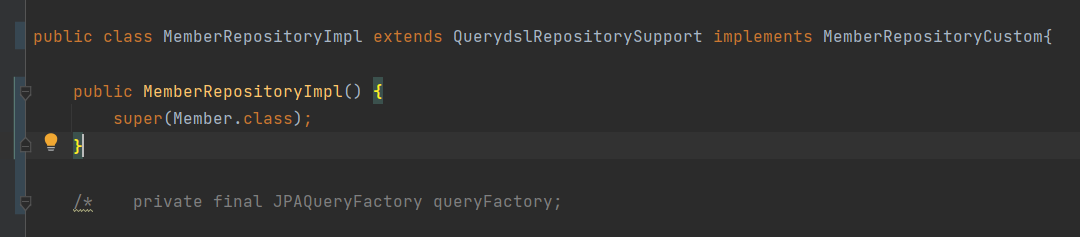
장점
getQuerydsl().applyPagination() 스프링 데이터가 제공하는 페이징을 Querydsl로 편리하게 변환 가능(단! Sort는 오류발생)
from() 으로 시작 가능(최근에는 QueryFactory를 사용해서 select() 로 시작하는 것이 더 명시적)
EntityManager 제공
한계
Querydsl 3.x 버전을 대상으로 만듬
Querydsl 4.x에 나온 JPAQueryFactory로 시작할 수 없음
select로 시작할 수 없음 (from으로 시작해야함)
QueryFactory 를 제공하지 않음
스프링 데이터 Sort 기능이 정상 동작하지 않음
4. Querydsl 지원 클래스 직접 만들기
스프링 데이터가 제공하는 QuerydslRepositorySupport 가 지닌 한계를 극복하기 위해 직접 Querydsl 지원 클래스를 만들어보자.
장점
- 스프링 데이터가 제공하는 페이징을 편리하게 변환
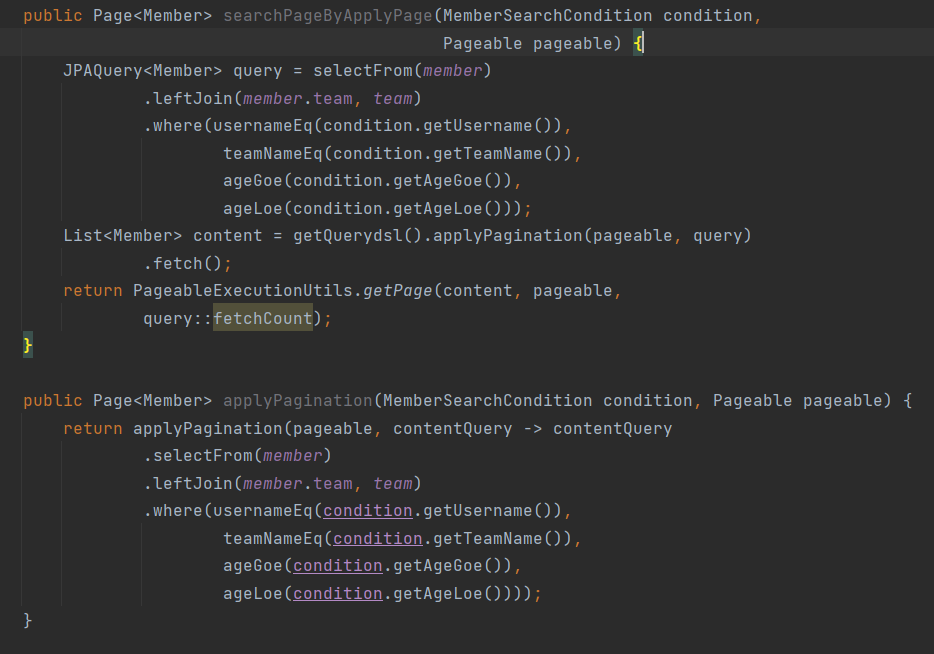
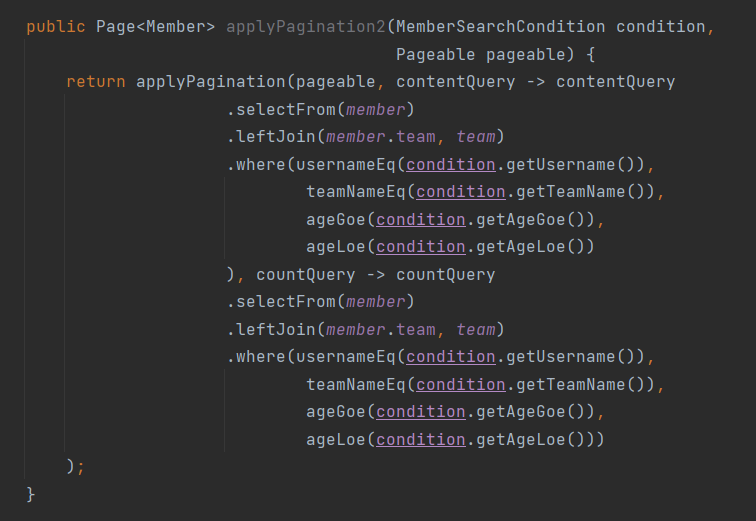
- 페이징과 카운트 쿼리 분리 가능
- 스프링 데이터 Sort 지원
- select() , selectFrom() 으로 시작 가능
- EntityManager , QueryFactory 제공
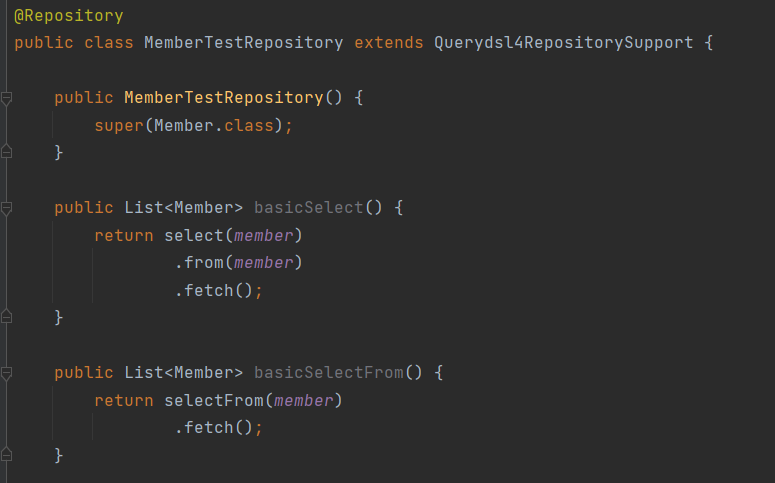
Querydsl4RepositorySupport
package study.querydsl.repository.support;

import com.querydsl.core.types.EntityPath;
import com.querydsl.core.types.Expression;
import com.querydsl.core.types.dsl.PathBuilder;
import com.querydsl.jpa.impl.JPAQuery;
import com.querydsl.jpa.impl.JPAQueryFactory;
import org.springframework.beans.factory.annotation.Autowired;
import org.springframework.data.domain.Page;
import org.springframework.data.domain.Pageable;
import org.springframework.data.jpa.repository.support.JpaEntityInformation;
import
        org.springframework.data.jpa.repository.support.JpaEntityInformationSupport;
import org.springframework.data.jpa.repository.support.Querydsl;
import org.springframework.data.querydsl.SimpleEntityPathResolver;
import org.springframework.data.repository.support.PageableExecutionUtils;
import org.springframework.stereotype.Repository;
import org.springframework.util.Assert;
import javax.annotation.PostConstruct;
import javax.persistence.EntityManager;
import java.util.List;
import java.util.function.Function;
/**
 * Querydsl 4.x 버전에 맞춘 Querydsl 지원 라이브러리
 *
 * @author Younghan Kim
 * @see
 org.springframework.data.jpa.repository.support.QuerydslRepositorySupport
 */

@Repository
public abstract class Querydsl4RepositorySupport {
    private final Class domainClass;
    private Querydsl querydsl;
    private EntityManager entityManager;
    private JPAQueryFactory queryFactory;

    public Querydsl4RepositorySupport(Class<?> domainClass) {
        Assert.notNull(domainClass, "Domain class must not be null!");
        this.domainClass = domainClass;
    }

    @Autowired
    public void setEntityManager(EntityManager entityManager) {
        Assert.notNull(entityManager, "EntityManager must not be null!");
        JpaEntityInformation entityInformation =
                JpaEntityInformationSupport.getEntityInformation(domainClass, entityManager);
        SimpleEntityPathResolver resolver = SimpleEntityPathResolver.INSTANCE;
        EntityPath path = resolver.createPath(entityInformation.getJavaType());
        this.entityManager = entityManager;
        this.querydsl = new Querydsl(entityManager,
                new PathBuilder<>(path.getType(), path.getMetadata()));
        this.queryFactory = new JPAQueryFactory(entityManager);
    }
    @PostConstruct
    public void validate() {
        Assert.notNull(entityManager, "EntityManager must not be null!");
        Assert.notNull(querydsl, "Querydsl must not be null!");
        Assert.notNull(queryFactory, "QueryFactory must not be null!");
    }
    protected JPAQueryFactory getQueryFactory() {
        return queryFactory;
    }
    protected Querydsl getQuerydsl() {
        return querydsl;
    }
    protected EntityManager getEntityManager() {
        return entityManager;
    }
    protected <T> JPAQuery<T> select(Expression<T> expr) {
        return getQueryFactory().select(expr);
    }
    protected <T> JPAQuery<T> selectFrom(EntityPath<T> from) {
        return getQueryFactory().selectFrom(from);
    }
    protected <T> Page<T> applyPagination(Pageable pageable,
                                          Function<JPAQueryFactory, JPAQuery> contentQuery) {
        JPAQuery jpaQuery = contentQuery.apply(getQueryFactory());
        List<T> content = getQuerydsl().applyPagination(pageable, jpaQuery).fetch();

        return PageableExecutionUtils.getPage(content, pageable, jpaQuery::fetchCount);
    }
    protected <T> Page<T> applyPagination(Pageable pageable,
                                          Function<JPAQueryFactory, JPAQuery> contentQuery, Function<JPAQueryFactory,
            JPAQuery> countQuery) {
        JPAQuery jpaContentQuery = contentQuery.apply(getQueryFactory());
        List<T> content = getQuerydsl().applyPagination(pageable, jpaContentQuery).fetch();
        JPAQuery countResult = countQuery.apply(getQueryFactory());

        return PageableExecutionUtils.getPage(content, pageable, countResult::fetchCount);
    }
}
Querydsl4RepositorySupport 사용 코드