Enterprise ETL Solutions Transforming Modern Data Pipelines
Introduction
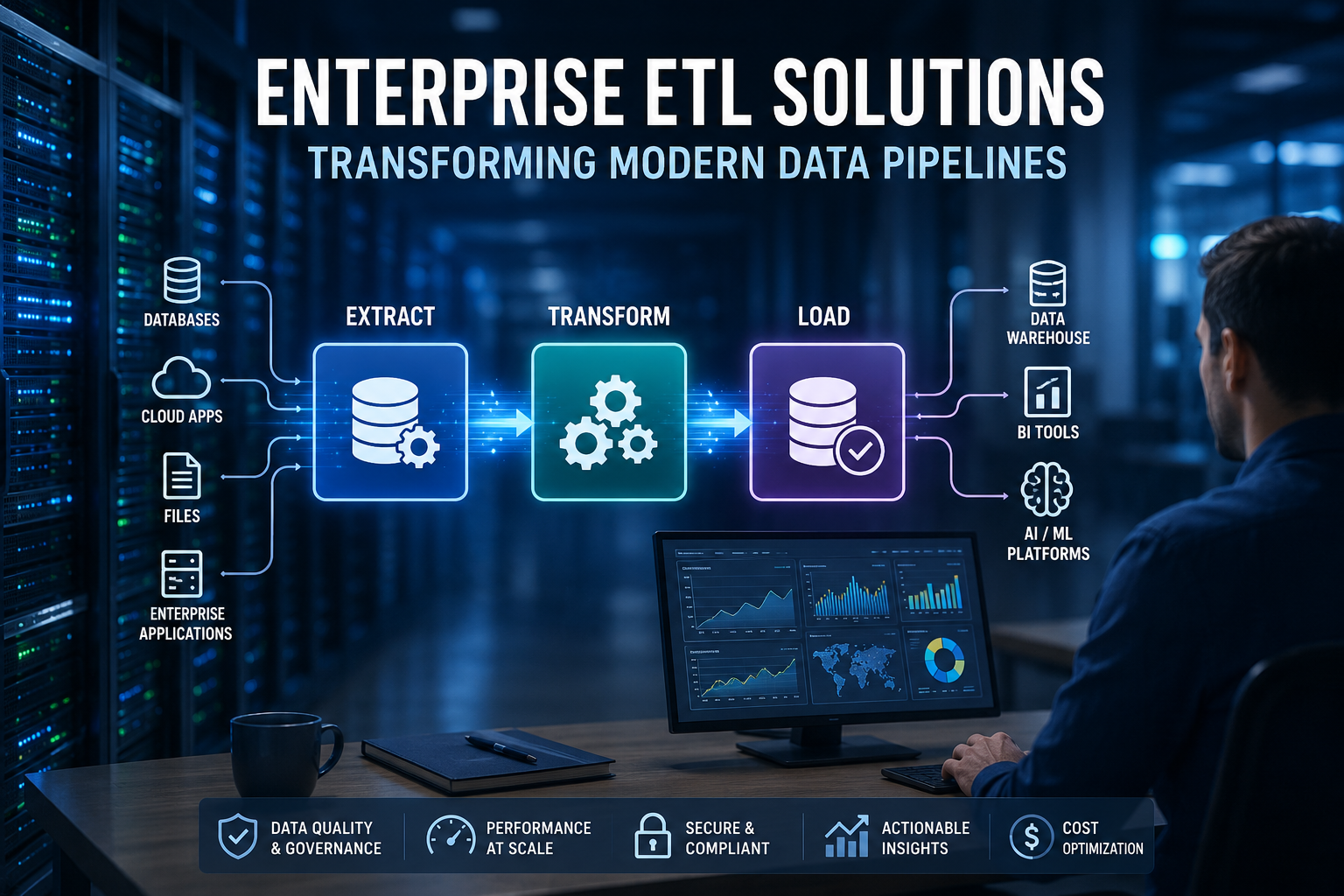
Every large organization today runs on data, yet most of that data arrives in messy, disconnected forms. Sales numbers sit in one system, customer records in another, and operational logs somewhere else entirely. Making sense of this scattered information is exactly why enterprise ETL solutions have become such a critical part of business technology stacks. These platforms extract information from multiple sources, transform it into a consistent and usable format, and load it into a central warehouse or lake where teams can actually work with it. What used to be a back-office IT concern has turned into a boardroom priority, because the speed and accuracy of decision-making now depend directly on how well data moves through an organization.
The Shift Toward Enterprise ETL Solutions
A decade ago, many companies relied on manual spreadsheets or small in-house scripts to move data between systems. That approach worked when data volumes were small and business needs were simple. As companies scaled and started collecting data from cloud applications, IoT devices, mobile apps, and third-party APIs, those old methods broke down quickly. This is where enterprise ETL solutions stepped in to fill the gap. They are built to handle massive volumes of structured and unstructured data without breaking under pressure, and they automate processes that once required entire teams working around the clock.
The shift is not just about handling more data; it is about handling it correctly. Poor data quality leads to flawed reporting, missed opportunities, and compliance risks. Reliable enterprise ETL solutions address these concerns by validating, cleaning, and standardizing data before it ever reaches a dashboard or analytics tool.
What Makes Enterprise ETL Solutions Different
Not every data integration tool qualifies as enterprise grade. A genuine enterprise-level platform needs to support high-volume processing, complex transformation logic, and strict security requirements simultaneously. It also needs to work across hybrid environments, since most large companies still operate a mix of on-premises systems and cloud infrastructure. Strong enterprise ETL solutions are designed with this hybrid reality in mind, offering connectors that link legacy databases with modern cloud warehouses without forcing a company to rebuild its entire architecture.
Scalability is another defining trait. A small business tool might struggle once data volume crosses a certain threshold, but true enterprise ETL solutions are engineered to scale horizontally, adding processing power as needed without major re-engineering. Governance features, audit trails, and role-based access controls are also baked in, which matters greatly for industries like finance, healthcare, and insurance where regulatory scrutiny is constant.
Key Benefits Businesses Gain
Organizations that invest in dependable enterprise ETL solutions typically notice improvements that go well beyond faster data movement. Reporting becomes more trustworthy because the underlying data has already been cleaned and standardized. Teams spend less time chasing down discrepancies between systems and more time actually analyzing trends. Automation also reduces the burden on IT staff, freeing skilled engineers to focus on higher-value projects instead of babysitting nightly data jobs.
There is a financial angle as well. Downtime, duplicated records, and inconsistent metrics all carry hidden costs. A well-implemented enterprise ETL solution reduces these inefficiencies, which often translates into measurable savings over time. Faster access to unified data also supports quicker product decisions, more accurate forecasting, and better customer experiences, since teams are working from the same version of the truth rather than conflicting spreadsheets.
Choosing the Right Platform
Selecting among the many enterprise ETL solutions available today requires looking past marketing claims and evaluating actual technical fit. Companies should consider how well a platform integrates with their existing data sources, whether it supports real-time or near-real-time processing, and how transparent its pricing structure is as data volumes grow. Vendor support quality matters too, since enterprise deployments often involve custom configurations that benefit from responsive technical assistance.
It also helps to involve both technical and business stakeholders in the evaluation process. IT teams can assess architecture and security, while business users can confirm that the resulting data outputs actually meet reporting and analytics needs. Skipping this collaborative step often leads to tools that look impressive on paper but fail to deliver practical value once deployed.
Common Implementation Challenges
Even the best enterprise ETL solution can run into friction during rollout. Legacy systems sometimes lack modern APIs, requiring custom connectors that take extra development time. Data quality issues that were previously hidden often surface during migration, forcing teams to clean up years of accumulated inconsistencies. Change management is another hurdle, since staff accustomed to old workflows may resist new processes.
Successful organizations tend to treat implementation as a phased journey rather than a single event. Starting with a limited set of high-priority data sources allows teams to refine their approach before expanding across the entire enterprise. This gradual rollout also builds internal confidence in the new system.
Future Outlook
Artificial intelligence and machine learning are increasingly being woven into ETL platforms, allowing systems to detect anomalies, suggest transformation rules, and even predict pipeline failures before they occur. As real-time analytics becomes standard rather than optional, the next generation of enterprise ETL solutions will likely emphasize speed and intelligent automation even more heavily than today's tools.
Final Thoughts
Data will only keep growing in volume and complexity, making reliable integration infrastructure more important than ever. Businesses that choose dependable enterprise ETL solutions position themselves to make faster, better-informed decisions while avoiding the costly pitfalls of fragmented, inconsistent data. The organizations that treat this as a strategic investment rather than a technical afterthought are the ones most likely to stay competitive in an increasingly data-driven economy.