생성자
클래스_이름()
호출 순서
#include <iostream>
using namespace std;
class character {
public:
character() {
cout << "character 클래스 생성자" << endl;
}
};
class monster {
public:
monster() {
cout << "monster 클래스 생성자" << endl;
}
};
class monster_a : public monster, character {
public:
monster_a() {
cout << "monster_a 클래스 생성자" << endl;
}
};
int main() {
monster_a forestMonster;
return 0;
}
기본 생성자
class monster{
public:
monster(){...};
};
class monster_a : public monster{
public:
monster_a() {...};
monster_a(int x, int y) {...};
monster_a(int z_order) : z_order(z_order) {...};
monster_a(monster_a & copy_monster) {...};
};
생성자에서 다른 생성자 호출
class monster_a : public monster, character {
public:
monster_a() : monster_a(10, 10) {
cout << "monster_a 클래스 생성자" << endl;
}
monster_a(int x, int y) : location(x, y) {
cout << "monster_a 클래스 생성자(매개변수 추가)" << endl;
}
void show_location() {
cout << "위치(" << location[0] << ", " << location[1] << ")" << endl;
}
private:
int location[2];
};
int main(){
monster_a wood_monster;
wood_monster.show_location();
return 0;
}
복사 생성자
얕은 복사
- 기본 복사 생성자
- 포인터 변수가 있을 경우 주소값만 복사됨
- 주소값이 같으므로 같은 메모리를 공유함 -> 값 변경 또는 delete위험성 있음
깊은 복사
- 포인터 변수가 있을 경우 레퍼런스로 원본 값을 가져와서 새 메모리, 값 복사를 해줌
- 한 객체를 수정해도 서로 영향 없음
class monster {
public:
int* hp;
monster(int v) {
hp = new int(v);
}
monster(const monster& other) {
hp = new int(*other.hp);
}
};
class monster_b : public monster, character {
public:
monster_b(player& attack_target) : monster_type("일반"), location{ 0, 0 }, unique_id(++total_count), target(attack_target) {
difficult_level = 10;
quiz = new char[1024];
};
~monster_b() {
delete[]quiz;
total_count--;
}
monster_b(const monster_b& ref);
void set_quiz(const char* new_quiz) { strcpy_s(quiz, 1024, new_quiz); };
void set_type(string type) { monster_type = type; }
void set_difficult_level(int level) { difficult_level = level; }
void set_location(int x, int y) { location[0] = x; location[1] = y; }
char* get_quiz() { return quiz; }
string get_type() { return monster_type; }
int get_difficult_level() { return difficult_level; }
int get_x_location() { return location[0]; }
int get_y_location() { return location[1]; }
private:
string monster_type;
int location[2];
static int total_count;
const int unique_id;
player& target;
int difficult_level;
char* quiz;
};
int monster_b::total_count = 0;
monster_b::monster_b(const monster_b& ref) : unique_id(++total_count), target(ref.target) {
quiz = new char[1024];
strcpy_s(quiz, strlen(ref.quiz) + 1, ref.quiz);
monster_type = ref.monster_type;
difficult_level = ref.difficult_level;
location[0] = ref.location[0];
location[1] = ref.location[1];
}
소멸자
- 객체가 소멸할 때 필요한 메모리 해제나 외부 환경을 객체 생성이전 상태로 변경하는 등의 일을 함
~클래스_이름()
~monster_b() {
delete[]quiz;
total_count--;
}
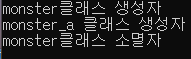
- virtual 키워드 안쓰면 자식 클래스 소멸자 호출 x
#include <iostream>

using namespace std;

class monster {
public:
	monster() {
		cout << "monster클래스 생성자" << endl;
	}
	~monster() {
		cout << "monster클래스 소멸자" << endl;
	}
};
class monster_a : public monster {
public:
	monster_a() {
		cout << "monster_a 클래스 생성자" << endl;
	}
	~monster_a() {
		cout << "monster_a 클래스 소멸자" << endl;
	}
};

int main() {
	monster* forest_monster = new monster_a();
	delete forest_monster;
	return 0;
}
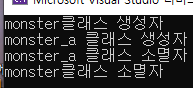
- virtual키워드로 가상소멸자로 만들면 부모 객체가 소멸할 때 자식 객체도 소멸
#include <iostream>

using namespace std;

class monster {
public:
	monster() {
		cout << "monster클래스 생성자" << endl;
	}
	virtual ~monster() {
		cout << "monster클래스 소멸자" << endl;
	}
};
class monster_a : public monster {
public:
	monster_a() {
		cout << "monster_a 클래스 생성자" << endl;
	}
	virtual ~monster_a() {
		cout << "monster_a 클래스 소멸자" << endl;
	}
};

int main() {
	monster* forest_monster = new monster_a();
	delete forest_monster;
	return 0;
}