The Future of Kitchen Ventilation: Advanced Stove Top Exhaust Hoods
Every home cook knows the feeling: you finish a meal, but the kitchen lingers with you long after — in the form of grease-laden air, stubborn odors, and a faint haze that seems to settle on every surface. Indoor air pollution from cooking is a surprisingly significant health concern, and yet the appliance designed to combat it is often selected as an afterthought. The stove top exhaust hood deserves far more attention than it typically receives.
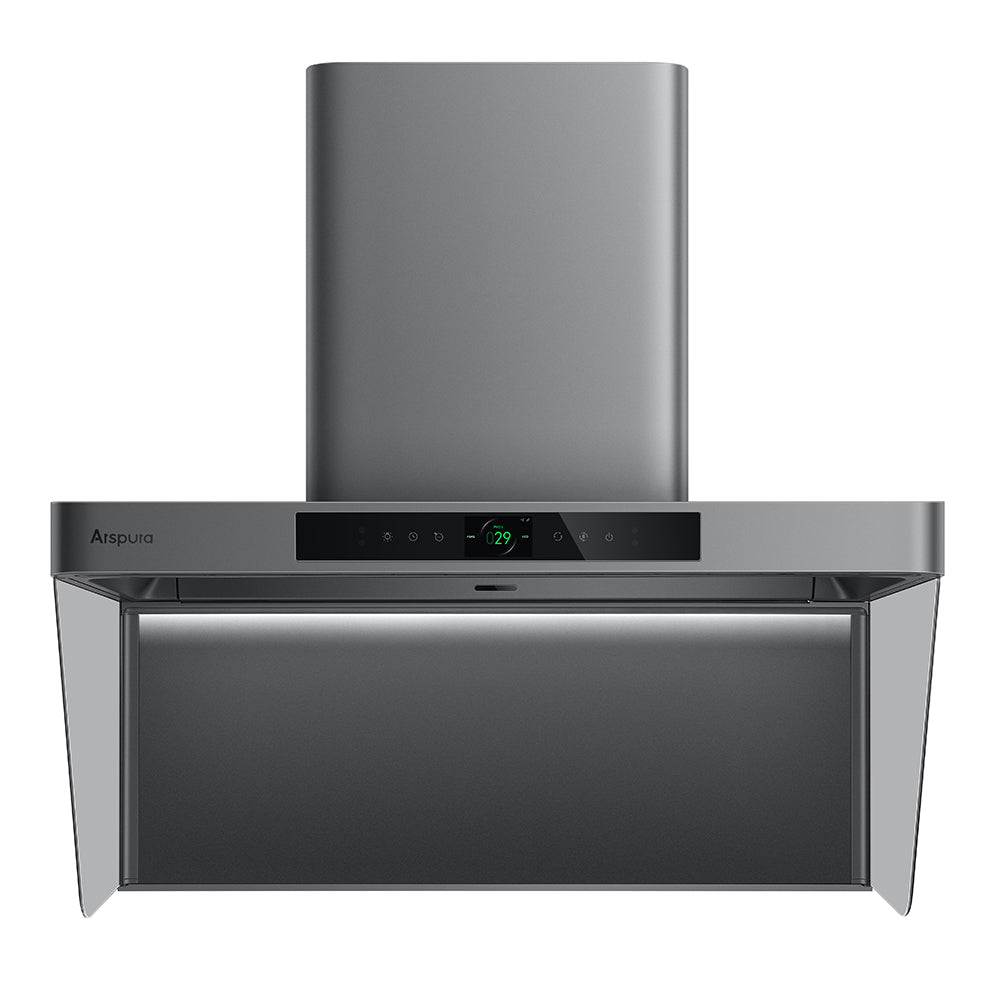
Kitchen appliance technology has advanced dramatically over the past decade, moving well beyond the simple ceiling fan awkwardly mounted above a range. Today's range hoods are sophisticated air management systems, engineered for high smoke capture efficiency, whisper-quiet operation, and seamless integration into even the most design-forward spaces. For interior designers and kitchen planners, understanding this evolution is no longer optional — it is a professional imperative.
This article serves as a practical guide for design professionals navigating the rapidly expanding landscape of advanced kitchen ventilation. We will explore how modern hoods address critical health and comfort needs, examine the design strategies that make them either bold focal points or invisible assets, decode the key features that separate entry-level units from truly high-performance systems, and look ahead at the innovations reshaping what kitchen ventilation can do. The goal is to equip designers with the knowledge to deliver kitchens that are as healthy and durable as they are beautiful.
Why Modern Ventilation is Non-Negotiable for Today's Kitchens
Cooking is chemistry, and not always the benign kind. Every time a burner ignites, the process releases a complex cocktail of airborne contaminants: grease particles, carbon monoxide, nitrogen dioxide, volatile organic compounds, and water vapor. These byproducts don't simply vanish — they circulate through the home, degrading indoor air quality in ways that rival outdoor pollution in some studies. For clients who cook frequently, particularly on high-output gas ranges, the cumulative exposure is a genuine health concern, not a theoretical one.
Beyond the respiratory impact, these airborne particles wage a slow war on the kitchen itself. Grease deposits accumulate on cabinetry finishes, penetrate wood grain, and dull stone countertops over time. Excess moisture accelerates the warping of cabinet boxes and promotes mold growth within walls if ductwork is improperly managed. A premium kitchen renovation can lose years of its lifespan simply because ventilation was treated as secondary. For design professionals whose reputation is tied to the lasting quality of their work, this is a practical concern as much as an aesthetic one.
The contrast between older ventilation systems and today's advanced models is stark. A decade-old recirculating hood running at full power often produced enough noise to interrupt conversation while barely keeping pace with a medium-heat sauté. Modern ducted systems with DC motors and precision-engineered airflow channels can move significantly more air at a fraction of the acoustic footprint — quiet enough to hold a conversation at the cooktop while operating effectively. This combination of genuine performance and livable noise levels reframes the range hood from a grudging necessity into an active contributor to kitchen comfort, home wellness, and the long-term durability of a carefully designed space.
Design Integration: Marrying Form with High-Function Kitchen Appliance Technology
For interior designers, the range hood presents a unique challenge: it must perform a demanding mechanical function while either commanding attention as a design statement or disappearing entirely into the surrounding architecture. Neither outcome happens by accident. It requires deliberate selection from the outset of a project, not as a last-minute specification.
The style landscape has expanded considerably. Wall-mounted chimney hoods anchor a kitchen's vertical space and work particularly well in open layouts where the cooking area faces a wall — their bold silhouette lending structure to the room. Island hoods suspend from the ceiling above a central cooktop, functioning almost like sculpture, and demand proportional sizing to read correctly in the space. Under-cabinet models tuck neatly beneath upper cabinetry, ideal for traditional or transitional kitchens where visual clutter must be minimized. Downdraft systems retract flush with the countertop when not in use — a compelling choice for minimalist or unobstructed-view designs, though they require careful CFM planning to compensate for drawing air laterally rather than upward. Concealed ceiling-integrated units offer the most invisible solution, housing the motor remotely while only a slim grille remains visible.
Material selection drives the aesthetic conversation. Brushed stainless steel reads as clean and professional, suiting modern and industrial kitchens. Hammered copper brings warmth and handcrafted character to farmhouse and rustic spaces. Custom panel options allow the hood to mirror surrounding cabinetry, effectively vanishing into the millwork — a technique increasingly popular in European-influenced minimalist designs. Brands like Arspura have expanded the material palette further, offering finishes that bridge the gap between industrial performance and residential warmth.
Sizing is non-negotiable for performance. As a baseline, the hood should extend at least three inches beyond each side of the cooking surface, and CFM ratings must account for the range's BTU output — generally 100 CFM per 10,000 BTUs. Duct diameter and run length directly affect airflow efficiency, making early HVAC coordination essential for both visual and functional success.
Case in Point: Selecting the Right Hood for the Design Vision
Matching hood style to design intent becomes intuitive with a clear framework. An open-concept modern loft calls for a sculptural island hood in matte black or stainless steel — powerful enough to handle high-output cooking while anchoring the space visually. A traditional kitchen with full upper cabinetry benefits from a panel-front under-cabinet unit that integrates seamlessly with the surrounding millwork. For a strictly minimalist interior where surfaces must remain uninterrupted, a flush-mounted ceiling system or a retractable downdraft keeps the visual field clean without sacrificing ventilation performance.
Decoding Range Hood Features: From Basic Extraction to Smart Air Management
Understanding what separates a capable hood from a truly advanced one starts with CFM — cubic feet per minute, the standard measure of airflow volume. As a working rule, kitchens with high-output gas ranges should target a minimum of 1 CFM per 100 BTUs, while electric cooktops typically require less. But raw CFM numbers only tell part of the story; how efficiently that air is captured at the source matters just as much as how much the motor can theoretically move.
Filtration design is where many mid-range hoods fall short. Mesh filters, common in budget models, capture some grease but clog quickly and require frequent cleaning to maintain airflow. Baffle filters — the standard in professional and high-performance residential hoods — use a series of angled channels to force air through directional changes, stripping grease particles more effectively while remaining easier to clean. For clients who cook frequently, specifying baffle filters is a straightforward upgrade that pays dividends in both smoke capture efficiency and long-term maintenance.
Noise levels, measured in sones, are a critical but often overlooked specification. A hood operating at 6 or 7 sones at high speed makes conversation at the cooktop nearly impossible. Premium models with DC motors routinely achieve effective ventilation at 1 to 2 sones — a difference that transforms the cooking experience. DC motors also consume significantly less energy than traditional AC counterparts, making them the preferred choice for energy-conscious clients.
Smart features have moved from novelty to genuine utility. Auto-sensing technology detects rising heat or steam and activates the hood automatically, eliminating the need to remember manual operation. Variable speed controls allow precise airflow adjustment, while integrated LED lighting — tunable in color temperature on advanced models — improves task visibility without adding visual clutter. Wi-Fi connectivity enables remote monitoring, filter replacement alerts, and seamless integration with smart home platforms, giving both homeowners and designers a new level of operational control.
A Step-by-Step Guide for Interior Designers: Advising Clients on the Perfect Hood
Selecting the right range hood becomes far less overwhelming when approached as a structured process rather than a single high-stakes decision. The following framework gives designers a repeatable method for arriving at a confident, well-reasoned specification every time.
Start by assessing client needs in concrete terms. Ask how often they cook, what type of range they use, and what their primary frustrations are — persistent odors, visible grease film on surfaces, or excessive noise from an existing unit. These answers directly shape every subsequent decision. A client who entertains frequently and cooks on a high-BTU gas range has fundamentally different requirements than one who prepares light weeknight meals on an induction cooktop.
Next, establish design parameters. Determine how visible the hood should be — statement piece or integrated element — and whether architectural constraints, such as ceiling height or the presence of upper cabinetry, limit the style options available. This step prevents technical backtracking later.
From there, calculate technical requirements. Confirm the range's total BTU output, measure the kitchen's square footage, and map the intended duct run from hood to exterior. These figures establish the minimum CFM needed and flag any duct diameter or run-length limitations that could compromise performance.
With requirements in hand, prioritize features. Separate non-negotiables — quiet operation, effective smoke capture, appropriate CFM — from desirable additions like smart controls or tunable lighting. This keeps the specification grounded in function rather than driven by feature lists.
Finally, present two or three curated options that meet the criteria, clearly explaining the trade-offs of each. And critically, involve an HVAC specialist before finalizing any selection. Duct routing decisions made late in a remodel are expensive to correct and can undermine even the most capable hood's real-world performance.
The Cutting Edge: Innovations Shaping the Future of Kitchen Ventilation
The next generation of range hoods is moving well beyond air extraction into something closer to whole-home environmental management. Heat recovery ventilators, increasingly integrated directly with high-performance hoods, capture thermal energy from exhausted air and transfer it back into the home's ventilation system — a meaningful efficiency gain in climates where heating or cooling costs are significant. For clients investing in energy-efficient homes, this integration bridges kitchen ventilation and broader sustainability goals in a single specification decision.
Advanced air quality sensors represent perhaps the most consequential leap forward. Rather than operating on fixed timer settings or manual activation, next-generation hoods equipped with PM2.5 particulate sensors, VOC detectors, and humidity monitors can read the kitchen's actual air composition in real time and respond accordingly — ramping fan speed up during a high-heat sear and stepping back down once the air clears. This adaptive operation delivers better performance while consuming less energy than hoods running at static speeds. Companies across the home supplies sector, including Arspura, are actively developing product lines that incorporate these sensor-driven capabilities into everyday kitchen environments.
DC motor technology, already standard in premium residential models, continues to improve in both power density and acoustic performance, enabling higher CFM ratings within quieter, more compact housings. Looking further ahead, AI-driven ventilation platforms are beginning to emerge — systems that learn a household's cooking patterns over time and pre-activate ventilation before smoke or steam even develops. Coupled with IoT integration, these hoods can communicate with whole-home air quality systems, adjusting fresh-air intake and filtration across the entire residence in response to what is happening at the cooktop. For design professionals, tracking these developments now positions them to specify solutions that remain genuinely relevant well into the next decade.
Ventilation as a Cornerstone of Holistic Kitchen Design
The stove top exhaust hood has quietly evolved into one of the most consequential appliances in the modern kitchen — not just for what it removes from the air, but for what it preserves: health, surface finishes, cabinetry integrity, and the overall quality of the living environment. For clients investing in premium kitchen renovations, the difference between a capable hood and a mediocre one is measured in years of durability and daily comfort, not merely in cubic feet per minute.
For design professionals, the range hood now occupies a dual role that demands equal attention on both fronts. It must perform as a genuine air management system — delivering high smoke capture efficiency, whisper-quiet operation, and smart adaptive controls — while simultaneously functioning as a cohesive design element, whether as a sculptural focal point or an invisible architectural detail. Neither dimension can be treated as secondary without compromising the finished result.
Designers who engage deeply with ventilation technology — understanding filtration systems, motor performance, sensor capabilities, and emerging innovations like heat recovery integration and AI-driven operation — are positioned to deliver kitchens that remain relevant, functional, and beautiful well into the future. Embracing this knowledge is not a technical detour from design work; it is the foundation of truly holistic kitchen planning, where every specification serves both the space and the people who live in it.
