처음 시작하는 Infrastructure as Code: AWS & 테라폼을 수강하며 정리한 내용입니다.
Terraform state
terraform.tfstate라는 파일명을 가짐apply의 결과를 저장해놓은 상태- 현재 인프라의 상태를 의미하는 것은 아니며
apply로 적용한 시점의 상태 - state는 원격 저장소인 Backend에도 저장될 수 있음
Terraform Backend
개념
- Terraform의 state file을 어디에 저장하고, 어디서 가져올지에 대한 설정
- 기본적으로 로컬 스토리지에 저장
- 설정에 따라서 S3, Consul, ETCD 등 다양한 Backend type을 사용할 수 있음
사용 이유
- Locking: 원격 저장소를 사용하면 동시에 같은 state에 접근하는 것을 막을 수 있음
- Backup: 원격 저장소를 사용함으로써 state 파일의 유실 방지
S3 bucket as Backend
- 테라폼의 상태를 저장하기 위한 S3 버킷 생성
- state 파일이 S3에 저장됨
DynamoDB Table for Lock
- DynamoDB는 AWS에서 제공하는 NoSQL Key-Value Store
- S3 파일의 경로와 Lock을 할 수 있는 파일들이 DynamoDB에 저장
- 동시에 같은 파일을 수정하지 못하도록 하기 위해 DynamoDB에 작업에 대한 Lock을 생성
실습
iam관련state파일을Backend로 옮기기
저장소 생성
init.tf파일을 다음과 같이 작성
provider "aws" {
  region = "ap-northeast-2"
}

# S3 Bucket for Backend
resource "aws_s3_bucket" "tfstate" {
  bucket = "tf101-chori-apne2-tfstate"
}

resource "aws_s3_bucket_versioning" "versioning_tfstate" {
  bucket = aws_s3_bucket.tfstate.id

  versioning_configuration {
    status = "Enabled" # Prevent from deleting tfstate file
  }
}

# DynamoDB for terraform state lock
resource "aws_dynamodb_table" "terraform_state_lock" {
  name = "terraform-lock"
  hash_key = "LockID"
  billing_mode =  "PAY_PER_REQUEST"

  attribute {
    name = "LockID"
    type = "S"
  }
}
terraform init명령어 실행
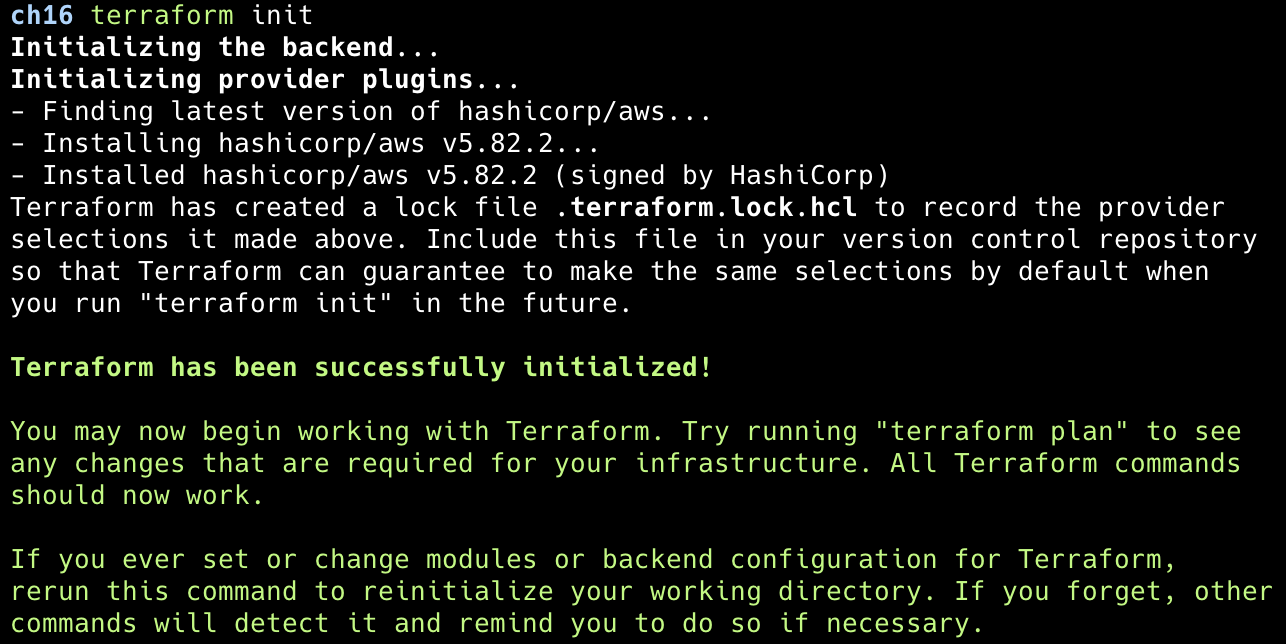
terraform plan을 입력하면 두 가지의 리소스가 만들어질 것이라고 안내됨- 문제가 없으면 'terraform apply'로 리소스 생성
- AWS 콘솔에서 S3가 만들어진 것을 확인
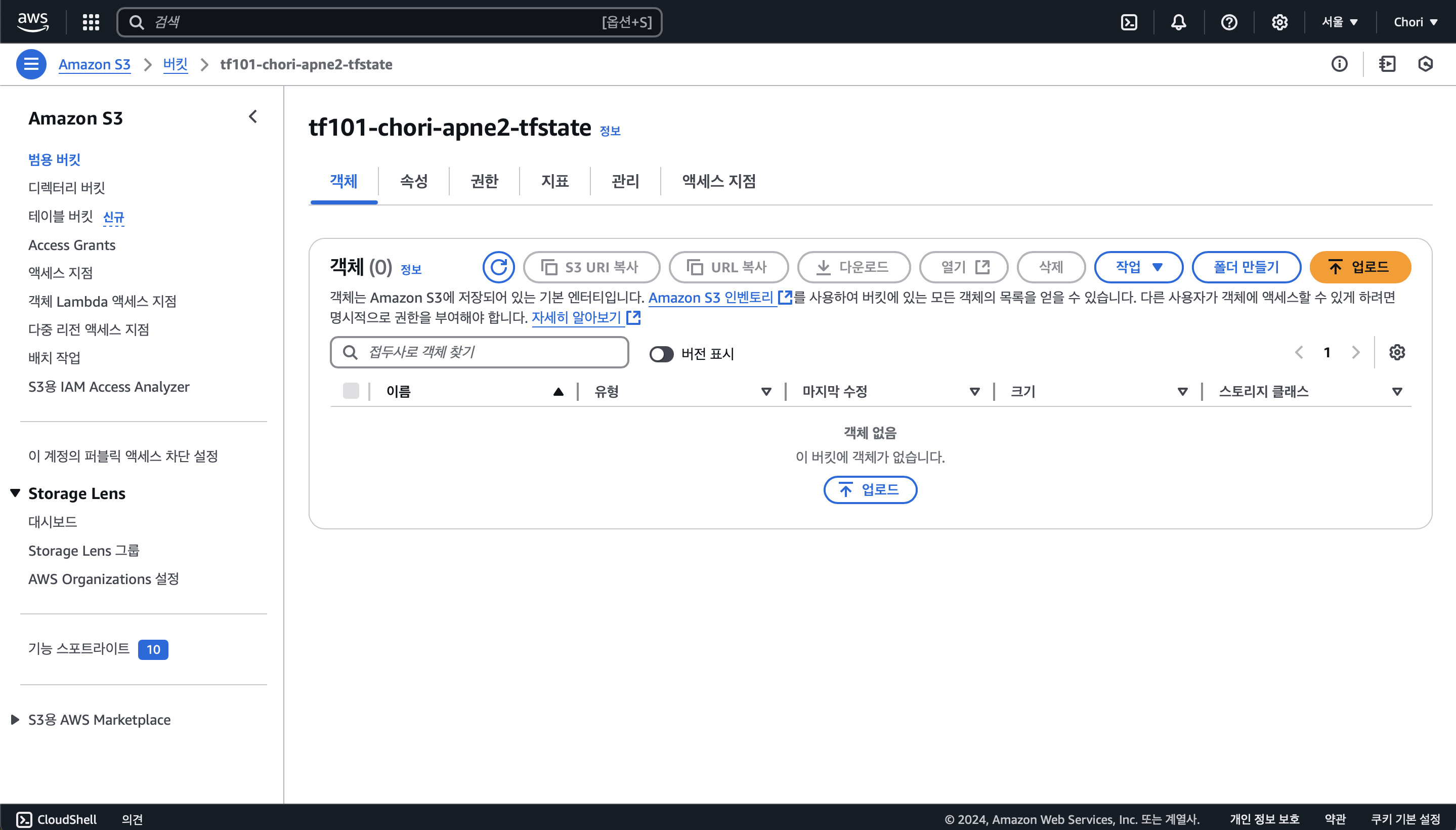
Backend 설정
iam디렉토리에backend.tf파일을 생성하고 아래와 같이 작성
terraform {
  backend "s3" {
    bucket = "tf101-chori-apne2-tfstate"
    key = "workspace/iam/terraform.tfstate"
    region = "ap-northeast-2"
    encrypt = true
    dynamodb_table = "terraform-lock"
  }
}
- backend: Backend의 타입을
s3로 지정- bucket:
s3버킷 이름- key:
s3내에서 저장되는 경로, 실제 경로와 같으면 좋음- region:
s3의 region- encrypt: 암호화 여부
- dynamodb_table: DynamoDB 테이블 지정
- 설정이 끝났으면
terraform init명령어 실행 - 기존의 state를 새로운 Backend로 copy할 것인지(로컬에 있는 파일을 Backend로 옮길 것인지) 물어보면
yes입력
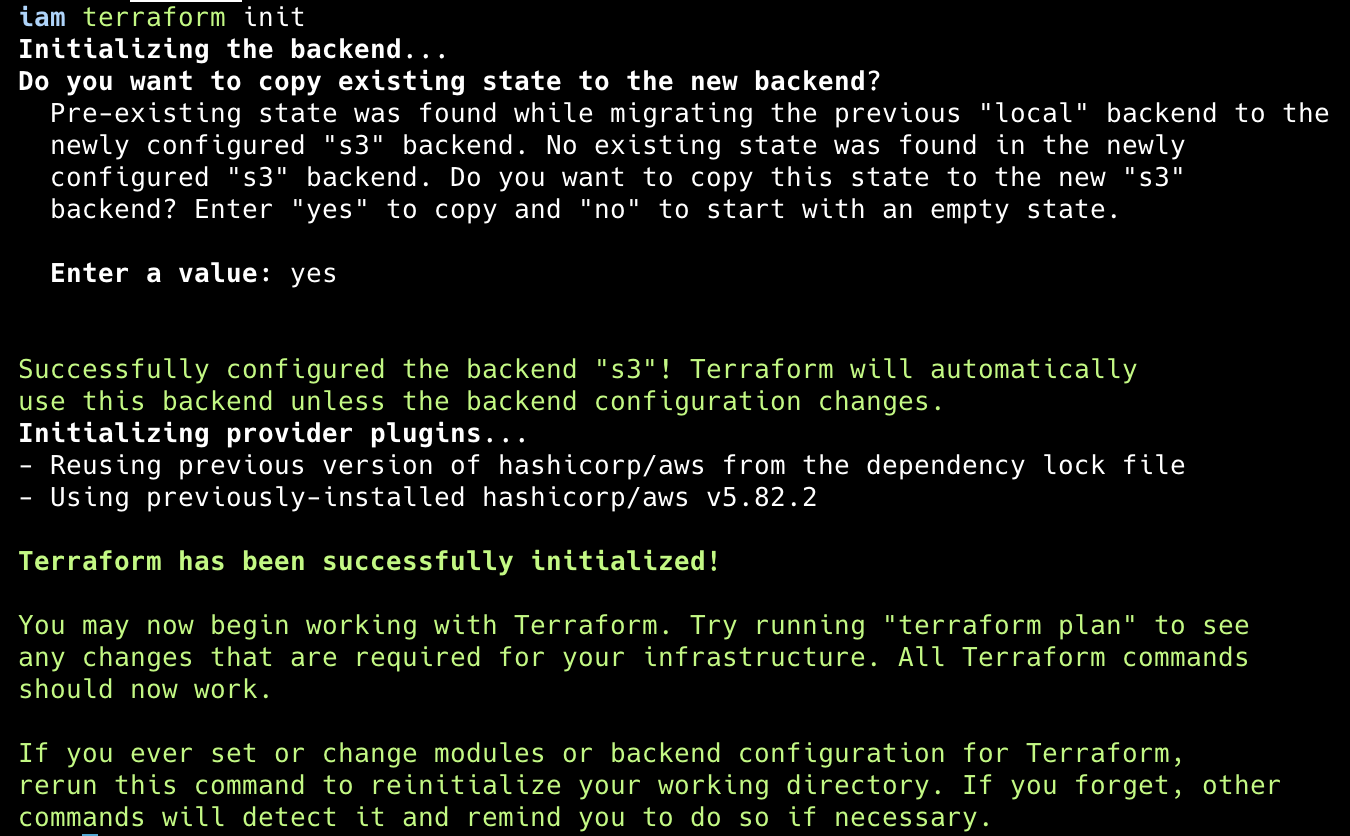
- AWS 콘솔에서
s3버킷에 파일이 업로드된 것을 확인
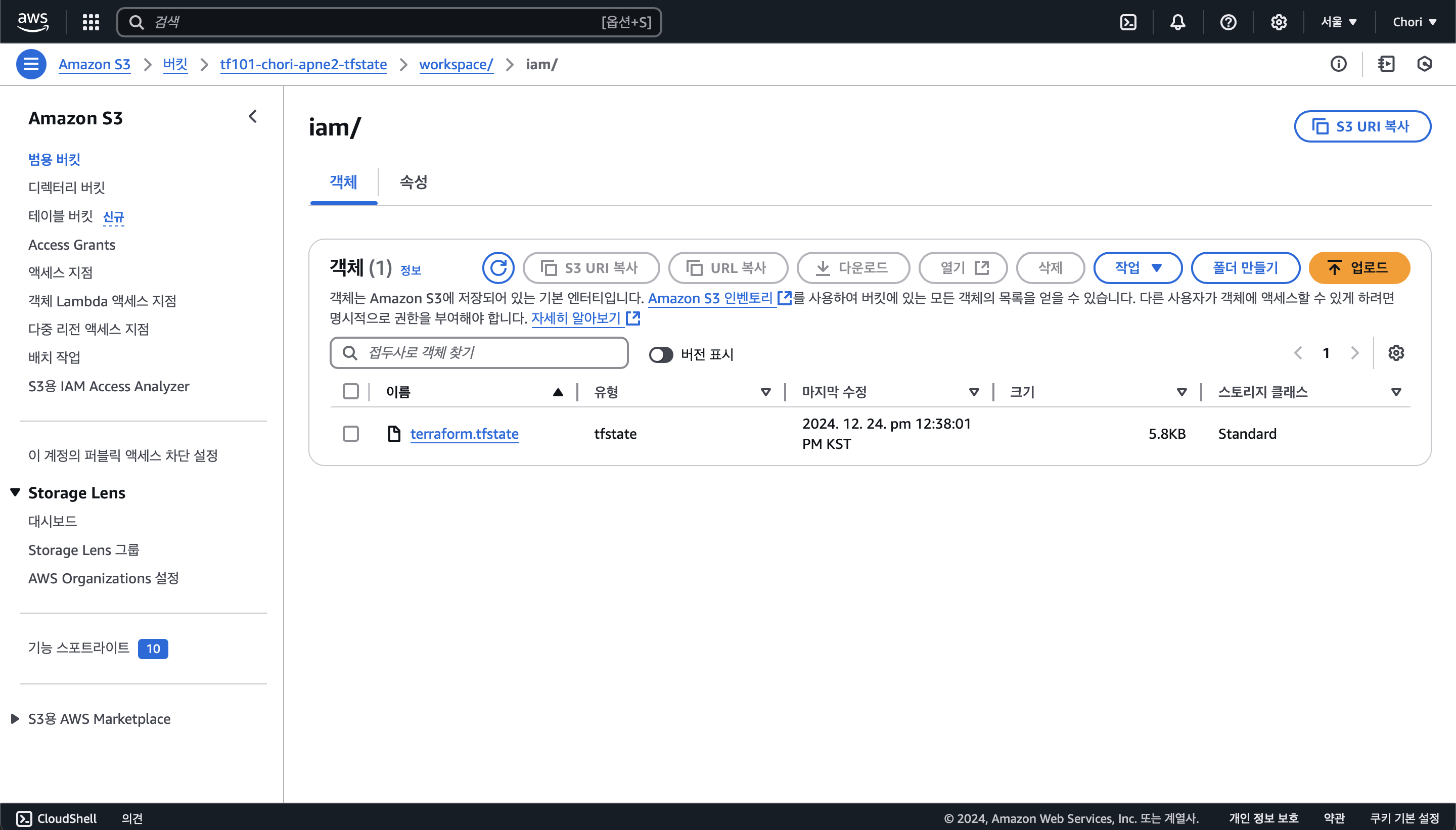
- 그러면 이제 로컬에 있던 state 파일은 쓸모가 없어짐
- 로컬에 state 파일이 없어도 동작하는데 문제가 없음

전부인 것처럼, 전부가 아닌 것처럼