1. 오늘 배운 내용에 대한 요약
1.1 while문
조건의 따라 프로그램의 일정 코드를 반복적으로 수행할 수 있도록 하는 구문
- ex) while(조건){ / 실행될 코드 / }
- continue: 남은 코드 모두 무시
- break: while문 탈출
1.2 do while문
do while은 반드시 한 번은 코드가 실행되고 그 이후 조건을 따짐
1.3 for문
형태: for(var i=0; i<5; i++){ / 반복 실행 / }
1.4 for in문
- object.keys(): 객체의 속성들이 배열로 반환
- 객체의 각 엘리먼트에 접근할 수 있는 반복문.
1.5 scope
- 변수의 scope는 function의 scope를 따른다.
- 객체(변수)는 선언된 함수 안에서만 접근이 가능
1.6 shadowing
함수 안에서 함수 밖에서 선언된 변수와 같은 이름의 변수를 사용할 때
- 함수 밖에 변수는 가려짐(shadowing)
- 함수 안에서 새롭게 선언된 변수를 사용
- 함수 종료 후 함수 밖에 있는 기존 변수 사용 가능
1.7 this
- 일반적인 함수를 호출할 때, 해당 함수 내부에서 사용된 this는 전역객체(브라우저의 경우 window객체)에 바인딩
- 메서드를 호출할 때 this의 값은 인스턴트화 된 객체(해당 메서드를 호출한 객체)를 참조
1.7 closure
- 함수와 environment로 구성
- 함수가 정의 될 때의 environment가 함께 closure로 결합되면서, 다양한 활용이 가능
잘 이해가 안된다면 아래 주소 확인
https://velog.io/@wngud4950/%ED%81%B4%EB%A1%9C%EC%A0%80Closure%EB%9E%80
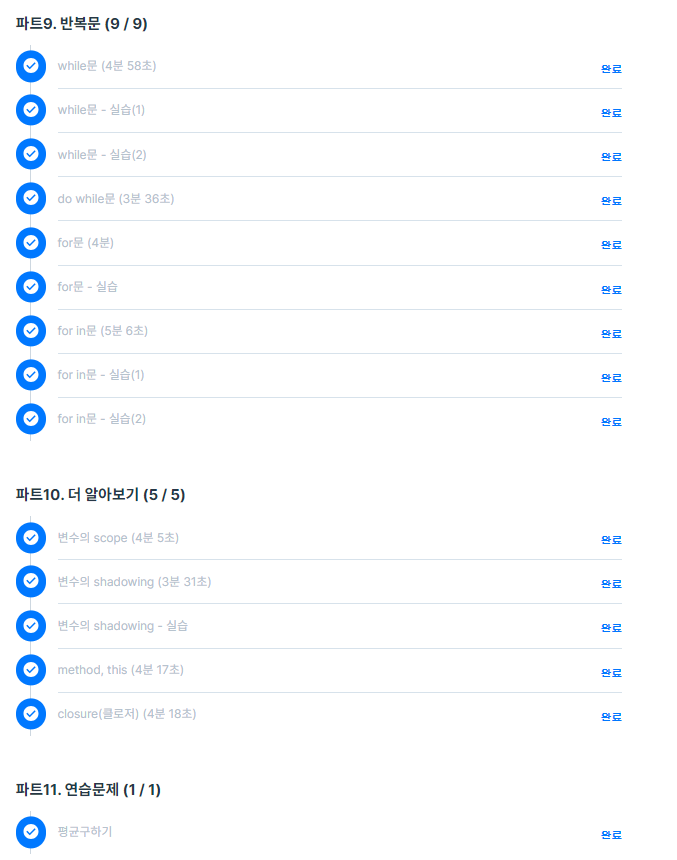
2. 각각의 실습 코드 정리
<!-- while.js-->
cnt= 0;

while(cnt < 3){
	var choice= parseInt(prompt("chooose 1~5"));
	switch(choice){
	case 1:
		alert(1);
		break;
	case 2:
		alert(2);
		break;
	case 3:
		alert(3);
		break;
	case 4:
		alert(4);
		break;
	case 5:
		alert(5);
		break;
	default:
		alert("chooose 1~5");
		break;
	}
	cnt++;
}
<!-- while2.js-->
var cnt= 0;
while(true){
var ans= parseInt(prompt("1+1="));
if(ans!=2){
cnt++;
continue;
}
ans= parseInt(prompt("2+2="));
if(ans!=4){
cnt++;
continue;
}
ans= parseInt(prompt("3+3="));
if(ans!=6){
cnt++;
continue;
}else{
alert(cnt+"번 틀림");
break;
}
}<!-- do_while.js -->
var cnt= 0;
while(true){
var ans= parseInt(prompt("1+1="));
if(ans!=2){
cnt++;
continue;
}
ans= parseInt(prompt("2+2="));
if(ans!=4){
cnt++;
continue;
}
ans= parseInt(prompt("3+3="));
if(ans!=6){
cnt++;
continue;
}else{
alert(cnt+"번 틀림");
break;
}
}<!-- for.js -->
var arr= [1,2,3,4,5,6,7,8,9,10];
for(var i=0; i<arr.length; i++){
console.log(arr[i]);
}<!-- for_in.js -->
var obj= {
name: "object",
weight: 30,
isObject: true,
arr: [1,2,3],
obj: {property:1}
};
var property_list= Object.keys(obj);
console.log(property_list)
for(var i= 0; i<property_list.length; i++){
var propertyName= property_list[i];
console.log("\t", propertyName, ": ", obj[propertyName]);
}
for(var propertyName in obj){
console.log("\t", propertyName, ": ", obj[propertyName]);
},<!-- scope -->
function a(){
var v_a= "a";
function b(){
var v_b= "b";
console.log("b :", typeof(v), typeof(v_a), typeof(v_b));
}
b();
console.log("a :", typeof(v), typeof(v_a), typeof(v_b));
}
var v= "v";
a();
console.log("o :", typeof(v), typeof(v_a), typeof(v_b));<!-- shadowing.js -->
function shadowing_example(){
var val= 0;
console.log("F", val);
val++;
}
var val= 0;
shadowing_example();
console.log("O", val);<!-- this.js -->
function f(){
console.log(this);
console.log("f is called");
}
function setName(name){
this.name= name;
}
var o= {name: "object", method:f, setName:setName};
var o2= {name: "", setName:setName};
o.setName("object1");
o.setName("object2");
console.log(o, o2);<!-- closure.js -->
function makeCounterFunction(initVal){
var cnt= initVal;
function increase(){
cnt++;
console.log(cnt);
}
return increase;
}
var counter1= makeCounterFunction(0);
var counter2= makeCounterFunction(10);
counter1();
counter2();3. 강의 목록 캡쳐