요구사항 정리
목적: 시험 문제를 만들것, 파이썬 문법을 테스트하기 위해서
문제에는
문제,문제설명,입력예시,출력예시 가 있어야한다.
문제 코드는 Python으로 작성되어야 하고
코드에 있는 @@@를 빈칸으로, @@@에 들어갈 것을 채우는 문제로만들어야 한다.
GPT 명령하기
새로운 Chat 열기
요구사항이 정리되어 NEW Chat를 열어서
다시 내용을 입력하려고 한다.
명령1 - 할일 정하기
I want to make exam to test understand python language.

파이썬 언어 이해했는지 테스트하기 위한 문제를 만들고 싶어.
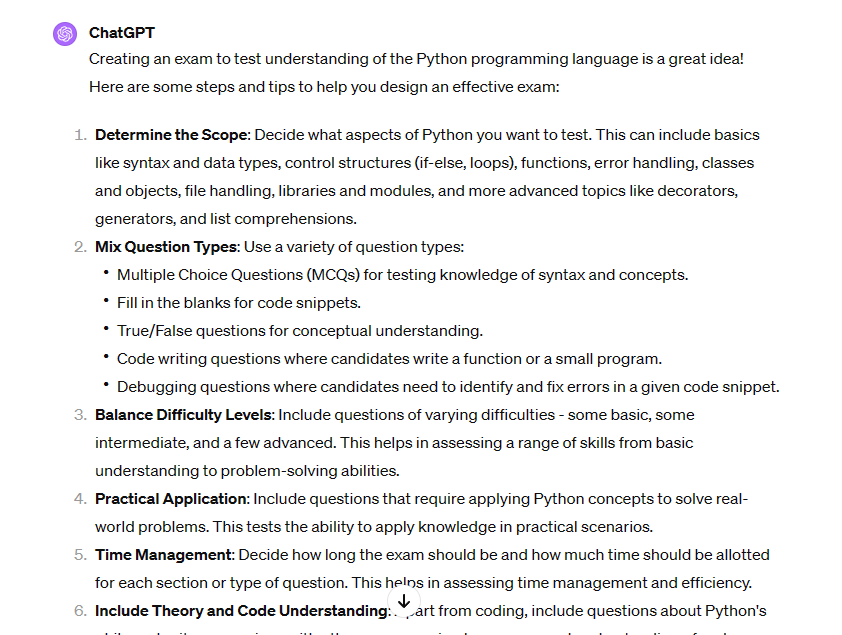
아래와 같이 GPT가 도와줄수 있다고 합니다..
명령2 - 예시 보여주기
Before Chat에 적용이 잘된 결과 예시를 보여주었습니다.
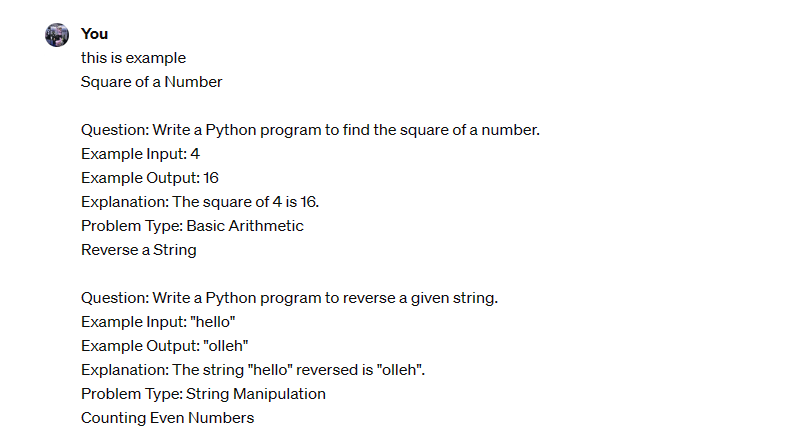
this is example
Square of a Number

Question: Write a Python program to find the square of a number.
Example Input: 4
Example Output: 16
Explanation: The square of 4 is 16.
Problem Type: Basic Arithmetic
Reverse a String

Question: Write a Python program to reverse a given string.
Example Input: "hello"
Example Output: "olleh"
Explanation: The string "hello" reversed is "olleh".
Problem Type: String Manipulation
Counting Even Numbers

Question: Write a Python program to count the number of even numbers from a list.
Example Input: [1, 2, 3, 4, 5, 6]
Example Output: 3
Explanation: There are three even numbers in the list (2, 4, 6).
Problem Type: Loops and Lists
Concatenating Strings

Question: Write a Python program to concatenate two strings with a space between them.
Example Input: "Python", "Programming"
Example Output: "Python Programming"
Explanation: The two strings are concatenated with a space.
Problem Type: String Manipulation
Finding the Maximum Number

Question: Write a Python program to find the largest number in a list.
Example Input: [3, 1, 4, 2, 5]
Example Output: 5
Explanation: The largest number in the list is 5.
Problem Type: Lists and Comparison
Check if Numbers are Equal

Question: Write a Python program to check if two numbers are equal or not.
Example Input: 7, 10
Example Output: "Not Equal"
Explanation: 7 and 10 are not equal.
Problem Type: Conditional Logic
Sum of Numbers up to N

Question: Write a Python program to calculate the sum of all numbers from 1 to N.
Example Input: 5
Example Output: 15
Explanation: The sum of numbers from 1 to 5 is 15.
Problem Type: Loops and Arithmetic
Adjacent Sum in a List

Question: Write a Python program to calculate the sum of each pair of adjacent numbers in a list.
Example Input: [1, 2, 3, 4]
Example Output: [3, 5, 7]
Explanation: Sums are 1+2, 2+3, and 3+4.
Problem Type: Lists and Loops
Palindrome Check

Question: Write a Python program to check if a number is a palindrome.
Example Input: 121
Example Output: True
Explanation: 121 is a palindrome since it reads the same backward.
Problem Type: String/Number Manipulation
Count Specific Digit in a String

Question: Write a Python program to count the occurrences of the digit '2' in a given string.
Example Input: "2124B2"
Example Output: 3
Explanation: The digit '2' appears three times.
Problem Type: String Processing and Counting
These questions cover a range of basic concepts in Python, making them ideal for beginners or as practice exercises. Let me know if you need further assistance with these!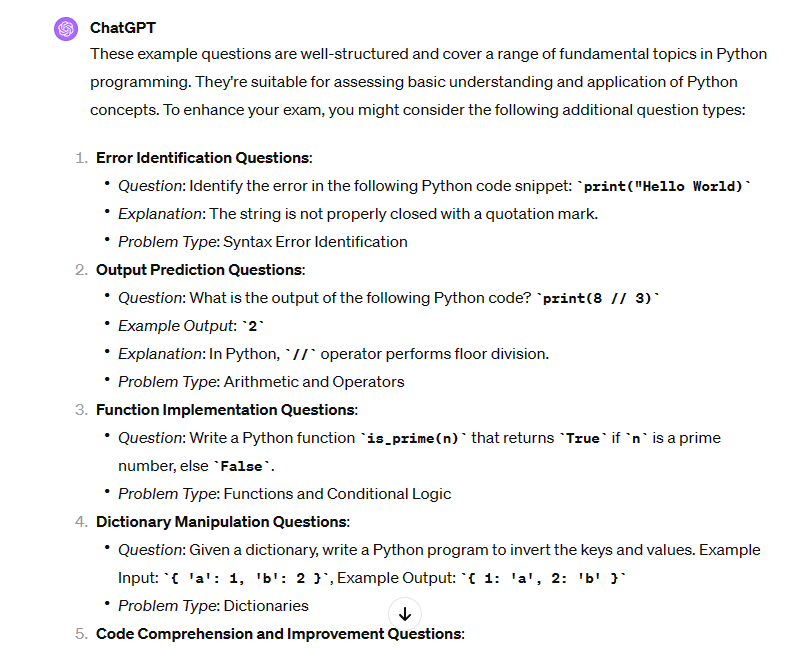
문제 유형을 예시로 보여주는데다. 원하던 결과는 아닙니다.
저는 Problem Type을 기준으로 다른 새로운 문제를 만들고 싶습니다.
명령 3 - 세부 요구 Problem Type
 i want to make 10 question. with same Problem Type.

 나는 10개를 만들고싶다. 같은 문제 유형으로.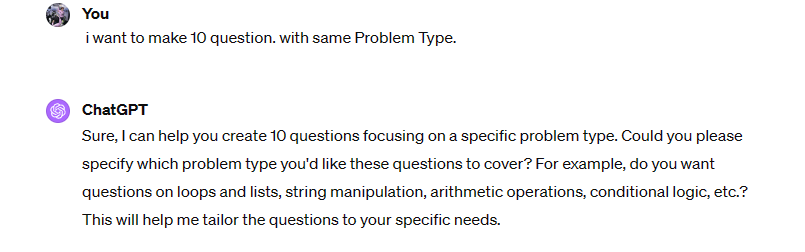
원하는 특정한 Problem Type들이 있냐고 되물어 주고 있습니다. 예시도 보여주면서
명령 4 - 10가지 Problem Type, 빈칸 문제
Problem Type is  belown
Basic Arithmetic
String Manipulation
Loops and Lists
String Manipulation
Lists and Comparison
Conditional Logic
Loops and Arithmetic
Lists and Loops
String/Number Manipulation
String Processing and Counting
i want to make this Python file. and it's a blank question.
밑에 10가지 Problem Type들이야. 파이썬 파일로 만들고 싶고, 그건 빈칸문제야.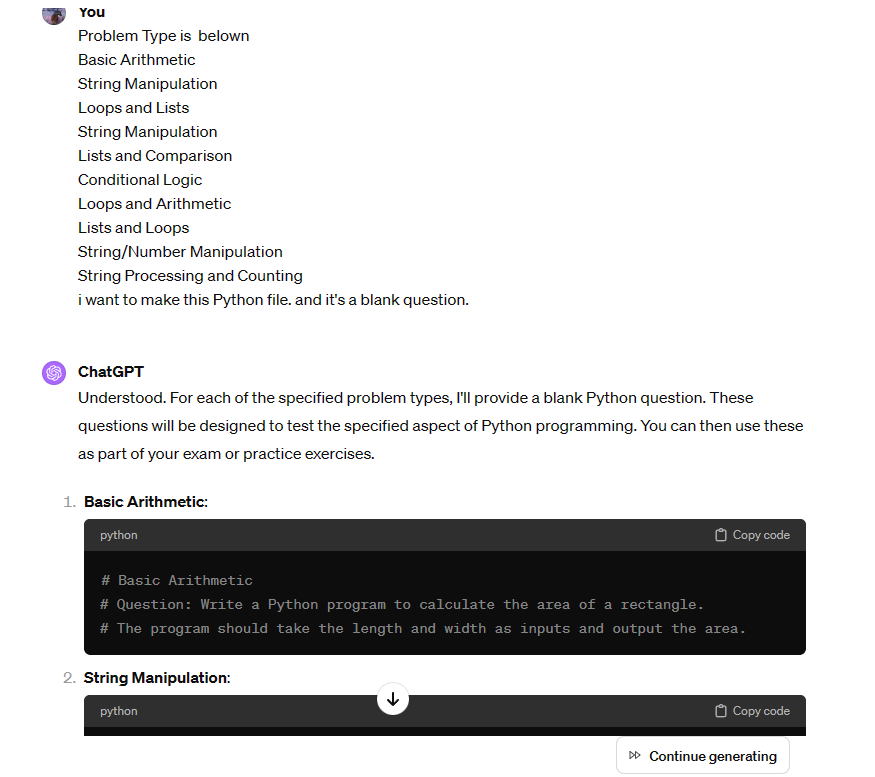
결과가 원하던 빈칸문제는 아닌 것으로 보입니다.
명령 5 - 빈칸문제 예시 보여주기, 반드시 포함해야 할 것들 추가
example
"
int main(void) {
    string n;
    cin >> n;
    for(int i = @@@; i > @@@; i--) {
        cout << n[i];
    }
    return 0;
}
"
this is blank question. "@@@" is blank.

you must show me Including question,explain, input example,output example.
이게 빈칸문제고, "@@@" 이 빈칸이야.
너는 절대로 문제,설명,입력예시,출력예시를 포함해서 보여줘야해라고 다시 교육을 시켰습니다.
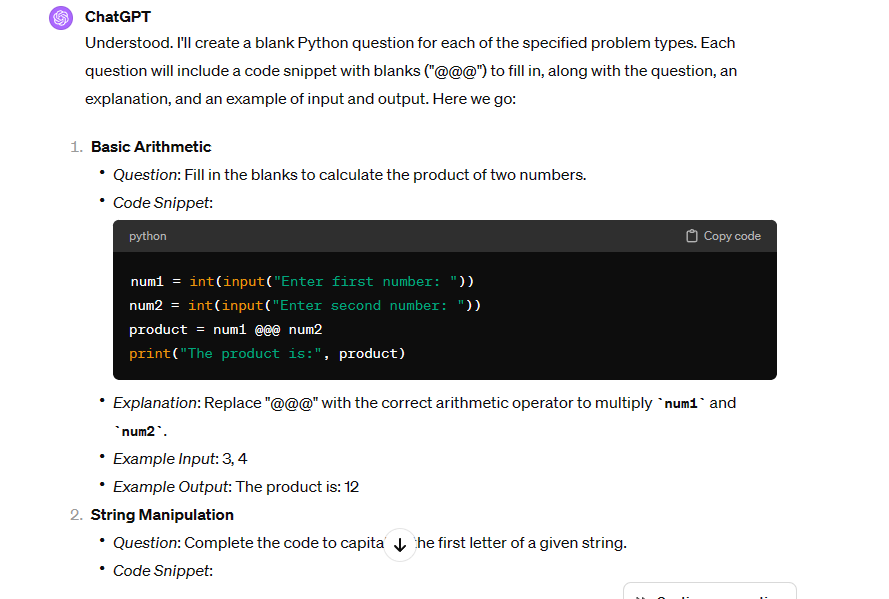
이후 드디어 원하는 결과가 나오기 시작하네요
명령 6 - 결과 확인, 한국어로 번역
you should translate it from english to korean. 한글로 번역해줘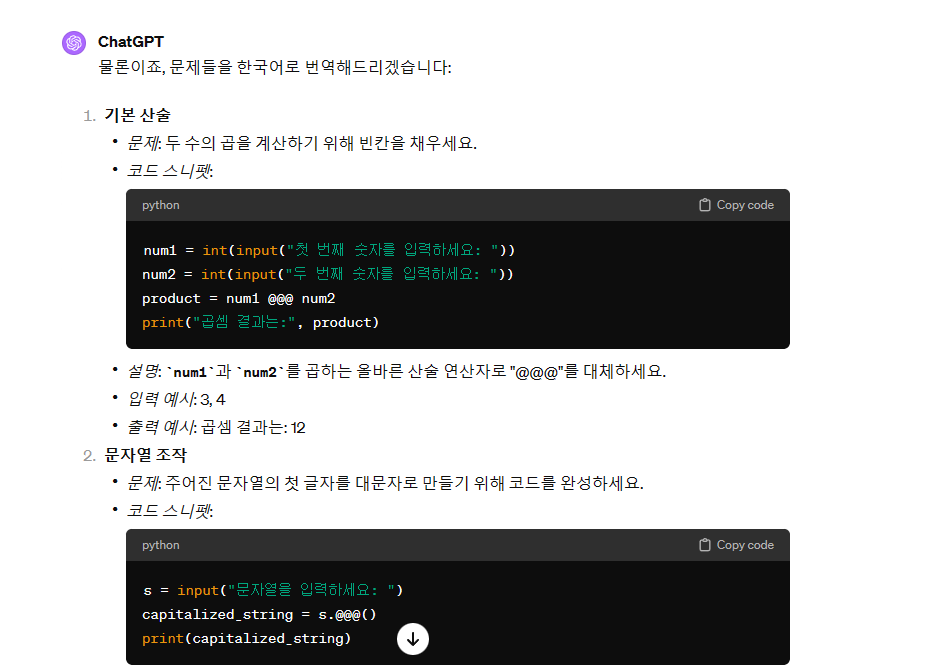
번역이 중간에 실패하여 4번째에 시도하여 성공하였습니다.
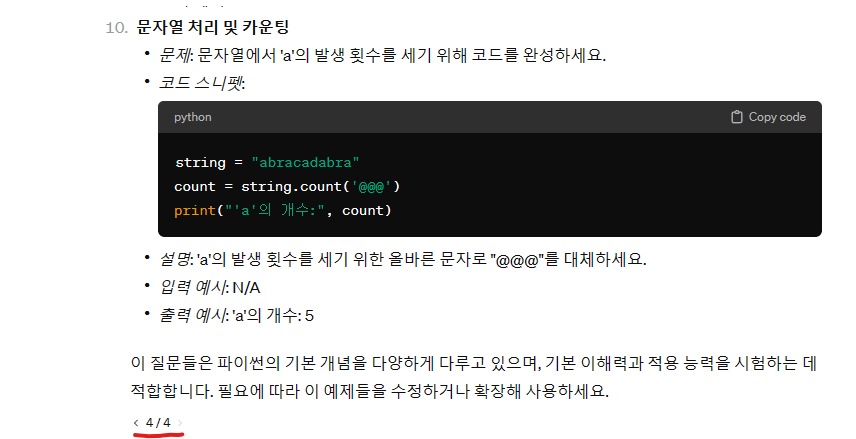
명령 7 - 문제 답안만들기
해당 문제 답안지도 만들어줘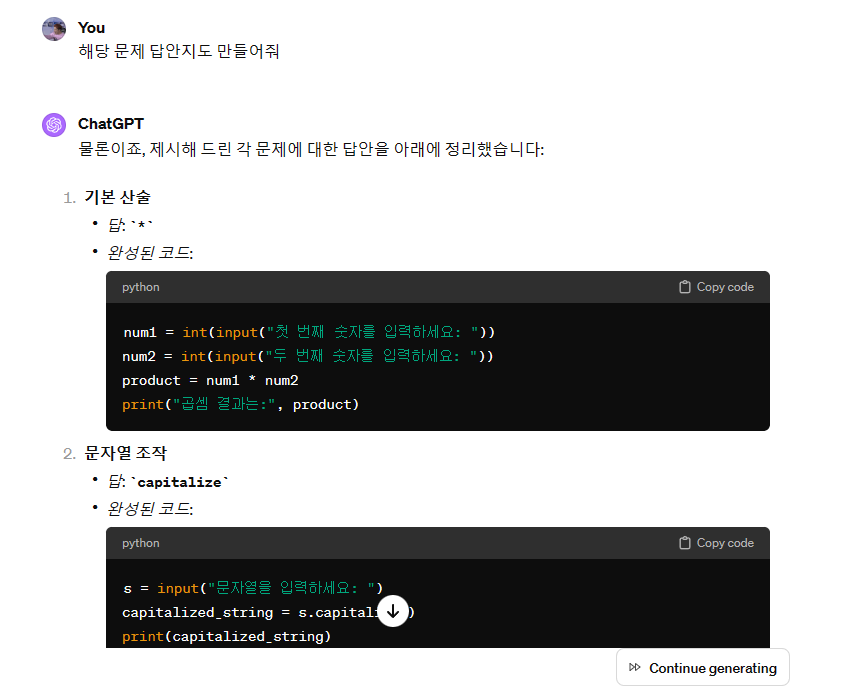
답안도 뽑아줍니다.
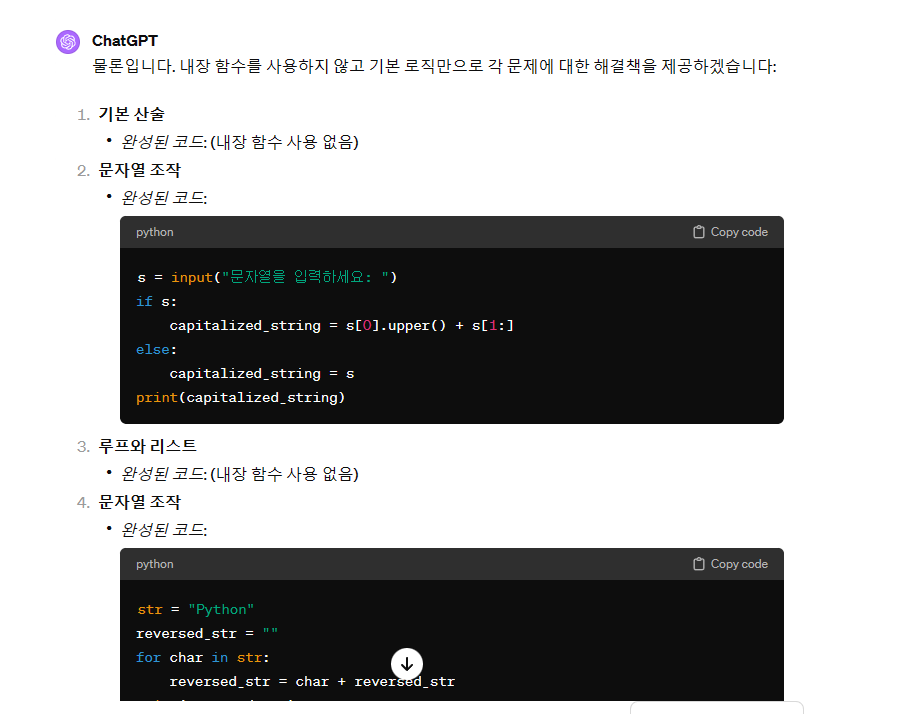
명령 8 - 동일 정답 문제 만들기 (함수 사용하지 않은것)
해당문제 함수를 사용하지 않고 로직으로만 만든 동일정답도 만들어줘
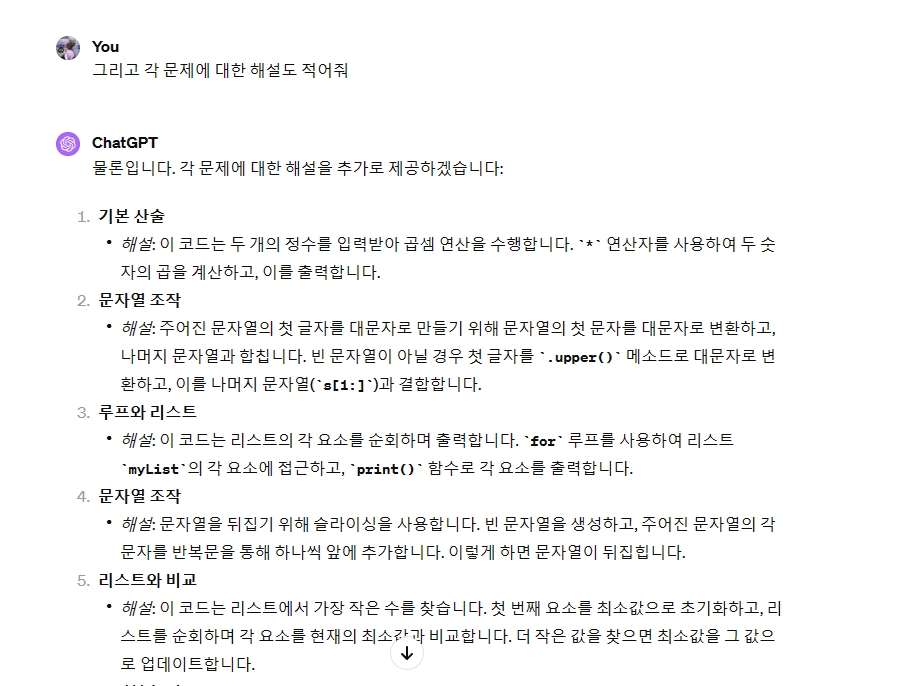
명령 9 - 해설지 만들기
완성본
문제
물론이죠, 문제들을 한국어로 번역해드리겠습니다:
-
기본 산술
- 문제: 두 수의 곱을 계산하기 위해 빈칸을 채우세요.
- 코드 스니펫:
num1 = int(input("첫 번째 숫자를 입력하세요: ")) num2 = int(input("두 번째 숫자를 입력하세요: ")) product = num1 @@@ num2 print("곱셈 결과는:", product) - 설명:
num1과num2를 곱하는 올바른 산술 연산자로 "@@@"를 대체하세요. - 입력 예시: 3, 4
- 출력 예시: 곱셈 결과는: 12
-
문자열 조작
- 문제: 주어진 문자열의 첫 글자를 대문자로 만들기 위해 코드를 완성하세요.
- 코드 스니펫:
s = input("문자열을 입력하세요: ") capitalized_string = s.@@@() print(capitalized_string) - 설명: 첫 글자를 대문자로 만드는 올바른 문자열 메소드로 "@@@"를 대체하세요.
- 입력 예시: "hello"
- 출력 예시: "Hello"
-
루프와 리스트
- 문제: 리스트의 모든 요소를 출력하기 위해 빈칸을 채우세요.
- 코드 스니펫:
myList = [1, 2, 3, 4, 5] for item in @@@: print(@@@) - 설명: 첫 번째 "@@@"를 리스트 이름으로, 두 번째를 루프에서 사용하는 변수로 대체하세요.
- 입력 예시: N/A
- 출력 예시: 1 2 3 4 5
-
문자열 조작
- 문제: 주어진 문자열을 뒤집기 위해 빠진 부분을 작성하세요.
- 코드 스니펫:
str = "Python" reversed_str = str[@@@] print(reversed_str) - 설명: 문자열을 뒤집기 위한 올바른 슬라이싱 매개변수로 "@@@"를 대체하세요.
- 입력 예시: N/A
- 출력 예시: "nohtyP"
-
리스트와 비교
- 문제: 리스트에서 가장 작은 수를 찾기 위해 코드를 완성하세요.
- 코드 스니펫:
numbers = [5, 3, 9, 1, 6] smallest = min(@@@) print("가장 작은 수는:", smallest) - 설명: 리스트에서 가장 작은 수를 찾기 위한 올바른 변수로 "@@@"를 대체하세요.
- 입력 예시: N/A
- 출력 예시: 가장 작은 수는: 1
-
조건부 논리
- 문제: 숫자가 양수인지 음수인지 확인하기 위해 빈칸을 채우세요.
- 코드 스니펫:
num = int(input("숫자를 입력하세요: ")) if num @@@ 0: print("양수") else: print("음수") - 설명: 올바른 비교 연산자로 "@@@"를 대체하세요.
- 입력 예시: -3
- 출력 예시: 음수
-
루프와 산술
- 문제: 숫자의 팩토리얼을
계산하기 위해 코드를 완성하세요.
- 코드 스니펫:
n = int(input("숫자를 입력하세요: ")) factorial = 1 for i in range(1, n@@@): factorial @@@= i print("팩토리얼은:", factorial) - 설명: 첫 번째 "@@@"를 올바른 범위 끝으로, 두 번째를 올바른 할당 연산자로 대체하세요.
- 입력 예시: 5
- 출력 예시: 팩토리얼은: 120
-
리스트와 루프
- 문제: 숫자 5까지의 수들의 제곱을 리스트로 만들기 위해 빈칸을 채우세요.
- 코드 스니펫:
squares = [] for i in range(1, 6): squares.append(i@@@) print(squares) - 설명:
i의 제곱을 구하기 위한 올바른 연산으로 "@@@"를 대체하세요. - 입력 예시: N/A
- 출력 예시: [1, 4, 9, 16, 25]
-
문자열/숫자 조작
- 문제: 숫자가 팰린드롬인지 확인하기 위해 빠진 부분을 작성하세요.
- 코드 스니펫:
num = input("숫자를 입력하세요: ") if num == num[@@@]: print("팰린드롬") else: print("팰린드롬 아님") - 설명: 문자열을 뒤집기 위한 올바른 슬라이싱으로 "@@@"를 대체하세요.
- 입력 예시: 121
- 출력 예시: 팰린드롬
-
문자열 처리 및 카운팅
- 문제: 문자열에서 'a'의 발생 횟수를 세기 위해 코드를 완성하세요.
- 코드 스니펫:
string = "abracadabra" count = string.count('@@@') print("'a'의 개수:", count) - 설명: 'a'의 발생 횟수를 세기 위한 올바른 문자로 "@@@"를 대체하세요.
- 입력 예시: N/A
- 출력 예시: 'a'의 개수: 5
이 질문들은 파이썬의 기본 개념을 다양하게 다루고 있으며, 기본 이해력과 적용 능력을 시험하는 데 적합합니다. 필요에 따라 이 예제들을 수정하거나 확장해 사용하세요.
답안1
물론입니다. 내장 함수를 사용하지 않고 기본 로직만으로 각 문제에 대한 해결책을 제공하겠습니다:
-
기본 산술
- 완성된 코드: (내장 함수 사용 없음)
-
문자열 조작
- 완성된 코드:
s = input("문자열을 입력하세요: ")
if s:
    capitalized_string = s[0].upper() + s[1:]
else:
    capitalized_string = s
print(capitalized_string)
- 완성된 코드:
-
루프와 리스트
- 완성된 코드: (내장 함수 사용 없음)
-
문자열 조작
- 완성된 코드:
str = "Python"
reversed_str = ""
for char in str:
    reversed_str = char + reversed_str
print(reversed_str)
- 완성된 코드:
-
리스트와 비교
- 완성된 코드:
numbers = [5, 3, 9, 1, 6]
if numbers:
    smallest = numbers[0]
    for num in numbers:
        if num < smallest:
            smallest = num
print("가장 작은 수는:", smallest)
- 완성된 코드:
-
조건부 논리
- 완성된 코드: (내장 함수 사용 없음)
-
루프와 산술
- 완성된 코드:
n = int(input("숫자를 입력하세요: "))
factorial = 1
for i in range(1, n + 1):
    factorial = factorial * i
print("팩토리얼은:", factorial)
- 완성된 코드:
-
리스트와 루프
- 완성된 코드:
squares = []
for i in range(1, 6):
    squares.append(i * i)
print(squares)
- 완성된 코드:
-
문자열/숫자 조작
- 완성된 코드:
num = input("숫자를 입력하세요: ")
reversed_num = num[::-1]
if num == reversed_num:
    print("회문")
else:
    print("회문이 아님")
- 완성된 코드:
-
문자열 처리 및 카운팅
- 완성된 코드:
string = "abracadabra"
count = 0
for char in string:
    if char == 'a':
        count += 1
print("'a'의 개수:", count)
- 완성된 코드:
이 답안들은 복잡한 내장 함수나 메소드를 사용하지 않고 기본적인 로직을 이용하여 문제를 해결합니다. 이를 통해 프로그래밍 기초를 다질 수 있습니다.
답안2
물론이죠, 제시해 드린 각 문제에 대한 답안을 아래에 정리했습니다:
-
기본 산술
- 답:
* - 완성된 코드:
num1 = int(input("첫 번째 숫자를 입력하세요: "))
num2 = int(input("두 번째 숫자를 입력하세요: "))
product = num1 * num2
print("곱셈 결과는:", product)
- 답:
-
문자열 조작
- 답:
capitalize - 완성된 코드:
s = input("문자열을 입력하세요: ")
capitalized_string = s.capitalize()
print(capitalized_string)
- 답:
-
루프와 리스트
- 답:
myList,item - 완성된 코드:
myList = [1, 2, 3, 4, 5]
for item in myList:
    print(item)
- 답:
-
문자열 조작
- 답:
[::-1] - 완성된 코드:
str = "Python"
reversed_str = str[::-1]
print(reversed_str)
- 답:
-
리스트와 비교
- 답:
numbers - 완성된 코드:
numbers = [5, 3, 9, 1, 6]
smallest = min(numbers)
print("가장 작은 수는:", smallest)
- 답:
-
조건부 논리
- 답:
> - 완성된 코드:
num = int(input("숫자를 입력하세요: "))
if num > 0:
    print("양수")
else:
    print("음수")
- 답:
-
루프와 산술
- 답:
+1,*= - 완성된 코드:
n = int(input("숫자를 입력하세요: "))
factorial = 1
for i in range(1, n + 1):
    factorial *= i
print("팩토리얼은:", factorial)
- 답:
-
리스트와 루프
- 답:
**2 - 완성된 코드:
squares = []
for i in range(1, 6):
    squares.append(i ** 2)
print(squares)
- 답:
-
문자열/숫자 조작
- 답:
[::-1] - 완성된 코드:
num = input("숫자를 입력하세요: ")
if num == num[::-1]:
    print("회문")
else:
    print("회문이 아님")
- 답:
-
문자열 처리 및 카운팅
- 답:
'a' - 완성된 코드:
string = "abracadabra"
count = string.count('a')
print("'a'의 개수:", count)
- 답:
각 문제에 대한 답안을 참고하여 답안지를 완성할 수 있습니다. 이러한 방식으로 학습자들이 문제를 해결하는 데 도움이 될 것입니다.
해설
물론입니다. 각 문제에 대한 해설을 추가로 제공하겠습니다:
-
기본 산술
- 해설: 이 코드는 두 개의 정수를 입력받아 곱셈 연산을 수행합니다.
*연산자를 사용하여 두 숫자의 곱을 계산하고, 이를 출력합니다.
- 해설: 이 코드는 두 개의 정수를 입력받아 곱셈 연산을 수행합니다.
-
문자열 조작
- 해설: 주어진 문자열의 첫 글자를 대문자로 만들기 위해 문자열의 첫 문자를 대문자로 변환하고, 나머지 문자열과 합칩니다. 빈 문자열이 아닐 경우 첫 글자를
.upper()메소드로 대문자로 변환하고, 이를 나머지 문자열(s[1:])과 결합합니다.
- 해설: 주어진 문자열의 첫 글자를 대문자로 만들기 위해 문자열의 첫 문자를 대문자로 변환하고, 나머지 문자열과 합칩니다. 빈 문자열이 아닐 경우 첫 글자를
-
루프와 리스트
- 해설: 이 코드는 리스트의 각 요소를 순회하며 출력합니다.
for루프를 사용하여 리스트myList의 각 요소에 접근하고,print()함수로 각 요소를 출력합니다.
- 해설: 이 코드는 리스트의 각 요소를 순회하며 출력합니다.
-
문자열 조작
- 해설: 문자열을 뒤집기 위해 슬라이싱을 사용합니다. 빈 문자열을 생성하고, 주어진 문자열의 각 문자를 반복문을 통해 하나씩 앞에 추가합니다. 이렇게 하면 문자열이 뒤집힙니다.
-
리스트와 비교
- 해설: 이 코드는 리스트에서 가장 작은 수를 찾습니다. 첫 번째 요소를 최소값으로 초기화하고, 리스트를 순회하며 각 요소를 현재의 최소값과 비교합니다. 더 작은 값을 찾으면 최소값을 그 값으로 업데이트합니다.
-
조건부 논리
- 해설: 입력받은 숫자가 양수인지 음수인지 판별하기 위해 조건문을 사용합니다. 숫자가 0보다 크면 "양수"라고 출력하고, 그렇지 않으면 "음수"라고 출력합니다.
-
루프와 산술
- 해설: 숫자의 팩토리얼을 계산하기 위해 반복문과 산술 연산을 사용합니다. 1부터 입력받은 숫자
n까지의 모든 수에 대해 곱셈 연산을 수행하여 팩토리얼을 계산합니다.
- 해설: 숫자의 팩토리얼을 계산하기 위해 반복문과 산술 연산을 사용합니다. 1부터 입력받은 숫자
-
리스트와 루프
- 해설: 1부터 5까지의 수의 제곱을 리스트에 저장합니다.
for루프를 사용하여 각 숫자에 대해 제곱 연산(i * i)을 수행하고, 결과를 리스트squares에 추가합니다.
- 해설: 1부터 5까지의 수의 제곱을 리스트에 저장합니다.
-
문자열/숫자 조작
- 해설: 숫자를 문자열로 변환한 후, 그 문자열이 회문인지 확인합니다. 문자열을 뒤집어서 원래 문자열과 같은지 비교합니다. 같으면 "회문"이라고 출력하고, 다르면 "회문이 아님"이라고 출력합니다.
-
문자열 처리 및 카운팅
- 해설: 주어진 문자열에서 'a' 문자의 출현 횟수를 세기 위해 반복문을 사용합니다. 문자열을 순회하며 각 문자가 'a'인지 확인하고, 'a'일 때마다 카운트를 증가시킵니다.
이러한 해설들은 각 문제의 해결 방법과 관련 개념에 대한 이해를 돕기 위해 제공됩니다. 프로그래밍 학습에 유용하게 활용하실 수 있을 것입니다
