Try to solve problems in JavaScript, Python, and Java.
This is TIL(memo of key learnings) for solving problems in these languages,
but mostly python.
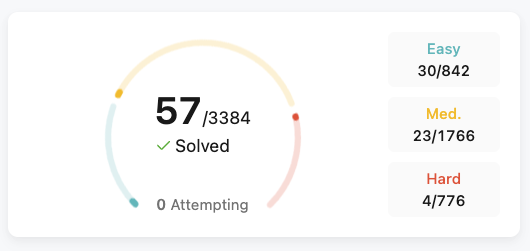
Solved Problems 📝
241205:
1. 0101-symmetric-tree
2. 0102-binary-tree-level-order-traversal
Key Learnings 🤔
How to null None check with a tree node in python?
Easy, you can check if a current node is None.
if treeNode is None:How can I ensure array[index] exists? before appending a value in python?
binary-tree-level-order-traversal
When working with a 2-dimensional array, attempting to append a value to a non-existent index results in an error.
To avoid this, you can check the length📏 of the array to ensure the target(array[index]) index exists.
# Case: 'level' represents the depth of the binary tree node.
result = []
...
if len(result) <= level:
    result.append([])  # add a new list for the current level.

result[level].append(node.val)
How can I declare a variable with nested array types in java?
List<List<Integer>>
List<List<Integer>> nestedList = new ArrayList<>();What Is the Difference Between List<int> and int[] in Java?
| Aspect | int[] | List<Integer> |
|---|---|---|
| Size | Fixed | Dynamic |
| Type | Primitive int | Wrapper Integer |
| Memory | More efficient (no object overhead) | Higher (due to object overhead) |
| Performance | Faster | Slower (boxing/unboxing) |
| Resizing | Not resizable | Resizable |
Why use new ArrayList<>(), not [] in java?
In Java, List is an interface, so you cannot directly instantiate it!
must use a concrete implementation like ArrayList, [] is not a valid way.
List<List<Integer>> result = new ArrayList<>();What Is ArrayList?
ArrayList is a dynamic array implementation of the List interface in Java, provided by the java.util package.
Boxing and unboxing
Boxing and Unboxing refer to the automatic conversion between primitive types and corresponding wrapper class objects.
Add a slight overhead because the Java Virtual Machine (JVM), create new objects for primitive values & convert objects back into primitives.
int num = 5;
Integer boxedNum = num;  // Automatic boxing
int unboxNum = boxedNum;  // Automatic unboxing
boxing
- The process of converting a primitive type into its corresponding wrapper class object.(int 👉 integer)
- store primitive values in collections like
List<Integer> - collections cannot store primitive types (only objects).
unboxing
- converting an object of a wrapper class.
- happens when you perform operations that require primitive types