Enum
enum이란 Enumeration으로 관련이 있는 상수들의 집합을 의미한다.
자바에서 변경할 수 없는 상수를 정의할 때 final을 사용하였다.
기존에는 인터페이스나 클래스 내에서 상수를 선언함으로써 상수를 관리하였는데, 이름이 겹치거나 불필요하게 상수가 많아진다는 단점을 가지고 있었다.
이런 단점을 보안하기 위해 나온 것이 enum이다.
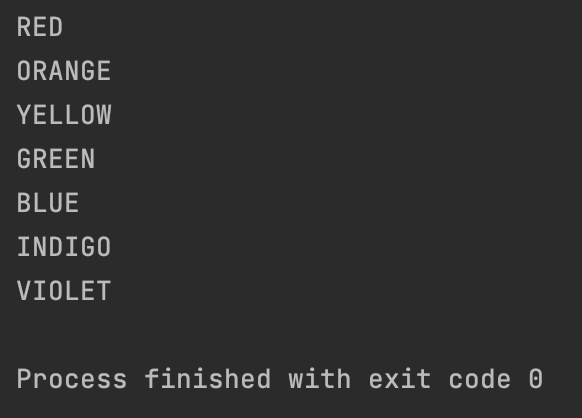
enum SetColor {
    RED(-7), ORANGE(-5), YELLOW(-3), GREEN(-1), BLUE(1), INDIGO(3), VIOLET(5);

    private final int value;

    SetColor(int value) {
        this.value = value;
    }

    int getValue() {
        return value;
    }
}

public class Color {
    public static void main(String[] args) {
        SetColor[] colorsArray = SetColor.values();
        for (SetColor setColor : colorsArray) {
            System.out.println(setColor);
        }
    }
}
Enum의 values() & valueOf()
values()
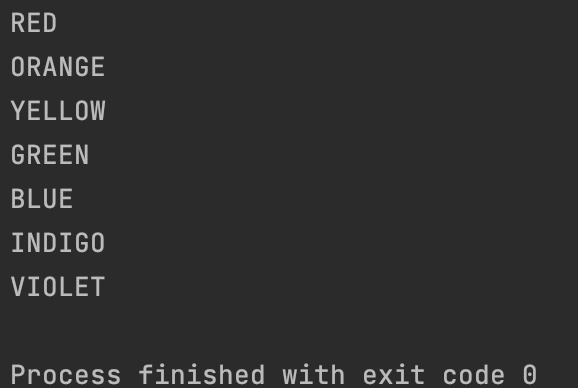
values() 메서드는 해당 열거체의 모든 상수를 저장한 배열을 생성하여 반환한다.
values() 메서드는 자바의 모든 열거체에 컴파일러가 자동으로 추가해주는 메서드이다.
enum SetColor {
    RED, ORANGE, YELLOW, GREEN, BLUE, INDIGO, VIOLET;
}

public class Color {
    public static void main(String[] args) {
        SetColor[] colorsArray = SetColor.values();
        for (SetColor setColor : colorsArray) {
            System.out.println(setColor);
        }
    }
}
valuesOf()
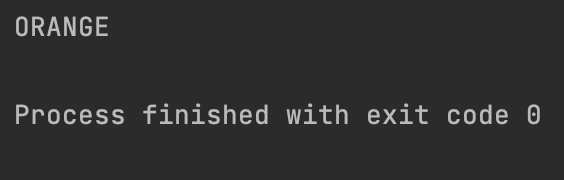
valuesOf() 메서드는 전달된 문자열과 일치하는 해당 열거체의 상수를 반환한다.
enum SetColor {
    RED, ORANGE, YELLOW, GREEN, BLUE, INDIGO, VIOLET;
}

public class Color {
    public static void main(String[] args) {
        SetColor colorsArray = SetColor.valueOf("ORANGE");
        System.out.println(colorsArray);
    }
}
ordinal()
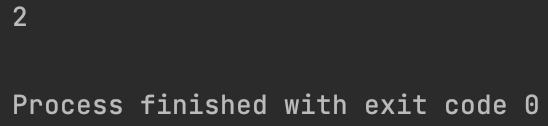
ordianl() 메서드는 해당 열거체 정의에서 정의된 순서( 0부터 시작 )를 반환한다.
반환되는 값은 해당 열거체 상수가 정의된 순서로 상수 값이 아니다.
enum SetColor {
    RED, ORANGE, YELLOW, GREEN, BLUE, INDIGO, VIOLET;
}

public class Color {
    public static void main(String[] args) {
        int index = SetColor.YELLOW.ordinal();
        System.out.println(index);
    }
}
java.lang.Enum 클래스
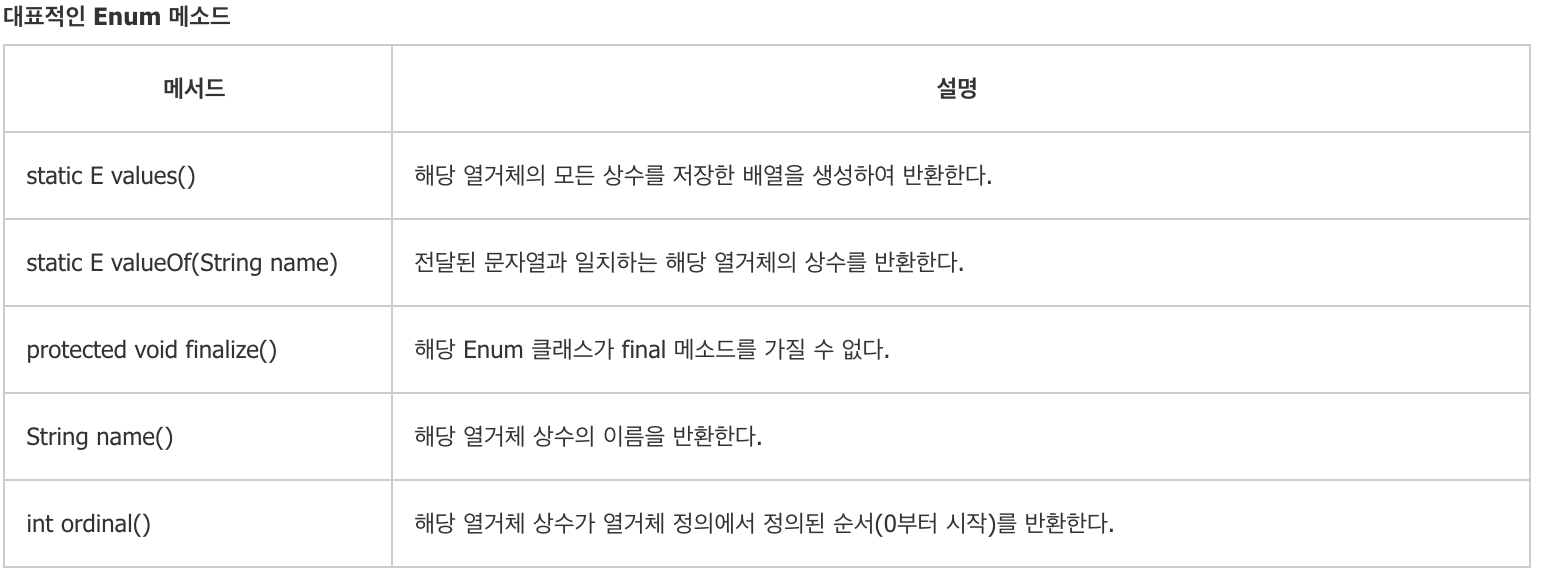
Enum 클래스는 자바 열거체의 조상 클래스로 열거체를 관리하기 위한 다양한 메서드를 포함한다.
EnumSet
EnumSet은 enum 클래스로 작동하기 위해 특화된 Set 컬렉션이다.
Set은 데이터를 중복해서 저장할 수 없으며, 순서가 보장되지 않는 특징을 가지고 있다.
- EnumSet : Set 인터페이스를 구현하고 AbstractSet을 상속받는다.
EnumSet의 주의사항
- 열거형 값만 포함할 수 있으며, 모든 값을 열거형이어야한다.
- null을 사용할 수 없다.
- 멀티스레드에 안전하지 않아서 필요한 경우 외부에서 동기화한다.
EnumSet의 장점
EnumSet의 모든 메서드는 산술 비트 연산을 사용하여 구현는 이유로 연산이 매우 빠르다.
EnumSet은 HashSet과 같은 다른 Set 구현체와 비교해서 데이터가 예상 가능한 순서로 저장되며 각 계산을 하는데 있어서 더 빠르다.
EnumSet은 적은 메모리를 사용한다.
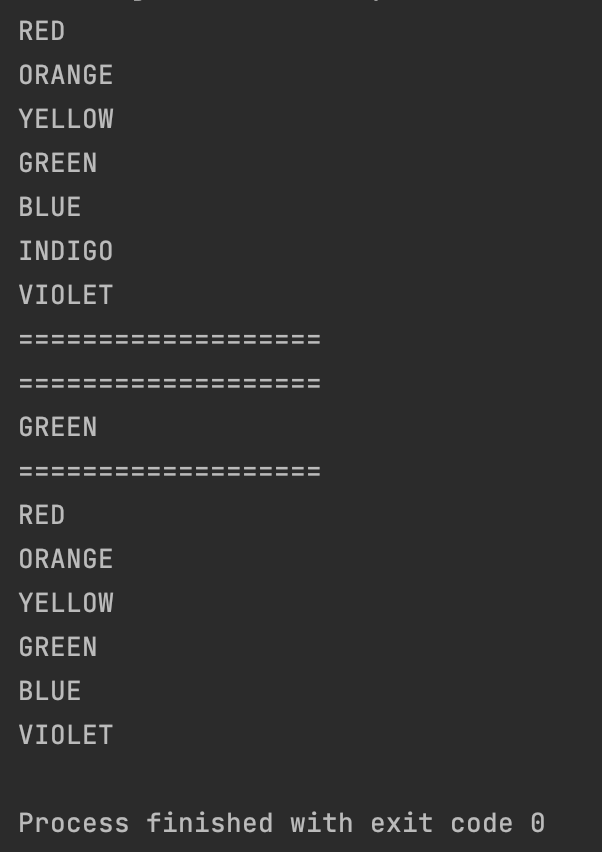
예제
enum SetColor {
    RED, ORANGE, YELLOW, GREEN, BLUE, INDIGO, VIOLET;
}

public class Color {
    public static void main(String[] args) {
        EnumSet<SetColor> set = EnumSet.allOf(SetColor.class);
        set.forEach((a) -> System.out.println(a));

        System.out.println("===================");

        EnumSet<SetColor> set1 = EnumSet.noneOf(SetColor.class);
        set1.forEach((a) -> System.out.println(a));

        System.out.println("===================");

        EnumSet<SetColor> set2 = EnumSet.of(SetColor.GREEN);
        set2.forEach((a) -> System.out.println(a));

        System.out.println("===================");

        EnumSet<SetColor> set3 = EnumSet.complementOf(EnumSet.of(SetColor.INDIGO));
        set3.forEach((a) -> System.out.println(a));
    }
}

장래희망 : 침대 위 녹아든 치즈