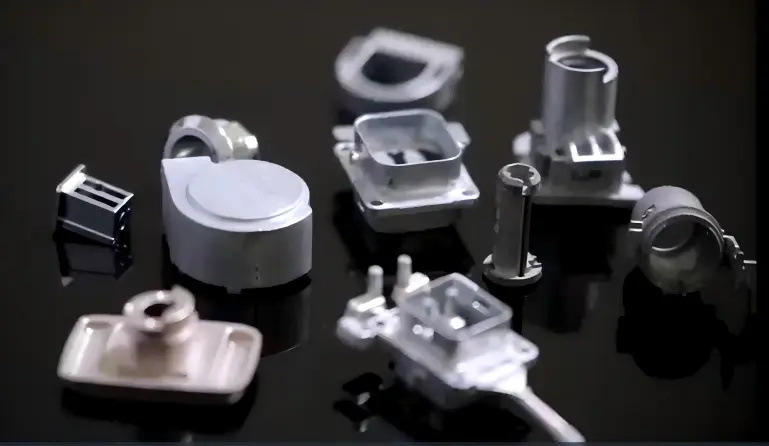
Zamak Die Casting
Zamak die casting offers high precision, excellent surface finish, and cost-effective production for complex, lightweight metal parts—ideal for industries like automotive, electronics, and jewelry.
Zamak Die Casting Process
zamak zinc alloy is a precision metal casting process that uses a zinc-aluminum alloy (typically Zamak 3, 5, or 7) to produce high-quality, dimensionally accurate parts with excellent surface finishes. The process involves melting the Zamak alloy at around 400°C (750°F) and injecting it under high pressure into a hardened steel mold (die). Once the molten metal fills the cavity, it rapidly cools and solidifies, allowing for quick ejection of the finished part. Zamak die casting is known for its high repeatability, tight tolerances (±0.1 mm or better), and thin-wall capabilities (down to 0.5 mm), making it ideal for automotive components, electrical housings, fasteners, and decorative hardware. Additional advantages include low energy consumption (compared to aluminum/magnesium die casting), smooth as-cast surfaces (reducing post-machining needs), and good corrosion resistance—especially when electroplated or coated. Due to its fluidity and strength, Zamak is a cost-effective choice for mass-produced, intricate metal parts.
Zamak 3 Material Properties
Zamak 3 is the most widely used zinc-aluminum alloy for die casting. Composed of approximately 96% zinc, 4% aluminum, and minor amounts of magnesium (0.02–0.05%) and copper (≤0.10%), it provides high dimensional stability, superior fluidity (easing thin-wall casting), and minimal shrinkage. Its tensile strength (∼280 MPa) and hardness (∼82 Brinell) make it durable for structural applications, while its impact resistance (>50 J/cm² at room temperature) ensures toughness in dynamic conditions. Zamak 3 also has a low melting point (~385°C), reducing energy costs during casting, and excellent corrosion resistance—especially when electroplated or painted.
zamak 5 material Properties
Zamak 5 offers improved strength, hardness, and creep resistance. Its composition—95.1% zinc, 4% aluminum, 0.5–1.2% copper, and 0.03–0.08% magnesium—enhances mechanical properties, providing a tensile strength of ~340 MPa, hardness of ~91 Brinell, and better wear resistance. The addition of copper increases thermal stability (up to ~95–120°C continuous use) and reduces long-term deformation under stress. It has excellent fluidity for thin-wall casting (down to 0.5 mm), low melting point (~380–390°C), and smooth as-cast surfaces. While slightly more expensive than Zamak 3, its superior strength-to-weight ratio and resistance to aging/microporosity justify its use in demanding applications.
Common Applications of Zamak Die Casting
Zamak die casting is widely used across multiple industries due to its excellent durability, high precision, and superior finish quality. Its ability to produce complex, lightweight, and corrosion-resistant components makes it ideal for both functional and decorative applications. Below are some of the most common industries and uses for Zamak die-cast parts.
Automotive Industry
Zamak is a preferred material for automotive components where precision, strength, and aesthetics are essential. Typical applications include:
Interior parts – handles, knobs, bezels, instrument clusters, air conditioning vents, radio controls, and seatbelt adjusters.
Exterior and under-the-hood components – fuel injector housings, carburetor parts, thermostat housings, and valve covers.
Consumer Electronics
The fine details and smooth surfaces achievable with Zamak castings make them ideal for electronic devices, including:
Laptop and tablet housing
Smartphone and camera components
Headphone frames, video game controllers, and remote controls
Furniture & Hardware
Zamak provides both functionality and decorative appeal in furniture and hardware, such as:
Handles, knobs, and pulls for cabinets and doors
Hinges, drawer slides, and decorative accents
Appliances & Plumbing
The corrosion resistance of Zamak makes it a popular choice for appliances and plumbing fixtures:
Faucet handles and showerheads
Appliance knobs, levers, and trim pieces
Toys & Sporting Goods
Due to its ability to hold intricate designs while remaining lightweight, Zamak is used in:
Die-cast toy cars and model trains
Toy firearm components
Sporting goods like bicycle shifters and fishing reel parts
Zamak die casting continues to be a versatile manufacturing solution, offering cost-effective production, high dimensional accuracy, and long-lasting performance across diverse applications.
Zamak Die Casting Parts by Zamak 3 Material & Zamak 5 Material
Additional Notes:
Zamak 3 Advantages: Lower cost, excellent casting fluidity, ideal for decorative and low-stress parts. However, its strength and corrosion resistance are inferior to Zamak 5.
Zamak 5 Advantages: Contains copper (1%), offering higher strength and hardness, making it suitable for mechanical stress applications. Slightly more expensive than Zamak 3.
Unsuitable Applications: High-temperature (>100°C), highly acidic/alkaline environments, or extreme strength requirements (consider steel or aluminum instead).
Zamak Alloy FAQs
Can ZAMAK alloys be finished for an attractive appearance?
Absolutely! ZAMAK alloys support various finishes, including painting, plating, and powder coating, to enhance aesthetics and texture.
How does zinc’s strength compare to other materials?
Zinc alloys offer greater strength than many other die-cast or injection-molded materials.
What is the expected lifespan of a zinc die-casting mold?
Zinc molds are known for their durability, often lasting up to one million casting cycles—typically 10 times longer than alternatives like aluminum.
For more information about zamak 5 composition, please feel free to contact us!