Legit ESA Letters Beat Online Registry Scams
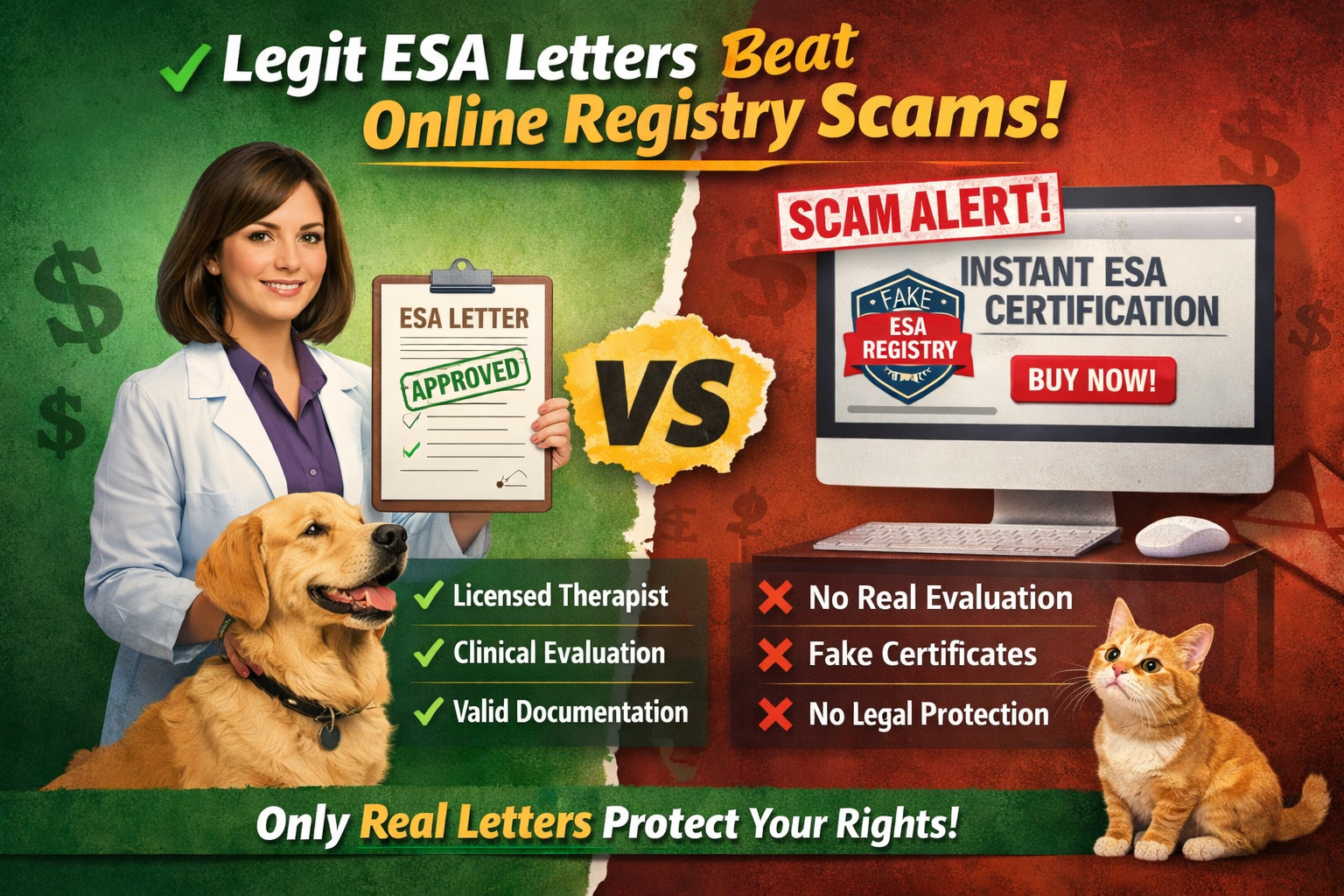
The internet is full of websites that promise instant registration or certification for emotional support animals with no clinical review whatsoever. For many people dealing with mental health challenges, these offers look like a quick fix to a stressful housing situation.
However, it is important to know that these services carry no legal weight and are often viewed as scams by housing authorities and legal professionals alike. RealESALetter focuses on providing actual clinical evaluations because federal law only recognizes documentation from licensed professionals.
There is no such thing as an official government registry for these animals, and buying a badge or a certificate will not protect your housing rights under the Fair Housing Act. This article explores why the clinical path is the only one that truly matters when you are trying to secure a home for you and your animal companion.
Understanding the Difference Between Support Animals and Pets
To navigate the world of housing regulations, you first have to understand how the law categorizes animals. In the eyes of a landlord, there are pets, and then there are assistance animals.
Emotional support animals fall into the latter category, but only if they are backed by the right paperwork. Unlike a service dog that might lead a blind person or detect a seizure, an emotional support animal doesn't need to be trained to perform specific physical tasks. Their primary role is to provide a therapeutic presence that helps a person manage the symptoms of a mental or emotional disability.
Because they aren't "pets," they aren't subject to the same rules that a landlord might apply to a standard cat or dog. However, the only way to prove your animal is a medical necessity is through a document that property managers actually respect. This is where the confusion between registries and clinical letters becomes a major problem.
A registration number on a plastic ID card tells a landlord nothing about your medical needs. A clinical letter, on the other hand, is a formal recommendation from a healthcare provider that confirms your animal is a vital part of your treatment plan.
The Reality of Online Registry Scams
If you spend more than five minutes searching for animal housing rights online, you will be bombarded with ads for "official" registries. These sites often use professional-looking logos and authoritative language to convince you that you need to "register" your dog with the government.
The truth is that no such government registry exists. These websites are essentially selling expensive pieces of paper and plastic that have the same legal standing as a library card from a fictional universe.
Housing providers and property managers are becoming increasingly educated about these fraudulent sites. In the past, a landlord might have been intimidated by a fancy certificate, but today’s property managers are trained to look for clinical validity.
If you present a certificate from a registry, your request will likely be denied because it fails to meet the basic requirements of federal law. By prioritizing real medical documentation over meaningless online badges, you protect your rights and ensure your animal can stay by your side without unnecessary legal hurdles.
Federal Protections and the Fair Housing Act
The primary law that protects your right to live with an animal is the Fair Housing Act. This federal law prohibits discrimination against individuals with disabilities in the housing market. Under this act, an emotional support animal is considered a "reasonable accommodation." This means that if you have a documented disability-related need for an animal, a landlord must waive their "no pets" policy or their pet-related fees to accommodate you.
For those who want to examine the specific legal language that mandates these protections, the Fair Housing Act overview provided by the Department of Justice explains the civil rights protections afforded to individuals with disabilities. This law is the reason why a landlord cannot simply say "no" to your animal if you have the proper documentation.
However, the law is very clear that the landlord has the right to request proof of the disability-related need. If that proof comes from a scam registry rather than a doctor, the landlord has every right to reject the request. To stay safe, you must follow the emotional support animal laws that govern these interactions.
Who Is Qualified To Write Your Documentation
Many people wonder who can write an esa letter and the answer is usually restricted to licensed therapists, psychologists, or psychiatrists who have evaluated the patient's specific needs. A valid letter serves as an official prescription for an animal that provides therapeutic benefit.
A legitimate letter must be written by a mental health professional licensed to practice in the state where the tenant lives. This requirement is intended to prevent the use of generic certificates that do not meet clinical standards.
The relationship between the patient and the provider is the most important factor. Federal guidelines suggest that the person writing the letter should have personal knowledge of the individual’s disability. This doesn't mean you have to see a therapist for five years, but it does mean a clinical evaluation must take place.
When you work with a professional, they are putting their professional license on the line to vouch for your need. This is why a letter from a clinician carries so much more weight than a computer-generated certificate from an anonymous website.
Identifying the Elements of a Legitimate Letter
When you receive your documentation, you should check it carefully to ensure it meets all the legal requirements. If the letter is missing key details, it might be viewed as suspicious by a property manager. Landlords are allowed to verify that the person who signed the letter is actually a licensed professional in good standing.
A legitimate letter must meet several specific criteria to be considered valid under the law:
The document must be printed on the professional letterhead of a licensed therapist, psychologist, or psychiatrist and include their current contact information.
It must include the therapist’s license type, their state of licensure, and their license number so that the landlord can verify their credentials through the state database.
The letter must clearly state that the individual has a mental health disability that limits major life activities, although it does not have to disclose the specific diagnosis.
There must be a specific statement confirming that the animal is a necessary part of the individual’s mental health treatment plan to alleviate symptoms.
The document should be dated and signed by the professional, typically within the last year, to show that the need is current and ongoing.
Navigating State Specific Rules and Mandates
While federal law sets the baseline, different states have started implementing their own rules to crack down on fraud. This is especially true in states with high rental demand. For example, if you are looking for an esa letter arizona or documentation in a similar state, you must ensure your provider follows all local telehealth and licensing regulations.
Arizona property managers are quite diligent about checking that the clinician is authorized to practice in the state.
Some states, like California and Montana, have even stricter rules. They might require a provider to have an established relationship with a client for at least thirty days before they can issue a housing letter. These laws were created because so many people were using "instant" websites to get around pet fees at the last minute.
By following the clinical path, you ensure that you are in compliance with both federal and state laws. This makes the conversation with your landlord much easier because you can demonstrate that you have followed every legal requirement to the letter.
Why Property Managers Reject Certain Requests
It is a common fear for renters that they will submit their paperwork only to have their esa letter rejected by the property management company. This usually happens for a few specific reasons. The most common reason is the use of a fake registry or certificate. Landlords have access to the same information you do, and they know which websites are "certification mills." If they see a letter that looks like a template from one of these sites, they will flag it immediately.
Another reason for rejection is a lack of state-level licensing. If your therapist is licensed in New York but you are trying to rent an apartment in Texas, the landlord might argue that the therapist doesn't have the authority to provide a medical recommendation in your jurisdiction.
Finally, letters that are too old or that don't clearly state the connection between the disability and the animal are often turned away. This is why it is so important to work with a service that understands the nuances of the law and ensures your document is airtight.
Financial Benefits of Genuine Documentation
Beyond the legal security, there is a major financial incentive to doing things the right way. The rental market is more expensive than ever, and "pet fees" have become a standard way for landlords to increase their monthly revenue. These fees are often divided into two categories: pet deposits and pet rent.
A pet deposit is usually a one-time fee paid at move-in, while pet rent is a monthly charge that can range from thirty to one hundred dollars.
When you have a legitimate medical recommendation, these fees are waived entirely. For many families, saving money with esa letters is a vital part of their financial planning.
Over the course of a twelve-month lease, you could easily save over a thousand dollars by having your animal recognized as a medical necessity. This is money that can stay in your pocket to pay for your actual healthcare, groceries, or savings. It turns the animal from a financial burden into a supported part of your household.
The Role of Effective Communication
Once you have your clinical letter, the next step is talking to your landlord. Many tenants are nervous about this part, but it doesn't have to be a confrontation. The goal is to present your request as a professional medical accommodation.
You should try to submit your letter at the time of your application or as soon as your medical need is identified. Waiting until you are "caught" with an animal to produce a letter often creates a sense of distrust, even if your document is 100% legal.
Landlords appreciate transparency. If you provide a high-quality letter from a licensed professional, it shows that you are a responsible tenant who respects the law. Most property managers just want to know that they are following HUD guidelines and that their property is protected.
When you provide a verifiable document, you make their job easier. It removes the guesswork and the suspicion, allowing both parties to move forward with a signed accommodation agreement.
Rights and Responsibilities of the Animal Owner
Having a support animal is a right, but it also comes with a lot of responsibility. The Fair Housing Act protects your right to have the animal, but it doesn't protect you if the animal is a nuisance. You are still responsible for ensuring the animal is house-trained and well-behaved. If your dog barks all night or acts aggressively toward other tenants, the landlord may have the legal right to revoke the accommodation.
You are also financially responsible for any actual damage the animal causes. While you don't have to pay a "pet deposit" upfront, the landlord can still bill you if the animal ruins the flooring or the walls.
Treating your animal as a professional assistant rather than just a pet is the best way to maintain a good relationship with your neighbors and your landlord. This keeps the integrity of the law intact for everyone else who genuinely needs a support animal to function.
The Clinical Path to Peace of Mind
The reality of the modern housing market is that landlords are more skeptical than ever. As mental health awareness continues to grow, so does the number of people trying to find ways to keep their companions in their homes. This has created a "battle of the paperwork" between tenants and property managers.
The only way to win that battle is to ensure your documentation is beyond reproach.
Choosing a clinical evaluation over a meaningless online registry is the only way to guarantee your housing security.
It provides a level of peace of mind that a plastic ID card never could. When you know that your document is signed by a licensed professional and backed by federal law, you can walk into any leasing office with confidence. You are not asking for a favor; you are exercising a civil right.
By following the legitimate medical path, you ensure that you and your animal have a safe, stable place to call home for years to come. Valid clinical documentation isn't just a requirement; it is your best defense in an unpredictable housing market.
