3.1 반복문
- for 문
for(초기문; 조건식; 반복 후 작업;) {
~~~~
}
조건식에는 논리변수나 논리 연산을 사용, true를 쓰거나 비워두면 무한반복함
초기문에는 지역변수를 선언하고 바로 사용가능
반복 후 작업문에는 ,로 분리하여 여러문장 사용 가능
- while 문
조건식이 없으면 컴파일오류 발생
- do-while 문
조건식 없으면 컴파일 오류, 작업문 실행 후 반복 조건 따짐
TIP)
반복의 횟수나 범위가 명확한 경우에는 for문을 많이 사용하고
반복횟수를 처음부터 알수없고 반복이 진행되면서 조건식의 결과가 달라지는 경우에는 while이나 do-while
3.2 continue & break
continue는 반복문을 빠져나가지않으면서 즉시 다음 반복으로 넘어가고자 할떄 사용
for문에서는 반복후 작업문으로 while이나 do-while에서는 조건식을 검사함
break는 하나의 반복문을 즉시 벗어날 때 사용
3.3 자바의 배열
- 배열이란
인덱스와 인덱스에 대응하는 일련의 데이터들로 이루어진 연속적인 자료구조
- 배열 선언 및 생성
- 배열에 대한 레퍼런스 변수 선언
int intArray[]; or int [] intArray;
선언 시 []안에 배열의 크기 지정하면 안됨
- 배열 생성 - 배열 공간 할당
intArray=new int[5]
=> 1,2 한번에 하면 int intArray[]=new int[5];
배열 선언문에서 {}에 원소를 나열하여 초기화된 배열을 만들 수 있다.
- 배열 인덱스와 배열 원소 접근
배열의 인덱스는 정수만 가능 0부터 시작
배열이 생성되있지 않을때 사용 X 음수 인덱스 X
- 레퍼런스 치환과 배열
배열이 복사되는 것이 아닌 레퍼런스가 복사되어 배열을 공유하게 됨
- 배열의 크기 length 필드
배열이 생성되면 length 필드가 배열 객체 내에 생성됨
- 배열과 for-each문
배열이나 나열의 크기만큼 루프를 돌면서 각 원소를 순차적으로 접근하는데 쓰임
ex)
for(int k : n) {
~~ // 반복될 때마다 k는 n[0], n[1], ~~로 번갈아 설정
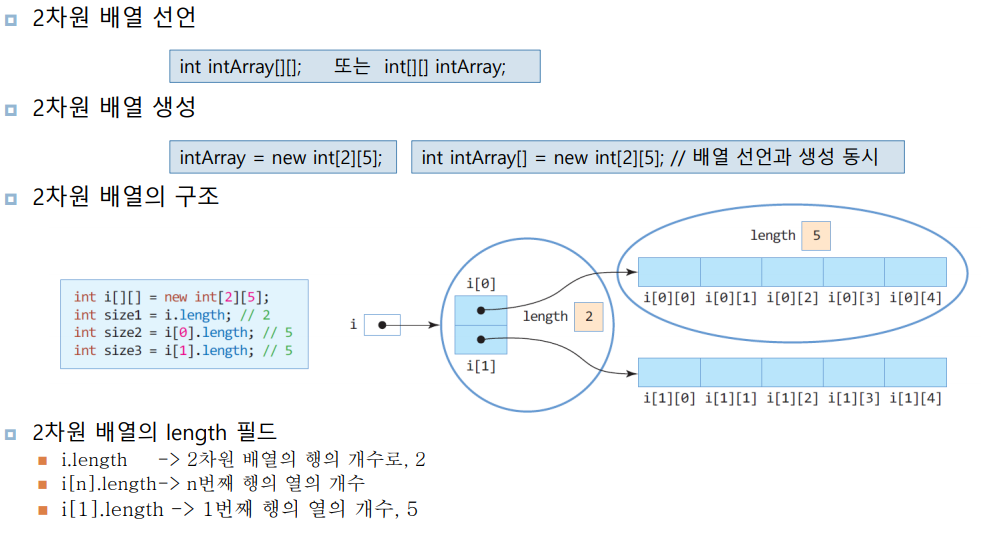
3.4 다차원 배열
2차원 배열
3.5 메소드의 배열 리턴
메소드는 배열에 대한 레퍼런스를 리턴하고 메소드의 리턴타입에 배열의 크기를 지정하지않음
3.6 자바의 예외 처리
예외? 실행 중 오동작이나 결과에 악영향을 미치는 예상치 못한 상황 발생
응용프로그램에 예외에 대처하는 코드가 없으면 자바플랫폼이 응용프로그램을 강제로 종료시킴
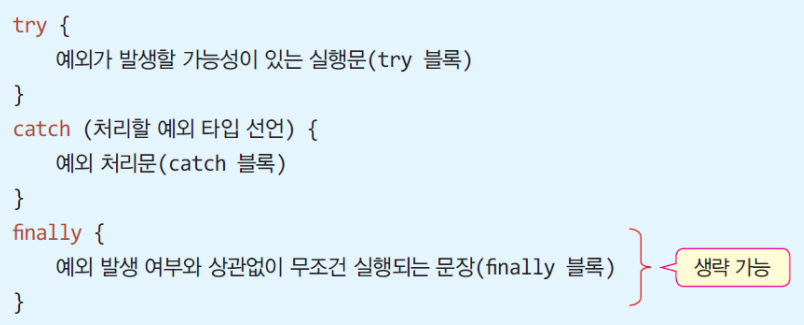
try-catch-finally문으로 예외처리함
catch()의 ()안에 int, double과 같은 기본 타입 사용 불가
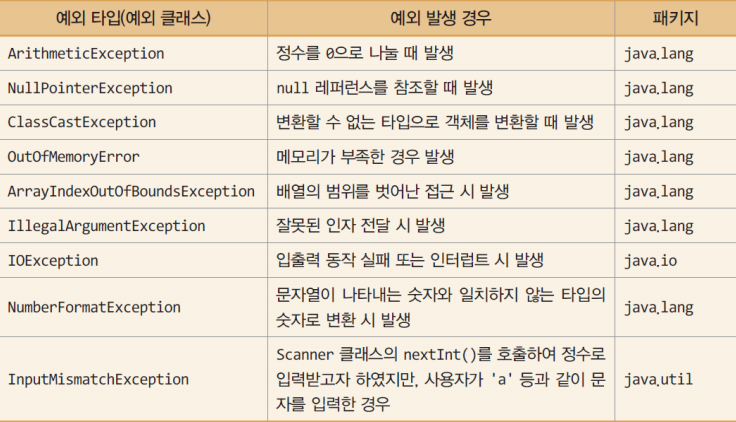
자바의 예외클래스
예제 3-1
public class ForSample {

	public static void main(String[] args) {
		// TODO Auto-generated method stub
		int i, sum=0;

		for (i=1; i<=10; i++) {
			sum+=i; //i가 증가하면서 sum에 추가
			System.out.print(i);

			if (i<=9) {
				System.out.print("+");
			}
			else {
				System.out.print("=");
				System.out.print(sum);
			}
		}
	}
}
예제 3-2
import java.util.Scanner;

public class WhileSample {

	public static void main(String[] args) {
		// TODO Auto-generated method stub

		Scanner scanner;
		scanner = new Scanner(System.in);

		int count=0, n=0;
		double sum=0;

		System.out.println("정수를 입력하고 마지막에 0을 입력하세요.");
		while ((n=scanner.nextInt())!=0) {
			sum=sum+n;
			count++;
		}
		System.out.print("수의 개수는 "+count+"개이며 ");
		System.out.println("평균은 "+sum/count+"입니다.");

		scanner.close();
	}
}
예제 3-3
public class DoWhileSample {

	public static void main(String[] args) {
		// TODO Auto-generated method stub
		char a='a';
		do {
			System.out.print(a);
			a=(char)(a+1);
		} while (a<='z');
	}
}
예제 3-4
public class NestedLoop {

	public static void main(String[] args) {
		// TODO Auto-generated method stub
		for (int i=1; i<10; i++) {
			for (int j=1; j<10; j++) {
				System.out.print(i+"*"+j+"="+i*j);
				System.out.print('\t');
			}
			System.out.println();
		}

	}

}
예제 3-5
import java.util.Scanner;

public class ContinueExample {

	public static void main(String[] args) {
		// TODO Auto-generated method stub
		Scanner scanner = new Scanner(System.in);
		System.out.println("정수를 5개 입력하세요.");
		int sum=0;
		for (int i=0; i<5; i++) {
			int n=scanner.nextInt();
			if (n<=0)
				continue;
			else
				sum+=n;
		}
		System.out.println("양수의 합은 "+sum);
		scanner.close();
	}

}
예제 3-6
import java.util.Scanner;

public class BreakExample {

	public static void main(String[] args) {
		// TODO Auto-generated method stub
		Scanner scanner=new Scanner(System.in);
		System.out.println("exit을 입력하면 종료됩니다.");

		while (true) {
			System.out.print(">>");
			String text=scanner.nextLine(); //스트링 입력

			if(text.equals("exit"))
					break;
		}
		System.out.println("종료합니다...");
		scanner.close();

	}
}
예제 3-7
import java.util.Scanner;

public class ArrayAccess {

	public static void main(String[] args) {
		// TODO Auto-generated method stub
		Scanner scanner=new Scanner(System.in);

		int intArray[];
		intArray=new int[5];

		int max=0;
		System.out.println("양수 5개를 입력하세요");

		for (int i=0; i<5; i++) {
			intArray[i]=scanner.nextInt();
			if (intArray[i]>max)
				max=intArray[i];
		}
		System.out.print("가장 큰 수는 "+max+"입니다.");
		scanner.close();
	}

}
예제 3-8
import java.util.Scanner;

public class ArrayLength {

	public static void main(String[] args) {
		// TODO Auto-generated method stub
		Scanner scanner=new Scanner(System.in);

		System.out.println("5개의 정수를 입력하세요");
		int intArray[]=new int[5]; //배열 생성과 선언
		double sum=0.0;

		for(int i=0; i<intArray.length; i++)
			intArray[i]=scanner.nextInt();
		for(int i=0; i<intArray.length; i++)
			sum+=intArray[i];
		System.out.print("평균은 "+sum/intArray.length);

		scanner.close();
	}

}
예제 3-9
public class foreachEx {

	public static void main(String[] args) {
		// TODO Auto-generated method stub
		int [] n = {1,2,3,4,5};
		int sum=0;

		for(int k:n ) { //k는 n[0], n[1], ... n[4]
			System.out.print(k+" ");
			sum+=k;
		}
		System.out.println("합은 "+sum);

		String f[]= {"사과","배","체리","딸기","포도"};
		for(String s:f)
			System.out.print(s+" ");
	}

}
예제 3-10
public class ScoreAverage {

	public static void main(String[] args) {
		// TODO Auto-generated method stub
		double score[][]= {{3.3, 3.4},
						   {3.5, 3.6},
						   {3.7, 4.0},
						   {4.1, 4.2}};
		double sum=0;
		for(int year=0; year<score.length; year++)
			for(int term=0; term<score[year].length; term++)
				sum+=score[year][term];

		int n=score.length; //4
		int m=score[0].length; //2
		System.out.println("4학년 전체의 평균은 "+sum/(n*m));

	}

}
예제 3-11
public class ReturnArray {
	static int[] makeArray() {
		int temp[]=new int[4];
		for(int i=0; i<temp.length; i++)
			temp[i]=i;
		return temp;
	}

	public static void main(String[] args) {
		// TODO Auto-generated method stub
		int intArray[];
		intArray=makeArray();
		for(int i=0; i<intArray.length; i++)
			System.out.print(intArray[i]+" ");

	}

}
예제 3-12,13
import java.util.Scanner;

public class DivideByZero {

	public static void main(String[] args) {
		// TODO Auto-generated method stub
		Scanner scanner=new Scanner(System.in);
		int dividend; //나뉨수
		int divisor; //나눗수

		System.out.print("나뉨수를 입력하세요:");
		dividend=scanner.nextInt();
		System.out.print("나눗수를 입력하세요:");
		divisor=scanner.nextInt();

		try {
		System.out.println(dividend+"를 "+divisor+"로 나누면 몫은 "+dividend/divisor+"입니다.");
		}
		catch(ArithmeticException e) {
			System.out.println("0으로 나눌 수 없습니다."); //ArithmeticException e는 0으로 나눴을때 예외 처리 코드
		}
		finally {
			scanner.close();
		}
	}

}
예제 3-14
import java.util.InputMismatchException;
import java.util.Scanner;

public class InputException {

	public static void main(String[] args) {
		// TODO Auto-generated method stub
		Scanner scanner=new Scanner(System.in);
		System.out.println("정수 3개를 입력하세요");
		int sum=0, n=0;

		for (int i=0; i<3; i++) {
			System.out.print(i+">>");
			try {
			n=scanner.nextInt();
			}
			catch (InputMismatchException e) {
				System.out.println("정수가 아닙니다. 다시 입력하세요.");
				scanner.next(); //정수가 아닌 입력값을 버린다.
				i--;
				continue;
			}
			sum+=n;
		System.out.println("합은 "+sum);
		scanner.close();
		}
	}
}