5 RPC Node Providers with High Performance
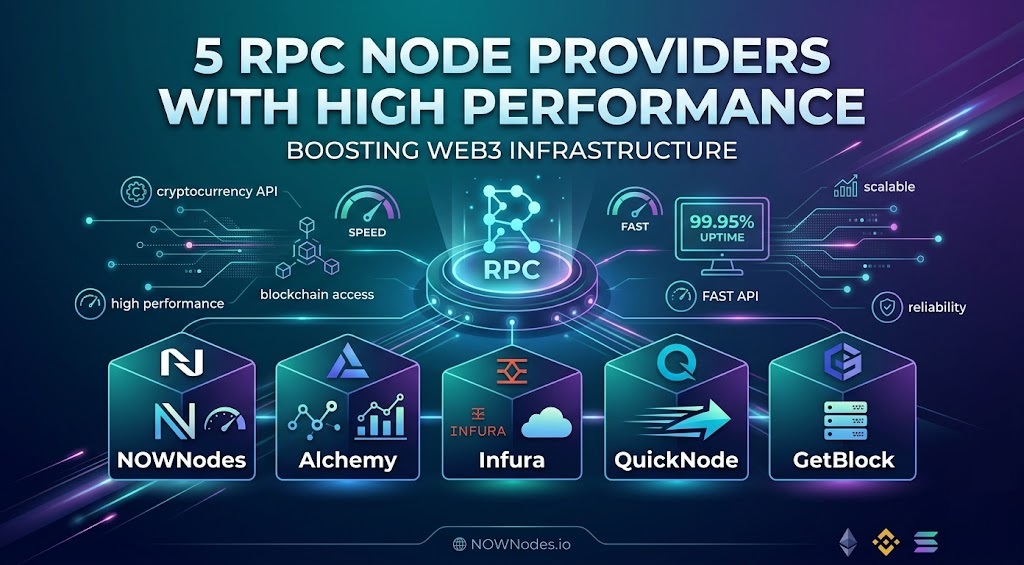
Modern blockchain infrastructure is as crucial as its applications. Wallets, exchanges, analytics platforms, and payment services require fast, reliable on-chain data. Applications frequently interface with blockchain networks through RPC nodes. Slow or unreliable RPC providers can be a significant drag on a product. Transactions might be delayed, balance information could take ages to refresh, and the overall user experience suffers. Consequently, numerous crypto companies opt for RPC node providers rather than constructing their own infrastructure. This allows businesses to focus on product development while these services handle server maintenance, node clusters, and performance optimization. Nowadays, many dependable providers emphasize speed, scalability, and developer-friendly APIs. The following five RPC node providers offer consistent blockchain network connectivity and robust infrastructure.
1. NOWNodes
NOWNodes has established itself as a dependable infrastructure gateway for projects that need quick and expandable access to blockchain data. Companies can connect to NOWNodes instead of running and maintaining nodes themselves. This gives them access to dozens of blockchains through a single interface. Because it puts a lot of emphasis on performance and stability, wallets, exchanges, and payment platforms that need constant access to on-chain data often use it. NOWNodes is different from other nodes because it has a powerful cryptocurrency API and a rpc node infrastructure that is very well optimized for production environments. The service gives you access to more than 120 blockchain networks and has a 99.95% uptime rate. It also offers unlimited RPS across all plans, which solves one of the biggest problems developers have when they want to grow their apps.
The platform also puts a lot of emphasis on being easy to use and reliable. Developers don't have to worry about node synchronization, network upgrades, or monitoring. They just connect to the API endpoint and start working with blockchain data. NOWNodes runs distributed node clusters with failover systems and load balancing behind the scenes. These help keep performance steady even when there are a lot of people using the service. Here are some of the most important things that make NOWNodes appealing to businesses:
-
A single infrastructure provider gives you access to more than 120 blockchains.
-
RPS is unlimited on all pricing levels.
-
Support and monitoring around the clock
-
Automatic failover systems keep uptime high.
Because of this method, NOWNodes has become a trusted infrastructure partner for well-known crypto platforms that need stable blockchain connections but don't want to have to deal with complicated node infrastructure themselves.
2. Alchemy
Many people think that Alchemy is one of the best blockchain infrastructure platforms in the business. The company started out focusing on Ethereum, but now it supports many networks and has built a strong reputation among developers who make DeFi apps, NFT platforms, and big blockchain services. The number of developer tools that Alchemy offers along with RPC access sets it apart from many of its competitors. The platform has more than just node connectivity; it also has analytics, debugging tools, and better APIs that make it easier to work with blockchain development.
Alchemy also puts a lot of emphasis on performance. The company runs a lot of infrastructure that can handle heavy traffic, which is especially important for apps that need to talk to Ethereum when the network is busy. Developers often choose Alchemy because it has both stable infrastructure and useful tools that make it easier and faster to build and grow blockchain apps. Some of the main benefits that the platform usually talks about are:
-
RPC infrastructure that works best for big blockchains
-
Tools for advanced developers and monitoring features
-
Infrastructure that can grow with big Web3 apps
-
A lot of support for Ethereum-based projects in the ecosystem
Alchemy is now one of the most well-known infrastructure providers in the Web3 ecosystem because of this mix of infrastructure and developer tools.
3. Infura
Infura is one of the oldest and most popular providers of RPC infrastructure in the blockchain space. ConsenSys made it, and it quickly became popular in the Ethereum ecosystem. Many big Web3 apps have used it for years. The platform gives developers easy-to-use API endpoints that let apps talk to blockchain networks without having to run their own nodes. This makes things a lot easier to run, especially for startups and teams that would rather work on product development than infrastructure management.
The company is known for being reliable and is widely used in the Ethereum ecosystem. Because Infura has been around for a long time and has a good track record, many wallets and dApps have used it as their main node provider in the past. Over time, Infura added more networks and new infrastructure services for developers to its list of services. Some features that people often agree on are:
-
You can always get to Ethereum and other networks that are supported.
-
Infrastructure that can grow to support big dApps
-
Simple API endpoints make it easy to integrate.
-
Support from ConsenSys and a strong presence in the ecosystem
Even though a lot of new infrastructure providers have entered the market, Infura is still one of the most important RPC services for a lot of the Web3 ecosystem.
4. QuickNode
In the last few years, QuickNode has become very popular, especially among developers who need to quickly access blockchain data. The company puts a lot of effort into optimizing performance and distributing infrastructure around the world. This helps reduce latency for apps that run in different parts of the world. QuickNode doesn't just offer standard RPC endpoints. Instead, it focuses on fast response times and extra services that help developers scale their apps quickly and easily.
One reason a lot of teams choose QuickNode is that it strikes a good balance between speed and ease of use. The platform makes it easy to manage infrastructure by giving you quick RPC connections, useful dashboards, analytics, and configuration options. This method is attractive to both new Web3 product startups and established platforms that need blockchain connectivity that can grow with them. QuickNode is often thought of as having the following features:
-
Global RPC infrastructure with high performance
-
Quick node synchronization and low latency
-
Dashboards and monitoring tools for developers
-
Support for more than one blockchain network
QuickNode has become a strong competitor among RPC providers because it focuses on speed and optimizing infrastructure.
5. GetBlock
GetBlock is another infrastructure provider that makes it easier for developers and businesses to use blockchain. Depending on their performance and scalability needs, users can connect to multiple blockchain networks through dedicated or shared RPC nodes on the platform. GetBlock is appealing to businesses that want more control over how their infrastructure is set up while still using a managed service because it offers flexible deployment options.
The company is focused on making sure that blockchain connections are stable across different networks while keeping the integration process as simple as possible. Using standard APIs, developers can quickly connect to supported blockchains and start working with network data right away. GetBlock is easy to use, which makes it a good choice for teams that want to build blockchain apps without having to worry about maintaining the infrastructure. Some of the most talked-about features are:
-
Access to more than one blockchain network
-
Options for dedicated and shared nodes
-
APIs for standard RPC and WebSocket
-
Infrastructure that can grow with Web3 apps
As the blockchain ecosystem grows, infrastructure providers like GetBlock help developers quickly connect to networks without needing to know a lot about how to manage nodes.
In conclusion
The success of contemporary blockchain applications hinges on a dependable RPC infrastructure. Consider this: a wallet retrieving balance information, an exchange verifying transactions, and an analytics platform indexing blockchain data all rely on swift and stable node connectivity. Setting up and maintaining nodes independently can be both expensive and technically challenging. Consequently, numerous businesses opt to outsource their infrastructure needs to specialized RPC providers.
NOWNodes, Alchemy, Infura, QuickNode, and GetBlock are all in the business of providing dependable, high-performing access to blockchains. They share a common goal: to furnish Web3 applications with consistent, scalable access to blockchain networks. While their approaches vary some emphasizing developer tools, others prioritizing raw infrastructure performance the demand for robust RPC infrastructure will inevitably increase as the crypto ecosystem expands. This makes these providers a critical component of the blockchain technology stack.
