Modern Podology Clinics
Modern Podology Clinics: The Paradigm Shift in Global Foot Care
In the rapidly evolving landscape of health, wellness, and aesthetic medicine, traditional approaches to foot care are becoming obsolete. Today's discerning patients expect far more from premium clinics than bas ic cosmetic procedures. They seek comprehensive, evidence-based medical solutions that lie at the intersection of deep anatomical knowledge and cutting-edge digital technology. For healthcare investors, clinic owners, and medical entrepreneurs, this shift signifies that the classic service delivery format is rapidly losing its competitive edge and profit margins.
The global solution to this market demand is the integration of advanced, high-tech podology. This specialized discipline focuses on preserving health and restoring function without resorting to outdated, highly invasive methods. Upgrading a facility to include a dedicated, high-tech podology department is no longer just a trend; it is a strategic necessity. It represents a powerful avenue to significantly increase the average transaction value, guarantee exceptional patient retention rates, and elevate a clinic's reputation to meet stringent international standards.
From Basic Aesthetics to Evidence-Based Podology
The primary distinction of a modern podology practice is its unwavering focus on evidence-based methodologies and the strict avoidance of unnecessary surgical interventions. For decades, patients suffering from complex nail deformities or severe foot pain had limited options, often being forced to choose between superficial cosmetic relief or aggressive surgical extractions that required long, painful recovery periods.
Today, world-class clinics are adopting advanced non-surgical techniques. By utilizing complex systems that provide dosed and adaptive tension---such as medical-grade steel wire, specialized elastic components, and shape-memory alloys---specialists can gently and effectively correct nail deformities over time.
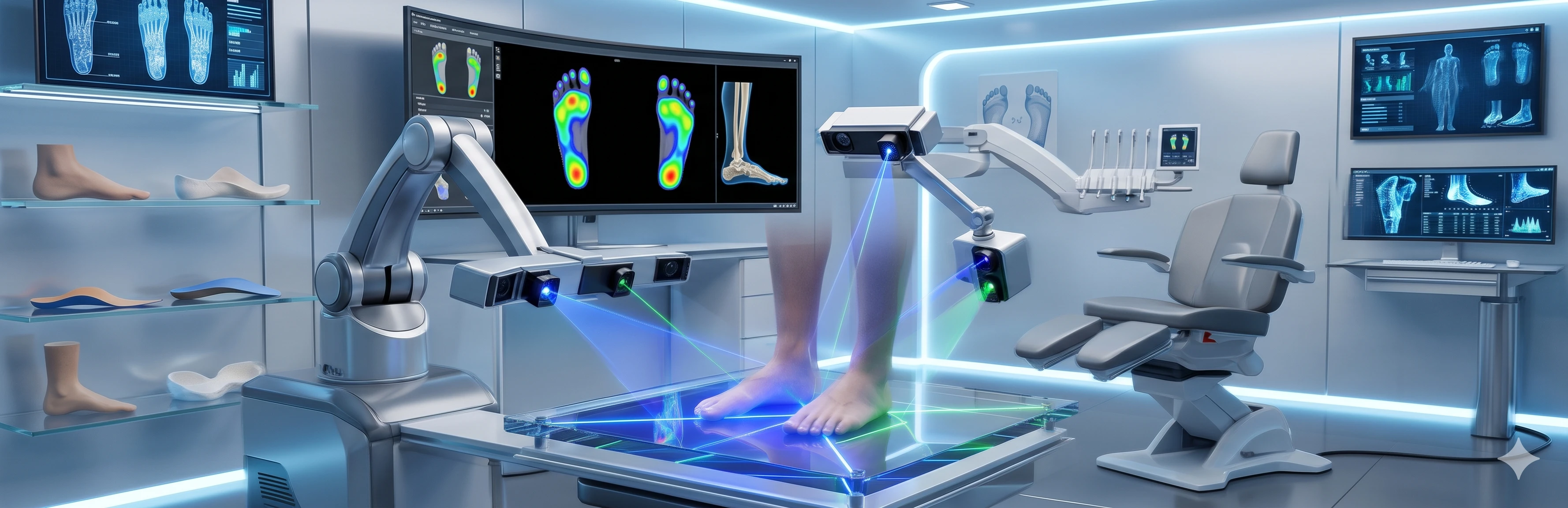
Advanced digital assessment in a modern podology clinic.
For a modern medical or wellness business, this opens up a highly lucrative niche. Clinics can now successfully treat patients who have struggled with chronic foot issues for years without finding adequate solutions. A specialist who masters the techniques of preserving and completely reconstructing the nail apparatus without a scalpel generates profound patient loyalty. This level of care triggers powerful word-of-mouth marketing, drawing in a continuous stream of new, highly motivated clients who value expertise over price.
The Orthonyxia Revolution: A Non-Surgical Future
Orthonyxia, the science of correcting nail plates using specialized braces and tension systems, is arguably the most impactful advancement in modern podology. This field heavily relies on the principles of physics and materials science. Modern systems utilize titanium threads and custom-calibrated braces to exert a precise, continuous lifting force on the nail edges.
The beauty of advanced orthonyxia lies in its biomechanical logic. According to peer-reviewed research on providing dosed and adaptive tension, applying a calculated, constant trajectory of tension using steel wire and elastic components allows the nail matrix to adapt and grow correctly without tissue trauma. This completely eliminates the need for anesthesia, incisions, or extended downtime. Patients can walk out of the clinic and immediately return to their active lifestyles, including sports.
From a B2B perspective, integrating advanced orthonyxia into a clinic's service menu transforms the business model. These are premium, high-ticket procedures that require regular follow-up adjustments. This creates a predictable, recurring revenue stream. The clinic shifts from selling one-off aesthetic treatments to providing long-term medical management and rehabilitation.
Digital Transformation: 3D Tech and Biomechanics
The integration of digital technology is the second massive pillar of clinical modernization. A contemporary podology treatment room no longer relies solely on manual labor and traditional tools. The introduction of high-precision digital equipment pushes the service firmly into the absolute premium segment.
One of the most revolutionary additions is the use of dynamic 3D scanning and computer-assisted gait analysis. By utilizing advanced pressure sensors and high-resolution optical scanners, a specialist can instantly map the biomechanics of a patient's step. This technology highlights areas of excessive friction, unequal weight distribution, and structural imbalances that are invisible to the naked eye.
Furthermore, this digital data is now seamlessly integrated with advanced 3D printing technology. Instead of relying on messy, inaccurate plaster casts, modern clinics can instantly transmit digital foot scans to medical-grade 3D printers. These machines use specialized polymers to create custom anatomical insoles and specialized offloading elements with microscopic precision.
This digitalization drastically minimizes human error, accelerates the diagnostic process, and makes treatment outcomes highly predictable. When a client sees a high-tech, real-time 3D visualization of their own foot mechanics on a monitor, the perceived value of the consultation skyrockets. This transparency builds absolute trust between the patient and the clinic.
Bridging the Gap: The Need for Systematic B2B Education
However, the most expensive diagnostic equipment and the most advanced 3D printers remain entirely useless without highly qualified personnel to operate them. On the global market---particularly in rapidly developing regions such as the Middle East, Africa, and parts of Asia---there is an acute shortage of specialists possessing fundamental, scientific knowledge of foot anatomy. Modernizing a clinic is functionally impossible without implementing a systematic, rigorous training program for the medical team.
The optimal approach for scaling a B2B healthcare business involves a clear, multi-stage educational hierarchy. This should start with fundamental safety protocols and pathology identification, advancing through complex non-surgical correction methods, and culminating in an expert level of biomechanical reconstruction.
Clinic owners must invest in proven, structured curricula to elevate their staff. To ensure global standards are met, many forward-thinking investors are partnering with platforms that provide advanced podology training designed specifically for international professionals. Training a team according to unified, evidence-based international protocols allows a clinic to completely eliminate medical errors, confidently scale the business, and position itself as an undisputed regional authority in foot care.
The Economics of Innovation: Maximizing ROI
When analyzing the financial viability of such an upgrade, the integration of advanced podology and IT solutions offers an exceptionally high Return on Investment (ROI). High-tech podological procedures carry a significant added value. Because the barrier to entry requires specific expertise and equipment, clinics face far less local competition compared to standard cosmetic services.
Additionally, a high-tech podology center acts as a magnet for cross-disciplinary traffic. It naturally attracts professional athletes seeking performance optimization, elderly patients requiring diabetic foot management, and individuals needing complex rehabilitation after trauma. These demographic segments typically possess a high lifetime value (LTV) and frequently require complementary services, such as physiotherapy or specialized retail products, further boosting the clinic's bottom line.
Conclusion: Setting the New Global Standard
The transformation of an ordinary foot care room into a center of advanced podology represents a strategic paradigm shift. It is a transition toward a powerful symbiosis of deep clinical knowledge, non-surgical correction methods, and digital innovations like 3D printing and smart materials.
For investors and clinic managers, adopting this modern framework is the key to future-proofing their business. By investing in proper education, embracing technological advancements, and adhering strictly to evidence-based practices, clinics can not only maximize their profitability but also set the new global standard for quality patient care.
