최단 경로(Shortest Path)
가중 그래프에서 구성하는 간선 간 가중치 합이 최소가 되도록 최단 경로를 찾는 알고리즘
최단 경로 알고리즘 유형
- Dijkstra 알고리즘 : 단일 최단 경로 최소 비용 산출
- A* 알고리즘 : 휴리스틱 방법 사용한 탐색
- Bellman-Ford 알고리즘 : 음수 가중치 허용한 비용 산출
- Floyd-Warshall : 동적 계획법 기반 고차원 기법
Dijkstra 알고리즘
그래프에서 출발점과 도착점 사이의 최단 거리를 구하는 알고리즘
보통 단일 정점 간 최단 경로 산출 시 사용, 도로 교통망이나 OSPF 등의 네트워크 라우팅 프로토콜에 널리 이용
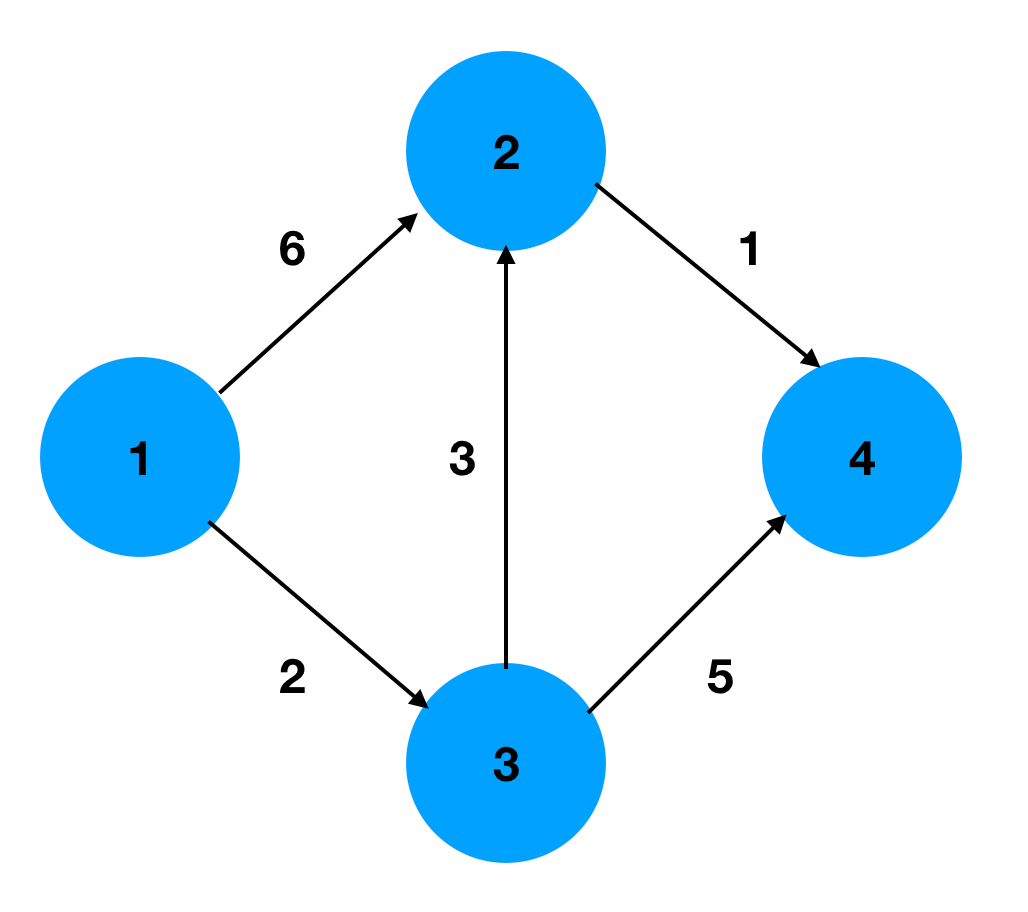
구현 메서드(method)
- 정점/간선 추가 :
ShortestPath.addVertex(),ShortestPath.addEdge() - 다익스트라 알고리즘 :
ShortestPath._extractMin(),ShortestPath.dijkstra()
// shortestPath() : edge object 객체 저장을 위한 생성자
// key : vertex
// value : list 형태로 연결된 vertex를 표현하여 edge 연결

function ShortestPath() {
  this.edges = {};
}

// addVertex() : 정점 추가(간성 비용 표시를 위해 object 형태로 저장)
ShortestPath.prototype.addVertex = function (vertex) {
  this.edges[vertex] = {};
};

// addEdge : 간선 추가
ShortestPath.prototype.addEdge = function (srcVertex, dstVertex, weight) {
  this.edges[srcVertex][dstVertex] = weight;
};

// _extractMin() : 최단 거리 노드 탐색
ShortestPath.prototype._extractMin = function (queue, dist) {
  let minDistance = Number.POSITIVE_INFINITY;
  let minVertex = null;

  for (let vertex in queue) {
    if (dist[vertex] <= minDistance) {
      minDistance = dist[vertex];
      minVertex = vertex;
    }
  }
  return minVertex;
};

// dijkstra() : 다익스트라 최단 경로 탐색
ShortestPath.prototype.dijkstra = function (start) {
  let queue = {};
  let dist = {};

  for (let vertex in this.edges) {
    dist[vertex] = Number.POSITIVE_INFINITY;
    queue[vertex] = this.edges[vertex]; // edge에 연결되어 있는 간선 정보까지 넣어준다
  }

  dist[start] = 0;
  while (Object.keys(queue).length != 0) {
    let u = this._extractMin(queue, dist);
    delete queue[u];
    for (let neighbor in this.edges[u]) {
      let alt = dist[u] + this.edges[u][neighbor];
      if (alt < dist[neighbor]) dist[neighbor] = alt;
    }
  }

  for (let vertex in this.edges) {
    if (dist[vertex] === Number.POSITIVE_INFINITY) delete dist[vertex];
  }

  return dist;
};

let path = new ShortestPath();
path.addVertex("A");
path.addVertex("B");
path.addVertex("C");
path.addVertex("D");
path.addVertex("E");

path.addEdge("A", "B", 10);
path.addEdge("A", "C", 3);
path.addEdge("B", "C", 1);
path.addEdge("B", "D", 2);
path.addEdge("C", "B", 4);
path.addEdge("C", "D", 8);
path.addEdge("C", "E", 2);
path.addEdge("D", "E", 7);
path.addEdge("E", "D", 9);

console.log(path);
console.log(path.dijkstra("A"));
console.log(path.dijkstra("B"));
console.log(path.dijkstra("C"));

-----------------------------------------------------------
OUTPUT
ShortestPath {
  edges: {
    A: { B: 10, C: 3 },
    B: { C: 1, D: 2 },
    C: { B: 4, D: 8, E: 2 },
    D: { E: 7 },
    E: { D: 9 }
  }
}
{ A: 0, B: 7, C: 3, D: 9, E: 5 }
{ B: 0, C: 1, D: 2, E: 3 }
{ B: 4, C: 0, D: 6, E: 2 }
Floyd-Warshall 알고리즘
동적 계획법을 활용해, 그래프에서 가능한 모든 정점 쌍에 대해 최단 거리를 구하는 알고리즘
음의 가중치가 있어도 사용 가능하며, 만은 수의 간선으로 이루어져 있는 밀집 그래프(Dense Graph)에 사용 적합
- 2차원 Object 형태로 만든다
구현 메서드(method)
- 정점/간선 추가 :
ShortestPath.addVertex(),ShortestPath.addEdge() - 다익스트라 알고리즘 :
ShortestPath.floydWarshall()
// shortestPath() : edge object 객체 저장을 위한 생성자
// key : vertex
// value : list 형태로 연결된 vertex를 표현하여 edge 연결

function ShortestPath() {
  this.edges = {};
}

// addVertex() : 정점 추가(간성 비용 표시를 위해 object 형태로 저장)
ShortestPath.prototype.addVertex = function (vertex) {
  this.edges[vertex] = {};
};

// addEdge : 간선 추가
ShortestPath.prototype.addEdge = function (srcVertex, dstVertex, weight) {
  this.edges[srcVertex][dstVertex] = weight;
};

// _extractMin() : 최단 거리 노드 탐색
ShortestPath.prototype._extractMin = function (queue, dist) {
  let minDistance = Number.POSITIVE_INFINITY;
  let minVertex = null;

  for (let vertex in queue) {
    if (dist[vertex] <= minDistance) {
      minDistance = dist[vertex];
      minVertex = vertex;
    }
  }
  return minVertex;
};

// floydWarshell() : 플로이드-워셜 최단 경로 탐색
ShortestPath.prototype.floydWarshall = function () {
  let dist = {};
  for (let srcVertex in this.edges) {
    dist[srcVertex] = {};
    for (let dstVertex in this.edges) {
      if (srcVertex === dstVertex) dist[srcVertex][dstVertex] = 0;
      else dist[srcVertex][dstVertex] = Number.POSITIVE_INFINITY;
    }
  }

  for (let srcVertex in this.edges) {
    for (let dstVertex in this.edges[srcVertex]) {
      dist[srcVertex][dstVertex] = this.edges[srcVertex][dstVertex];
    }
  }

  // 업데이트 되는 부분
  for (let minVertex in this.edges) {
    for (let srcVertex in this.edges) {
      for (let dstVertex in this.edges) {
        dist[srcVertex][dstVertex] = Math.min(
          dist[srcVertex][dstVertex],
          dist[srcVertex][minVertex] + dist[minVertex][dstVertex]
        );
      }
    }
  }

  for (let srcVertex in this.edges) {
    for (let dstVertex in this.edges) {
      if (dist[srcVertex][dstVertex] === Number.POSITIVE_INFINITY)
        delete dist[srcVertex][dstVertex];
    }
  }

  return dist;
};

let path = new ShortestPath();
path.addVertex("A");
path.addVertex("B");
path.addVertex("C");
path.addVertex("D");
path.addVertex("E");

path.addEdge("A", "B", 10);
path.addEdge("A", "C", 3);
path.addEdge("B", "C", 1);
path.addEdge("B", "D", 2);
path.addEdge("C", "B", 4);
path.addEdge("C", "D", 8);
path.addEdge("C", "E", 2);
path.addEdge("D", "E", 7);
path.addEdge("E", "D", 9);

console.log(path);
console.log(path.floydWarshall());

-----------------------------------------------------------
OUTPUT
ShortestPath {
  edges: {
    A: { B: 10, C: 3 },
    B: { C: 1, D: 2 },
    C: { B: 4, D: 8, E: 2 },
    D: { E: 7 },
    E: { D: 9 }
  }
}
{
  A: { A: 0, B: 7, C: 3, D: 9, E: 5 },
  B: { B: 0, C: 1, D: 2, E: 3 },
  C: { B: 4, C: 0, D: 6, E: 2 },
  D: { D: 0, E: 7 },
  E: { D: 9, E: 0 }
}
:)