6 out of 7
This unit introduces the core concepts of a computer system, in particular how modern computer systems work, how they are structured, and how they operate. You will work with simulation software that allows you will build your own small computer system. The unit teaches you how to work effectively with modern computer environments and gain sufficient knowledge to be able to adapt to the evolution of computer systems in the future. The unit provides the necessary knowledge and skills for further study in areas such as networking, security, data science and software development.
-QUT unit description-
* Identify componets of a computer.
A computer is made up of many indivisual components.
Simply there are motherboard and peripherals.
There are CPU,Memory etc. on a motherboard. (Img source: Wikipedia)
(add motherboard explanation)
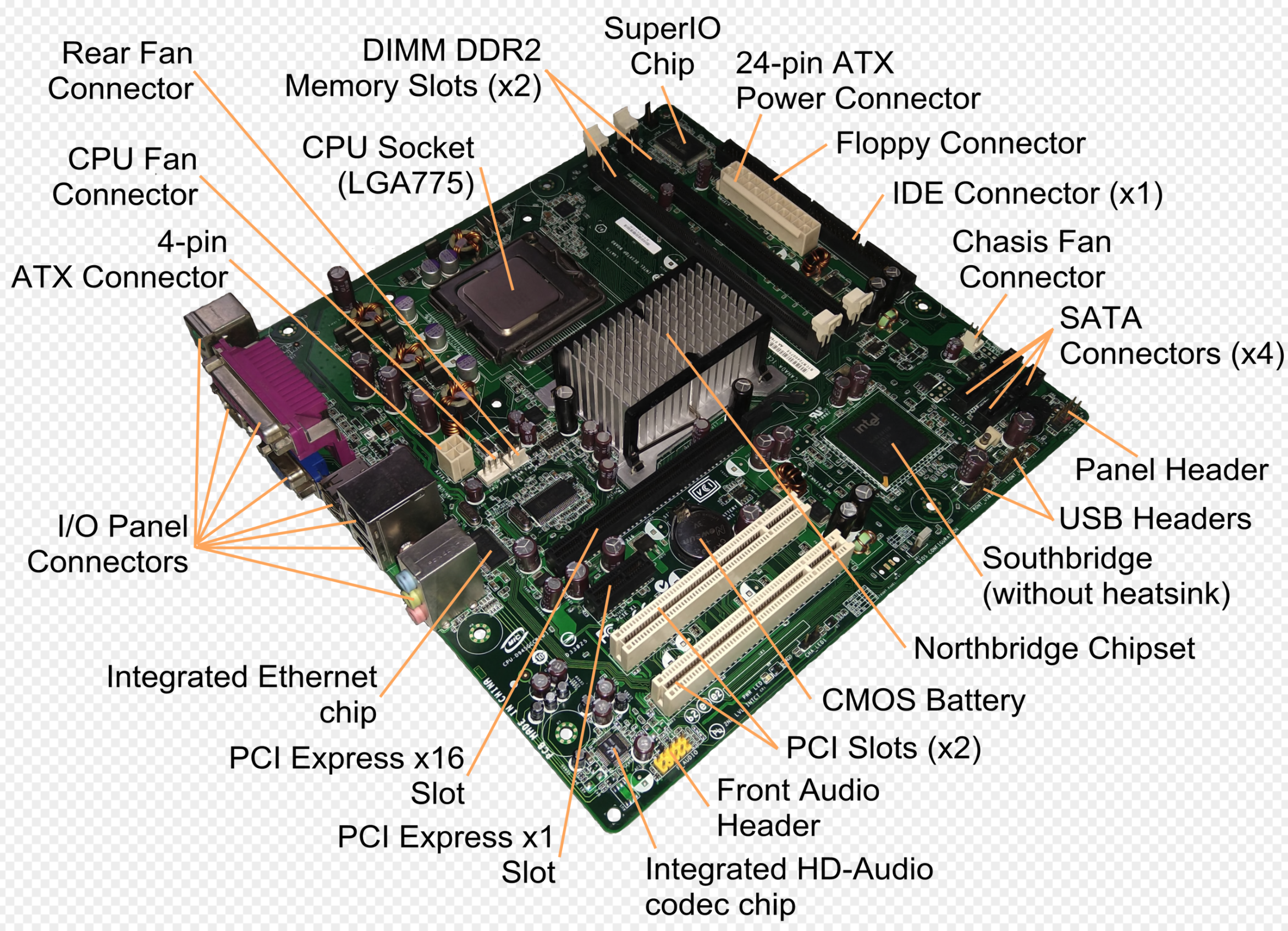
The others, which are not essential depends on the users' or computers' requirements are belongs to peripherals. For example, keyboards, mouse,monitor, speakers, webcam, microphone.
* What are the differences between primary storage and secondary storage.
Firstly, memory is known as primary storage, working storage, and RAM.
The purpose of memory is to keep data easily accessible and provides temporary storage for the Operating System(OS), software programs to the device's processor.
It consists of bits 0 or 1 (8bits = 1byte)
RAM (Random Access Memory), ROM (Read Only Memory), Caches* What is a computer system?
A computer system is a setup that consists of all necessary components to run and operate computer software. It consists CPU(no less than 1), Memory to hold programs and data, I/O devices, Long-term storage.
* Why do I need to study computer system as a student who is pursuing Master of IT?
I think computer system is the basis of everyting regarding the computer related.
Thr attainments from this unit would help me to develop the resource management knowledge of its performance because we try to understand each parts performance and how they work in this unit.
* What does the cloud abstraction represent?
* Cloud Computing
- Off-site
: storage facilities for an organization - Software as a Service (SaaS)
: applications run on a server or processing may be divided on server and client
The highest level of abstraction in the cloud - Platform as a Service (PaaS)
: tools for an developer to create and run applications on a cloud platform
A lower level of abstraction in the public cloud - Infrastructure as a Service (IaaS)
: cloud-based hardware emulation of virtual machines and networking
The lowest level of abstraction in the public
* Give some examples of coluld providers
The big 3 : Google Cloud / Microsft Azure / Amazon Web Services (AWS)
* Virtualization's concept
Virtualization in Computer systems examples
: Virtual memory , Virtual networks, Java Virtual Machine
* Standards
: Created to ensure universal compatibility of data formats and protocols
: May be created by committee or may become a de facto standard through popular use
- computer languages: Java, SQL, C, Javascript
- display standards: Postscript, MPEG-2, JPEG, PNG
- character set standards: ASCII, Unicode, EBCDIC
- multimedia standards: MPEG-2, MPEG-4, MP3, DVD-ROM
* Protocols (source from QUT)
: Common rules of communication between computers, I/O devices, and many software programs
- HTTP (Hypertext Transfer Protocol)
: Communication features(=transfer information) between Web servers and Web browsers
ex) data representation, signaling characteristics, message format, meanings of messages, identification and authentication - TCP/IP ( Transmission Control Protocol/Internet Protocol)
:between computers on the Internet and local area networks - SATA
:between storage devices and computers - XML, RSS, SIP
: new protocols developed to meet new demands
XML(Extensible markup Languege) - a markup language that provides rules to define any data.
RSS(Really Simple Syndication) - a web feed that allows users and applications to access updates to websites in a standardized, computer readable format.
SIP(Systematic Investment Plan) - a signaling protocol that enables the Voice Over Internet Protocol(VoIP) by defining the messages sent between endpoints and managing the actual elements of a call.
https://www.sciencedirect.com/topics/computer-science/protocol-layer