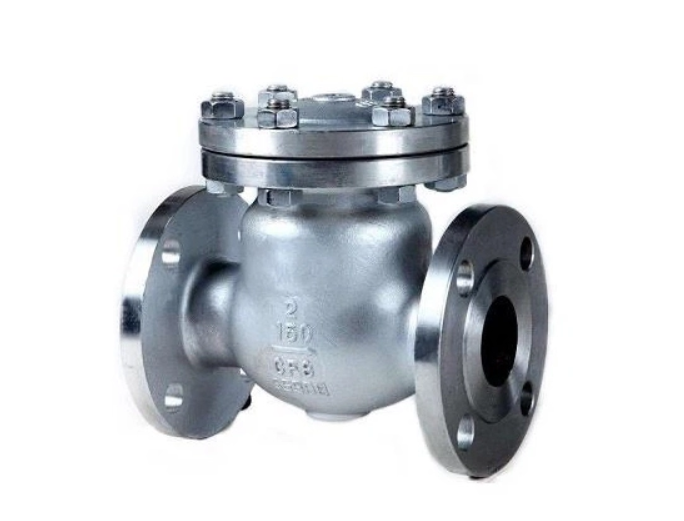
Check Valve 50mm
50mm double check valve is a butterfly check valve connected to the pipeline, which can prevent the backflow of the medium and the change of the pipeline pressure. The 50 mm check valve is light, compact, and easy to install, and is suitable for flow control of liquid, gas, and corrosive media and prevention of backflow. As one of leading wafer check valve manufacturers, our valves are made of cast iron, cast steel, stainless steel, etc., and adopt soft sealing structure, which has good sealing performance and is easy to switch.
How does a 50mm check valve work?
The valve operates by allowing fluid to flow through it in a single direction. It typically consists of a valve body, a seat, and a movable part (like a disc, ball, or flap) that blocks the reverse flow. When fluid flows in the forward direction, it pushes the movable part open. When the flow stops or reverses, the movable part returns to its seat, blocking the flow and preventing backflow.
What are the main applications of a 50mm one way valve?
check valve 50mm are used in various applications such as water supply systems, chemical processing, HVAC systems, agricultural irrigation, and in any system where it is crucial to prevent backflow and protect equipment like pumps and compressors.
What is the pressure rating for a 50mm check valve?
The pressure rating of a non return valve 50mm varies depending on its design and material. Common pressure ratings include PN10, PN16, PN25, and PN40, which indicate the maximum pressure the valve can handle at a specified temperature.
What are the differences between a swing check valve and a ball check valve in 50mm size?
In a swing check valve, the closure mechanism is a swinging disc, which allows for low-pressure drop and is suitable for larger flow rates. In contrast, a ball check valve uses a ball that sits on the seat to block backflow. Ball check valves are more compact and can handle varying flow rates but may have a slightly higher pressure drop compared to swing check valves.
How do I choose the right 50mm check valve for my system?
Selecting the appropriate check valve involves considering factors such as the type of fluid, flow rate, pressure, temperature, and the specific application requirements. Material compatibility with the fluid, valve design (swing, ball, etc.), and the valve's pressure rating are crucial considerations. Consulting with valve manufacturers or experts is recommended to ensure the valve meets all operational needs effectively.
The primary production tools at Gangye include a processing center, a big precision vertical lathe with CNC capabilities, a planer, a boring machine, a digital display milling machine, a plasma spray welding machine, a heat treatment furnace, and others.