Retail Store Photography
Retail Store Photography: The Secret Behind Stores That Get More Customers
Walk into two different stores selling similar products, and you'll probably notice something interesting. One feels bright, inviting, and professional. The other? Not so much. The difference often isn't the products—it's how the space is presented.
That's exactly why retail store photography matters. High-quality images don't just document a retail space; they tell a story about the brand, create trust, and encourage customers to visit. I've seen beautifully designed stores lose potential business simply because their online photos didn't do them justice. It's a shame because first impressions happen online long before someone walks through the front door.
Whether you're opening a boutique, remodeling a flagship store, or updating your website, professional photography can become one of your smartest marketing investments.
Why Retail Store Photography Is More Important Than Ever
Let's be honest. People judge businesses quickly.
Before visiting a store, most customers search online. They check your website, Google Business Profile, social media pages, and even customer reviews. The first thing they notice? Your photos.
Strong retail store photography instantly communicates professionalism. It tells visitors that you care about details, and if you care about your space, they'll assume you care about your customers too.
Poor lighting, crooked angles, or blurry smartphone pictures can send the opposite message, even if your store is amazing in person.
Great Photography Sells More Than Products
Retail photography isn't only about shelves and displays.
It's about creating an emotional connection.
A professional photographer knows how to capture:
- Store layout
- Product displays
- Lighting design
- Interior finishes
- Customer flow
- Brand personality
- Architectural details
These images help customers imagine themselves shopping in your space before they even arrive.
That's powerful marketing.
What Makes Professional Retail Store Photography Different?
Anyone can take a picture.
Creating images that actually help sell a business? That's a different skill.
A professional architectural photographer understands how architecture, lighting, perspective, and composition work together. Instead of simply photographing a room, they showcase how every design element supports the customer experience.
They know how to:
- Control reflections in glass
- Balance indoor and outdoor lighting
- Make spaces appear natural—not overly edited
- Highlight unique architectural features
- Capture wide spaces without distortion
The result feels authentic instead of staged.
Lighting Makes or Breaks Every Retail Photo
Here's something many business owners don't realize.
Retail spaces are surprisingly difficult to photograph.
Large windows create harsh contrasts. LED lighting often produces mixed colors. Reflective floors, mirrors, and display cases can confuse automatic cameras.
Professional photographers spend considerable time balancing light so every area looks clean, bright, and welcoming without appearing artificial.
Good lighting helps products look more appealing, but it also makes customers feel comfortable before they even visit.
Retail Store Photography Helps Every Marketing Channel
Once you have professional images, you'll use them almost everywhere.
Your photos become valuable assets for:
- Company website
- Google Business Profile
- Social media
- Online advertising
- Brochures
- Investor presentations
- Press releases
- Magazine features
- Store directories
Instead of constantly searching for decent pictures, you'll already have a complete visual library ready to support your marketing.
Telling Your Brand Story Through Images
Every retail store has a personality.
A luxury jewelry boutique shouldn't feel the same as a sporting goods store. Likewise, a trendy clothing shop shouldn't look like a grocery store.
Photography should reflect that personality.
Colors, textures, displays, architectural design, signage, and customer pathways all help communicate your brand values without saying a single word.
That's what separates average business photography from exceptional retail store photography.
Why Experience Matters
Retail environments move fast.
Sometimes photographers have only a few hours before opening or after closing. Every minute counts.
Experienced photographers know how to work efficiently while paying attention to details many people overlook, including fingerprints on glass, uneven lighting, cluttered shelves, or distracting reflections.
Those small corrections often make the biggest visual difference.
Commercial Photography Florida Businesses Can Trust
Businesses throughout the state compete in crowded markets.
Whether you're operating in Jacksonville, Orlando, Tampa, Miami, or anywhere else, quality visuals help your business stand out online.
That's why many companies invest in commercial photography Florida services rather than relying on stock images or smartphone photography.
Professional photography creates original content that reflects your actual business—not someone else's.
Customers notice authenticity.
Every Retail Space Is Unique
No two stores are exactly alike.
Some businesses focus on luxury interiors.
Others highlight colorful merchandise, architectural details, or customer experiences.
A skilled photographer develops a custom approach based on the space itself rather than following the same checklist every time.
That's one reason professionally photographed stores always feel more engaging.
Choosing the Right Photographer
When hiring a photographer, don't just compare prices.
Review their portfolio carefully.
Ask yourself:
- Do the images feel natural?
- Is the lighting consistent?
- Can you clearly understand the layout?
- Do the spaces look inviting?
- Would these photos encourage you to visit?
A strong portfolio tells you much more than a list of equipment ever will.
Beyond Retail: Expertise Across Commercial Projects
Many photographers who specialize in retail environments also photograph offices, hotels, restaurants, educational facilities, and mixed-use developments.
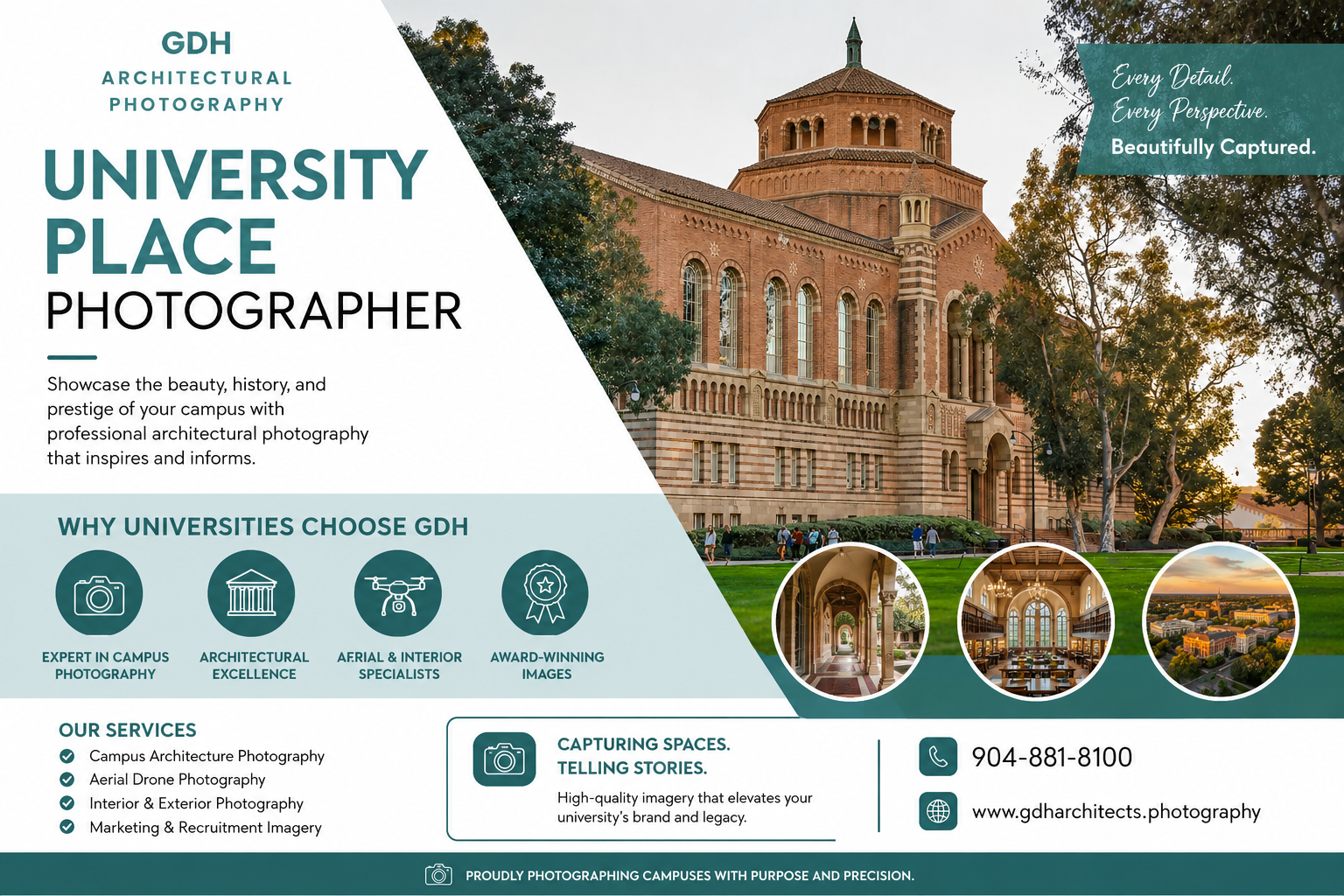
If you're searching for a university place photographer or someone with experience documenting commercial architecture, choosing a photographer who understands both architecture and branding can provide better long-term value.
That broader experience often translates into stronger composition and more effective storytelling across different types of properties.
Invest Once, Benefit for Years
Professional photography isn't something you'll replace every few months.
High-quality images continue working for your business across websites, marketing campaigns, presentations, advertisements, and social media long after the photo session is finished.
That's why many successful retailers view photography as an investment instead of an expense.
When customers see a clean, professionally photographed retail space, they're already forming a positive impression before they arrive.
If you're ready to showcase your business at its absolute best, GDH Architects provides expert retail store photography that highlights every detail of your commercial space with precision, creativity, and architectural expertise. From boutique shops to large retail environments, professional images can strengthen your brand, attract more customers, and give your business a lasting competitive advantage.