WAS 구현 중 생긴 의문
WAS를 직접 구현하면서 쿠키를 다루다 보니, 세션 쿠키를 디폴트로 만들기 위해 max-age를 음수값으로 설정했다.
하지만 브라우저에서 확인해보니 쿠키가 아예 존재하지 않았다.
코드를 살펴봤지만 문제를 못찾았고, RFC 문서를 찾아보았다.
RFC 6265
RFC 6265 §4.1.2.2에는 다음과 같이 정의돼 있다.
If the attribute-value is less than or equal to zero (0), let expiry-time be the earliest representable date and time.
즉, Max-Age가 0 이하이면 즉시 만료되도록 규정하고 있다.
내가 음수를 넣었기 때문에 브라우저는 쿠키를 바로 만료시킨 것이다.
나는 왜 음수값으로 설정했나?
Spring ResponseCookie를 사용해 로그인 기능을 만들 때, 세션 쿠키를 위해 maxAge를 -1로 정의했고, 이를 표준적인 방식이라고 생각했었다.
A negative value results in no "Max-Age" attribute in which case the cookie is removed when the browser is closed
org.springframework.http.ResponseCookie
/**
 * Set the cookie "Max-Age" attribute.
 *
 * <p>A positive value indicates when the cookie should expire relative
 * to the current time. A value of 0 means the cookie should expire
 * immediately. A negative value results in no "Max-Age" attribute in
 * which case the cookie is removed when the browser is closed.
 */
ResponseCookieBuilder maxAge(Duration maxAge);
Spring은 왜 이렇게 모호하게 만들었을까?
이 의문을 Spring Framework에 문서 개선 PR을 올려보았다.
PR의 목적은 ResponseCookie#getMaxAge()와 ResponseCookieBuilder#maxAge()의 Javadoc에서 Max-Age 동작을 RFC 6265 기준으로 더 명확히 설명하는 것이었다. PR에서는 다음처럼 동작을 구분해 문서화하고자 했다. PR
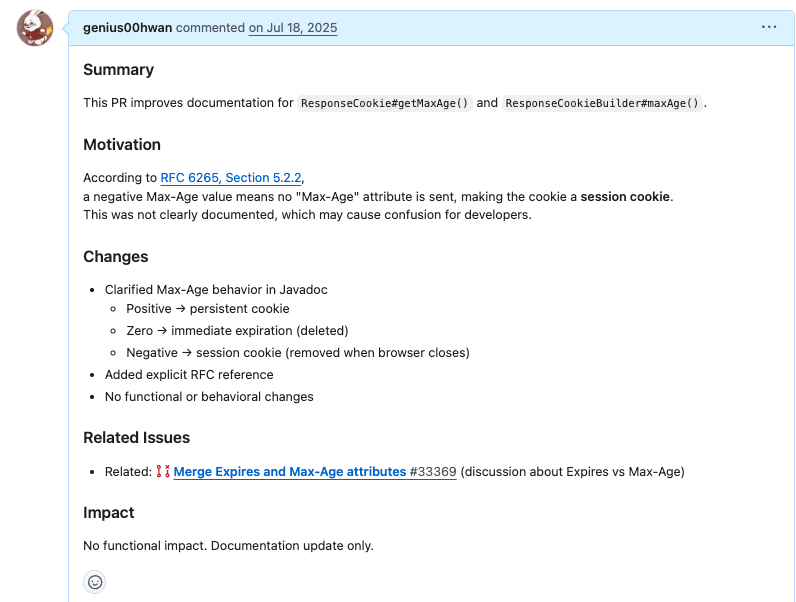
양수: 지정된 시간 이후 만료되는 영속 쿠키
0: 즉시 만료되어 삭제되는 쿠키
음수: Max-Age 속성을 보내지 않으며, 브라우저 종료 시 제거되는 세션 쿠키
음수값이 실제 HTTP 헤더에 그대로 전달되는 것이 아니라 Max-Age 속성 자체를 생략하는 의미로 해석된다는 점을 문서에 드러내고자 했다.
사실 실제 코드를 수정하여 PR을 날리고자 했으나.. 너무 짧게 해석하고 코드를 수정하는 건 아닌가 해서 문서라도 RFC에 맞추자는 의도로..
결과는 reject.

다만 저 한줄만으론 충분히 납득 되지 않아 좀더 조사해보니..
Spring의 잘못은 아니었다.
Spring은 javax.servlet.http.Cookie 의 표준 설계를 그대로 따르고 있다.
/**
 * Sets the maximum age of the cookie in seconds.
 * A positive value indicates that the cookie will expire after that many seconds have passed.
 * A negative value means that the cookie is not stored persistently and will be deleted
 * when the Web browser exits.
 * A zero value causes the cookie to be deleted.
 */
public void setMaxAge(int expiry){}
즉, 음수 = 세션 쿠키라는 해석은 자바에서 시작된 것이다.
톰캣의 실제 동작
톰캣도 이 자바 표준을 따른다.
하지만 톰캣은 RFC 표준을 맞추기 위해 음수값일 때 Max-Age를 아예 헤더에 포함하지 않는다.
톰캣 org.apache.tomcat.util.http.Rfc6265CookieProcessor
@Override
public String generateHeader(cookie, request){
  //...
  if (maxAge > -1) {
      // Negative Max-Age is equivalent to no Max-Age
      header.append("; Max-Age=");
      header.append(maxAge);

      if (maxAge == 0) {
          header.append("; Expires=");
          header.append(ANCIENT_DATE);
      } else {
          COOKIE_DATE_FORMAT.get().format(new Date(System.currentTimeMillis() + maxAge * 1000L),
                                          header, new FieldPosition(0));
      }
  }
즉, maxAge < 0이면 Max-Age와 Expires를 모두 설정하지 않는다.
브라우저는 이를 세션 쿠키로 인식하며, 동작 자체는 RFC와 완전히 일치한다.
왜 이런 차이가 발생했을까?
자바 초기(1997년) 넷스케이프 표준 시절
- 당시 넷스케이프 쿠키 표준에서는 세션 쿠키 = Expires 미설정 방식이었다.
- 자바는 명시적 API 설계를 선호했고, 세션 쿠키를 나타내기 위해 음수를 상태값으로 사용했다.
자바 초기의 언어적·설계적 제약
maxAge는 원시 타입(int)으로 설계되었기 때문에null을 사용할 수 없었다.- 당시에는
Optional이나 자동 박싱(autoboxing)도 없었고, 단순성을 위해 래퍼 타입(Integer) 대신 원시 타입을 선호했다. - 그래서
>0= 영속 쿠키,0= 즉시 만료,<0= 세션 쿠키라는 간단한 규칙이 채택되었다.
RFC 6265(2011) 이후
- RFC에서는 "세션 쿠키 = Max-Age 미설정"으로 명확히 규정.
- 하지만 이미 자바와 톰캣, JBoss 등의 서버는 -1 관례를 사용하고 있었고, 동작상 문제도 없었기 때문에 그대로 유지되었다.
결론
처음엔 Spring의 처리 방식만 보고 의문을 제기했고, 자바와 톰캣의 모호함이 문제라고 생각했다.
다만 이걸 바꾸려면 방대한 자바 생태계 전반을 수정해야 하고, 이미 -1 관례는 자바 개발자들에게 사실상의 표준으로 자리 잡았다.
개발 표준은 결국 문서가 아니라 많은 사람들이 쓰면서 자연스럽게 굳어지는 것이니까.
제일 중요한건 동작 자체에는 아무런 문제가 없다는 점이다.
의문을 제기하는 태도도 중요하지만, 기존 생태계가 만든 현실을 받아들이는 것도 필요하다.
