✔️ 예외 처리 코드
- try-catch-finally 블록
: 생성자 내부와 메소드 내부에서 작성되어
일반 예외와 실행 예외가 발생할 경우
예외 처리를 할 수 있도록 해줌
try {
	예외 발생가능 코드
} catch(예외클래스 e) {
	예외 처리
} finally {
	/*생략 가능*/
	//예외 발생 여부와 상관없이
	//항상 실행할 내용이 있을 경우에만
	//finally 블록을 작성하면 됨
	항상 실행;
}
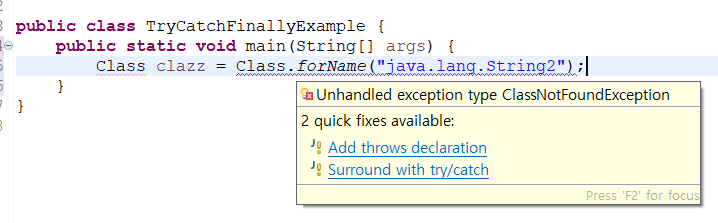
: Class.forName() 메소드는 매개값으로 주어진
클래스가 존재하면 Class객체를 리턴하지만,
존재하지 않으면 ClassNotFoundException을 발생시킴
👩💻 일반 예외 처리
public class TryCatchFinallyExample {
public static void main(String[] args) {
try {
Class clazz = Class.forName("java.lang.String2");
} catch(ClassNotFoundException e){
System.out.println("클래스가 존재하지 않습니다.");
}
}
}
💻 결과
클래스가 존재하지 않습니다.
→ java.lang.String2 클래스가 존재하지 않기 때문에
예외가 발생함→ ArrayIndexOutOfBoundsException이나 NumberFormatException과
같은 실행 예외는 컴파일러가 예외 처리 코드를 체크하지 않기 때문에
이클립스에서도 빨간 밑줄이 생기지 않음
👩💻 실행 예외 처리
public class TryCatchFinallyRuntimeExceptionExample {
public static void main(String[] args) {
String data1 = null;
String data2 = null;
try {
data1 = args[0];
data2 = args[1];
} catch (ArrayIndexOutOfBoundsException e) {
System.out.println("실행 매개값의 수가 부족합니다.");
return;
}
try {
int value1 = Integer.parseInt(data1);
int value2 = Integer.parseInt(data2);
int result = value1 + value2;
System.out.println(data1 + "+" + data2
+ "=" + result);
} catch(NumberFormatException e) {
System.out.println("숫자로 변환할 수 없습니다.");
} finally {
System.out.println("다시 실행하세요.");
}
}
}
💻 결과
실행 매개값의 수가 부족합니다.✔️ 예외 종류에 따른 처리 코드
- 다중 catch
: try 블록 내부에는 다양한 예외가 발생할 수 있음
이럴경우, 다중 catch블록을 작성해야함
try {

} catch(예외클래스 e) {
	예외처리1
} catch(예외클래스 e) {
	예외처리2
}
: catch 블록이 여러 개라 할지라도
단 하나의 catch블록만 실행됨
→ try블록에서 동시 다발적으로 예외가 발생하지 않고,
하나의 예외가 발생하면 즉시 실행을 멈추고
해당 catch블록으로 이동하기 때문
👩💻 다중 catch
public class CatchByExceptionKindExample {
public static void main(String[] args) {
try {
String data1 = args[0];
String data2 = args[1];
int value1 = Integer.parseInt(data1);
int value2 = Integer.parseInt(data2);
int result = value1 + value2;
System.out.println(data1 + "+" + data2 + "=" + result);
} catch (ArrayIndexOutOfBoundsException e) {
System.out.println("실행 매개값의 수가 부족합니다.");
} catch (NumberFormatException e) {
System.out.println("숫자로 변환할 수 없습니다.");
} finally {
System.out.println("다시 실행하세요.");
}
}
}
💻 결과
실행 매개값의 수가 부족합니다.
다시 실행하세요.- catch 순서
: 다중 catch 블록을 작성할 떄는
상위 예외 클래스가 하위 예외 클래스보다 아래 있어야함
- 잘못된 코딩 예
try {
	ArrayIndexOutOfBoundsException 발생

	Number FormatException 발생
} catch(Exception e) {
	에외 처리1
} catch(ArrayIndexOutOfBoundsException e){
	예외 처리2
}

→ ArrayIndexOutOfBoundsException과
   NumberFormatException은 모두 Exception을
  상속값을 받기 때문에 첫번째 catch블록만 선택되어 실행됨

→ 두 번째 catch 블록은 어떤 경우에라도 실행되지 않음

- 올바른 코딩 예

try {
	ArrayIndexOutOfBoundsException 발생

	Number FormatException 발생
} catch(ArrayIndexOutOfBoundsException e) {
	예외 처리1
} catch(Exception e) {
	예외 처리2
}

→ try 블록에서 ArrayIndexOutOfBoundsException이 발생하면
  첫 번째 catch블록을 실행하고, 그 밖의 다른 예외가 발생하면
두 번째 catch블록을 실행함👩💻 catch 블록의 순서
public class CatchOrderExample {
public static void main(String[] args) {
try {
String data1 = args[0];
String data2 = args[1];
int value1 = Integer.parseInt(data1);
int value2 = Integer.parseInt(data2);
int result = value1 + value2;
System.out.println(data1 + "+" + data2 +
"=" + result);
} catch(ArrayIndexOutOfBoundsException e) {
System.out.println("실행 매개값의 수가 부족합니다.");
} catch(Exception e) {
System.out.println("실행에 문제가 있습니다.");
} finally {
System.out.println("다시 실행하세요.");
}
}
}
💻 결과
실행 매개값의 수가 부족합니다.
다시 실행하세요.✔️ 예외 떠넘기기
: 메소드를 호출한 곳으로 예외를 떠넘길 수도 있음
: 이떄 사용하는 키워드가 throws임
- throws 키워드
리턴타입 메소드이름(매개변수, ···) throws 예외클래스1, 예외클래스2, ··· {
}
: 메소드 선언부 끝에 작성되어 메소드에서 처리하지 않은
예외를 호출한 곳으로 떠넘기는 역할
: throws 키워드 뒤에는 떠넘길 예외 클래스를
쉼표로 구분해서 나열해주면 됨
리턴타입 메소드이름(매개변수, ···) throws Exception {
}
: throws Exception만으로도 모든 예외를 간단히
떠넘길 수도 있음
: thorws 키워드가 붙어 있는 메소드는
반드시 try 블록 내에서 호출되어야 함 그리고
catch 블록에서 떠넘겨 받은 예외를 처리해야함
ex)
throws 키워드가 있는 method2()를
method1()에서 호출하는 방법

public void method1() {
	try {
		method2();
	} catch(ClassNotFoundException e) {
		//예외 처리 코드
		System.out.println("클래스가 존재하지 않습니다.");
	}
}

public void method2() throws ClassNotFoundException {
	Class clazz = Class.forName("java.lang.String2");
}

- method1()에서도 try-catch 블록으로 예외를 처리하지 않고
  다음과 같이 throws 키워드로 다시 예외를 떠넘길 수 있음
- 그러면 method1()을 호출하는 곳에서
  try-catch블록을 사용해서 예외를 처리해야함

public void method1() throws ClassNotFoundException {
	method2();
}👩💻 예외 처리 떠넘기기
버전1)
public class ThrowsExample {
public static void main(String[] args) {
try {
findClass();
} catch(ClassNotFoundException e) {
System.out.println("클래스가 존재하지 않습니다.");
}
}
public static void findClass() throws ClassNotFoundException {
Class clazz = Class.forName("java.lang.String2");
}
}
💻 결과
클래스가 존재하지 않습니다.
버전2)
public static void main(String[] args) throws ClassNotFoundException {
findClass();
}
→ main()메소드에서도 throws 키워드를 사용해서 예외를 떠넘길 수 있음
결국 JVM이 최족적으로 예외 처리를 하게 됨
JVM은 예외의 내용을 콘솔에 출력하는 것으로 예외 처리함