1. 자바에서의 정렬방식
Java에서 정렬 기준을 정의하는 방법은 두 가지.
Comparable인터페이스 (Comparable<T>)- 자기 자신이 정렬 기준
- 클래스 내부에
compareTo()메서드를 구현해 정렬 기준을 정의.
Comparator인터페이스 (Comparator<T>)- 외부에서 정렬 기준을 주입.
- 주로 익명 클래스나 람다식으로 사용.
2. 동작 과정
자바의 정렬 메커니즘은 객체 간의 우선순위를 비교하여 결정하는 방식으로 작동.
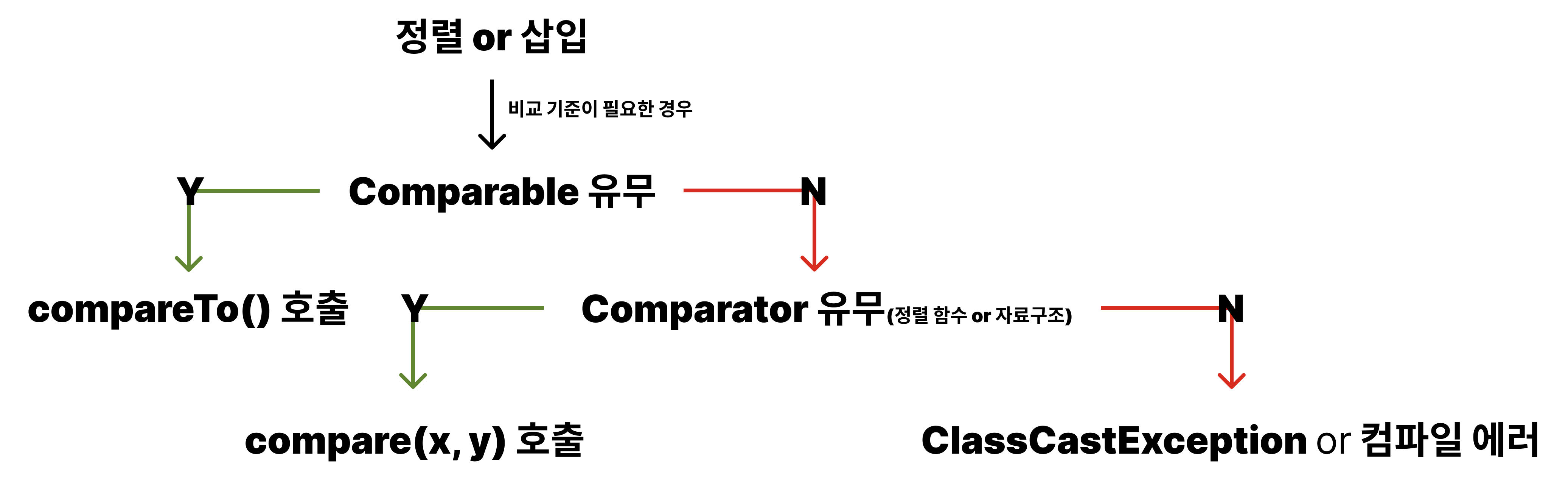
3. Comparable & Comparator
Comparable
- 객체가 Comparable 인터페이스를 구현하고 있다면, compareTo() 메서드가 객체 간 비교에 사용됨
- ex) PriorityQueue, Collections.sort() 등은 내부에서 자동으로 compareTo()를 호출해 순서 결정
- 내부적으로는 힙 구성, 정렬 알고리즘 수행 등에서 다수의 비교가 발생, 매번 compareTo()를 통해 정렬 기준을 판단
Comparator
- 객체가 Comparable을 구현하지 않은 경우 또는 다른 정렬 기준이 필요할 때, 외부에서 Comparator를 주입함
- 주로 PriorityQueue, Arrays.sort, Collections.sort 등에서 두 번째 인자로 전달함
- Comparator는 함수형 인터페이스, compare(x, y) 메서드를 통해 정렬 우선순위를 정의함
- 일반적으로 람다식으로 많이 사용, 특정 필드 기준 정렬, 역순 정렬, 복합 정렬 등 다양한 패턴에 유용함
4. 각 동작마다 차이점
| 항목 | Comparable | Comparator |
|---|---|---|
| 비교 위치 | 클래스 내부 | 외부에서 정의 |
| 코드 유지보수 | 클래스 수정 필요 | 외부에서 유연하게 변경 가능 |
| 다중 정렬 기준 | 불가능 (1개만 정의) | 가능 (여러 Comparator 조합 가능) |
| 성능 | 빠름 (직접 구현, 메서드 호출 적음) | 약간 느림 (람다/익명 클래스 오버헤드) |
| 재사용성 | 낮음 | 높음 |
4. 실제 문제로 알아보기 (백준 11286 - 절댓값 힙)
-
문제 요구 조건:
- 절댓값이 작은 수가 먼저 나오고
- 절댓값이 같으면 더 작은 수가 먼저 나와야 함
두 방식으로 모두 구현 가능
1) Comparable 사용
static class Numbers implements Comparable<Numbers> {
    int value;

    Numbers(int value) {
      this.value = value;
    }

    public int compareTo(Numbers other) {
      if (Math.abs(value) == Math.abs(other.value)) {
        return Integer.compare(value, other.value);
      } else {
        return Integer.compare(Math.abs(value), Math.abs(other.value));
      }
    }
}- 장점: 성능 빠름, 가독성 좋음
- 단점: 한 클래스에 하나의 정렬 기준만 넣을 수 있음
2) Comparator 사용
PriorityQueue<Integer> pq =
        new PriorityQueue<>((x, y) -> {
          return Math.abs(x) == Math.abs(y)
              ? (x > y ? 1 : -1)
              : (Math.abs(x) > Math.abs(y) ? 1 : -1);
});- 장점: 코드가 짧고 유연함, 정렬 기준을 외부에서 바꿀 수 있음
- 단점: 성능적으로 비교가 많을 경우 약간 느릴 수 있음
속도 비교 (체감 기준)
Comparable

Comparator

- Comparable 방식이 일반적으로 약간 더 빠름 (정렬 기준이 객체 내부에 고정되어 있기 때문!)
- Comparator는 유연하지만, 매번 비교 시마다 람다 호출 오버헤드가 있음
5. 느낀점
처음에는 람다의 편의성과 큰 차이점을 못느껴서 항상 Comparator를 사용했었지만, Comparable를 사용한 정렬방식이 훨씬 속도가 빠르다는 점을 알게 되어 추후에는 Comparable를 구현한 정렬방식을 더 많이 사용할 것 같다.

Backend Developer