알고리즘
- 그래프 이론
- 그래프 탐색
- 너비 우선 탐색
1. 문제
-
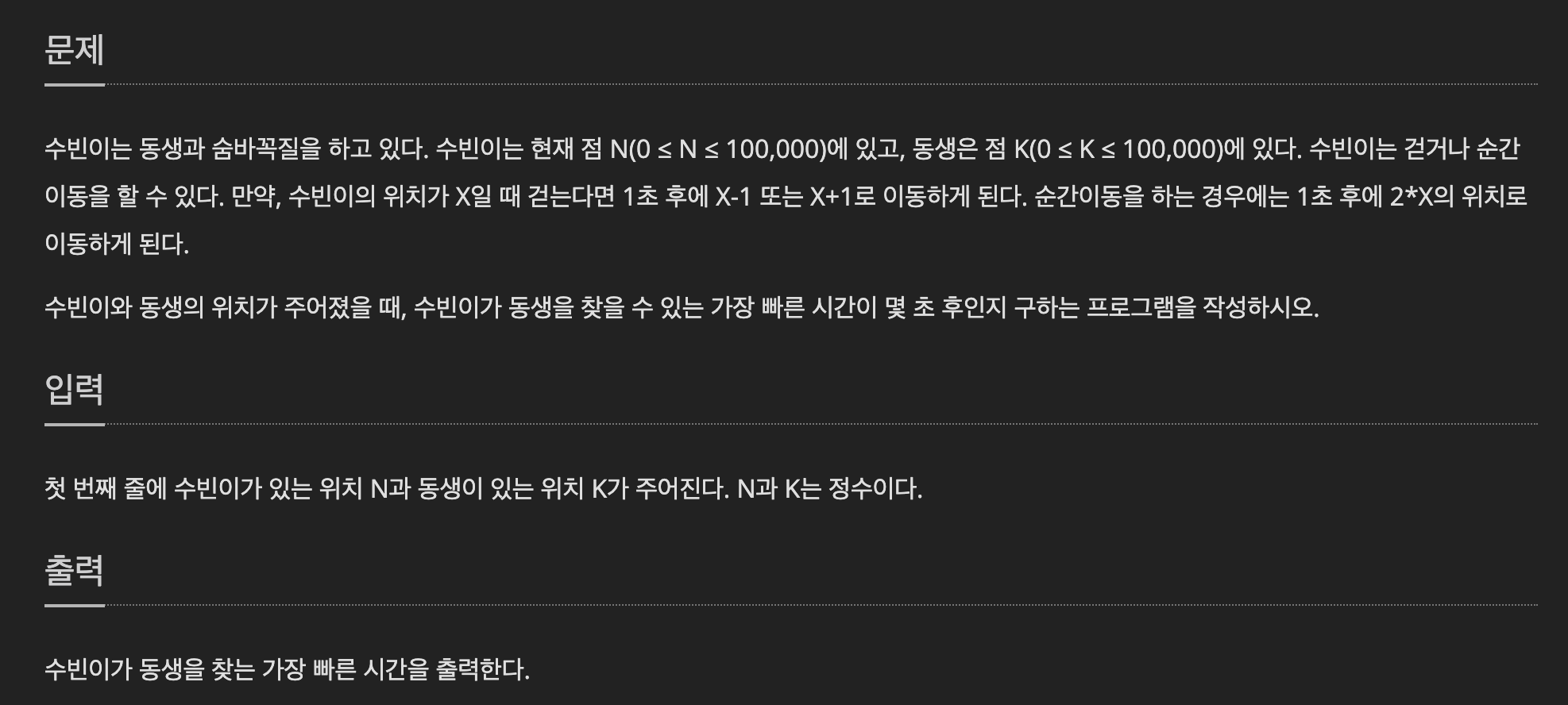
수빈이가 동생을 찾을 수 있는 최소 시간을 구하는 문제
-
수빈이는 현재 위치에서 X-1, X+1, 또는 2*X로 이동할 수 있으며, 각 이동은 1초의 시간이 소요
2. Idea
- 너비 우선 탐색(BFS) 알고리즘 사용이 알고리즘은
- 시작점에서 목표 지점까지의 최단 경로를 찾는 데 유용
3. 풀이
3.1. 변수 입력
- 수빈이의 현재 위치: N에
- 동생의 위치: K
		BufferedReader br = new BufferedReader(new InputStreamReader(System.in));

		String input = br.readLine();
		String[] inputs = input.split(" ");

		N = Integer.valueOf(inputs[0]);
		K = Integer.valueOf(inputs[1]);
3.2. bfs 함수 구현
- 너비 우선 탐색(BFS)을 사용하여 수빈이가 동생을 찾는 최소 시간을 계산
- visited 배열을 사용하여 이미 방문한 위치를 추적하고, 해당 위치에 도달하는 데 걸린 시간을 저장
- 초기에 수빈이의 위치를 큐에 넣고, 해당 위치를 방문한 것으로 표시
- while 큐가 빌 때까지
- 큐에서 노드를 하나 꺼내어 현재 위치를 나타내는 변수인 n에 저장
- 만약 n이 동생의 위치인 K와 같다면, 현재까지 걸린 시간인 visited[n]-1을 반환
- 그렇지 않으면, n에서 갈 수 있는 모든 위치를 확인하고 방문하지 않은 위치는 큐에 추가
-이때, 각 위치에 도달하는 데 걸리는 시간을 visited 배열에 저장
	private static int  bfs(int node)
	{
		Queue<Integer> queue = new LinkedList<Integer>();

		queue.add(node);
		int index = node;
		int n = 0;
		visited[index] = 1;
		while (queue.isEmpty() == false)
		{
			n = queue.remove();

			if (n == K)
			{
				return visited[n]-1;
			}

			if (n-1>=0 && visited[n-1] == 0)
			{
				visited[n-1] = visited[n]+1;
				queue.add(n-1);
			}
			if (n+1 <= 100000 && visited[n+1] == 0)
			{
				visited[n+1] = visited[n]+1;
				queue.add(n+1);
			}
			if (2*n <= 100000 && visited[2*n] == 0)
			{
				visited[2*n] = visited[n] + 1;
				queue.add(2*n);
			}
		}
		return -1;
	}
3.3. 함수 호출 및 결과 출력
int result = bfs(N);
System.out.println(result);
4. 전체코드
import java.io.*;
import java.util.*;

public class Main
{
	static int N;
	static int K;

	static int visited[] = new int[100001];

	// X-1, X+1
	// 2*X
	public static void main(String[] args) throws IOException
	{
		BufferedReader br = new BufferedReader(new InputStreamReader(System.in));

		String input = br.readLine();
		String[] inputs = input.split(" ");

		N = Integer.valueOf(inputs[0]);
		K = Integer.valueOf(inputs[1]);

		int result = bfs(N);
		System.out.println(result);
	}

	private static int  bfs(int node)
	{
		Queue<Integer> queue = new LinkedList<Integer>();

		queue.add(node);
		int index = node;
		int n = 0;
		visited[index] = 1;
		while (queue.isEmpty() == false)
		{
			n = queue.remove();

			if (n == K)
			{
				return visited[n]-1;
			}

			if (n-1>=0 && visited[n-1] == 0)
			{
				visited[n-1] = visited[n]+1;
				queue.add(n-1);
			}
			if (n+1 <= 100000 && visited[n+1] == 0)
			{
				visited[n+1] = visited[n]+1;
				queue.add(n+1);
			}
			if (2*n <= 100000 && visited[2*n] == 0)
			{
				visited[2*n] = visited[n] + 1;
				queue.add(2*n);
			}
		}
		return -1;
	}
}