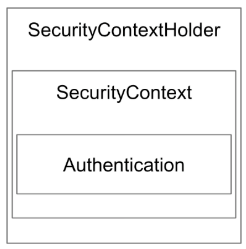
계층구조
SecurityContextHolder
   └─ SecurityContext
        └─ Authentication
             ├─ principal (UserDetails 구현 객체 등)
             ├─ credentials (비밀번호 등)
             └─ authorities (권한 정보)
SecurityContextHolder
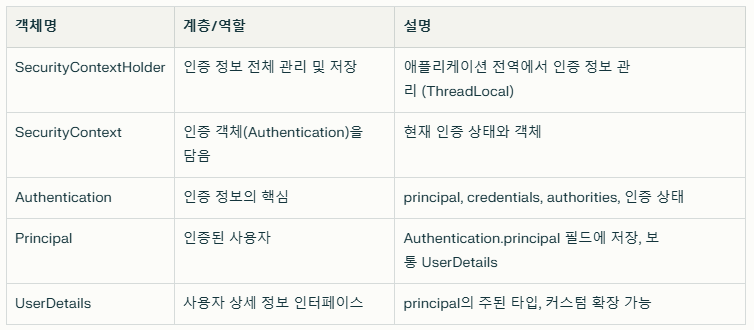
- 인증/ 인가 정보의 저장소(컨테이너) 역할
- Spring Security가 인증 관련 정보를 ThreadLocal로 저장하여 애플리케이션 어디서나 인증 정보(SecurityContext)를 가져올 수 있게 해줌
- 현재 사용자의 인증 정보는 다음과 같이 얻을 수 있음
Authentication auth = SecurityContextHolder.getContext().getAuthentication();
- 한 요청의 라이프사이클 동안 동일한 인증 정보가 보장됨
SecurityContext
- 실제 인증 객체(Authentication)를 담는 컨텍스트 역할
- SecurityContextHolder가 제공하는 인증 컨텍스트
- 내부에 Authentication(인증 객체)를 가지고 있음
Authentication auth = SecurityContextHolder.getContext().getAuthentication();
Authentication
- 인증 정보의 핵심 객체
- 주로 현재 로그인한 사용자와 그 권한, 인증 상태, 자격 증명 등 보관
- 주요 필드:
- principal: 인증된 실제 사용자 정보(Object, 통상 UserDetails)
- credentials: 자격 정보(주로 비밀번호, 인증 후 null로 처리)
- authorities: 사용자 권한(roles, authorities)
- details: 인증 관련 추가 정보
- 인증 완료 후 사용자 정보, 권한, 이름 등을 가져올 때 Authentication을 참조함
Principal
- 현재 인증된 사용자 신원 정보
- Authentication 객체의 principal 필드에 저장됨
- 일반적으로 UserDetails 객체가 principal로 사용됨
- 사용자 이름 등 식별 정보를 제공함
- auth.getPrincipal() 또는 ((UserDetails)auth,getPrincial()),getusername() 등으로 사용
UserDetails
- Spring Security에서 제공하는 사용자 상세 정보 인터페이스
- principal의 타입이 되는 것이 일반적
- 주요 메서드: getUsername(), getPassword(), getAuthorities(), 등
- DB 등에서 불러온 사용자 정보를 담는 역할
- 개발자가 커스텀 구현체로 확장하여 사용할 수 있음