What is IELTS? Format, Band Scores & How the Exam Works
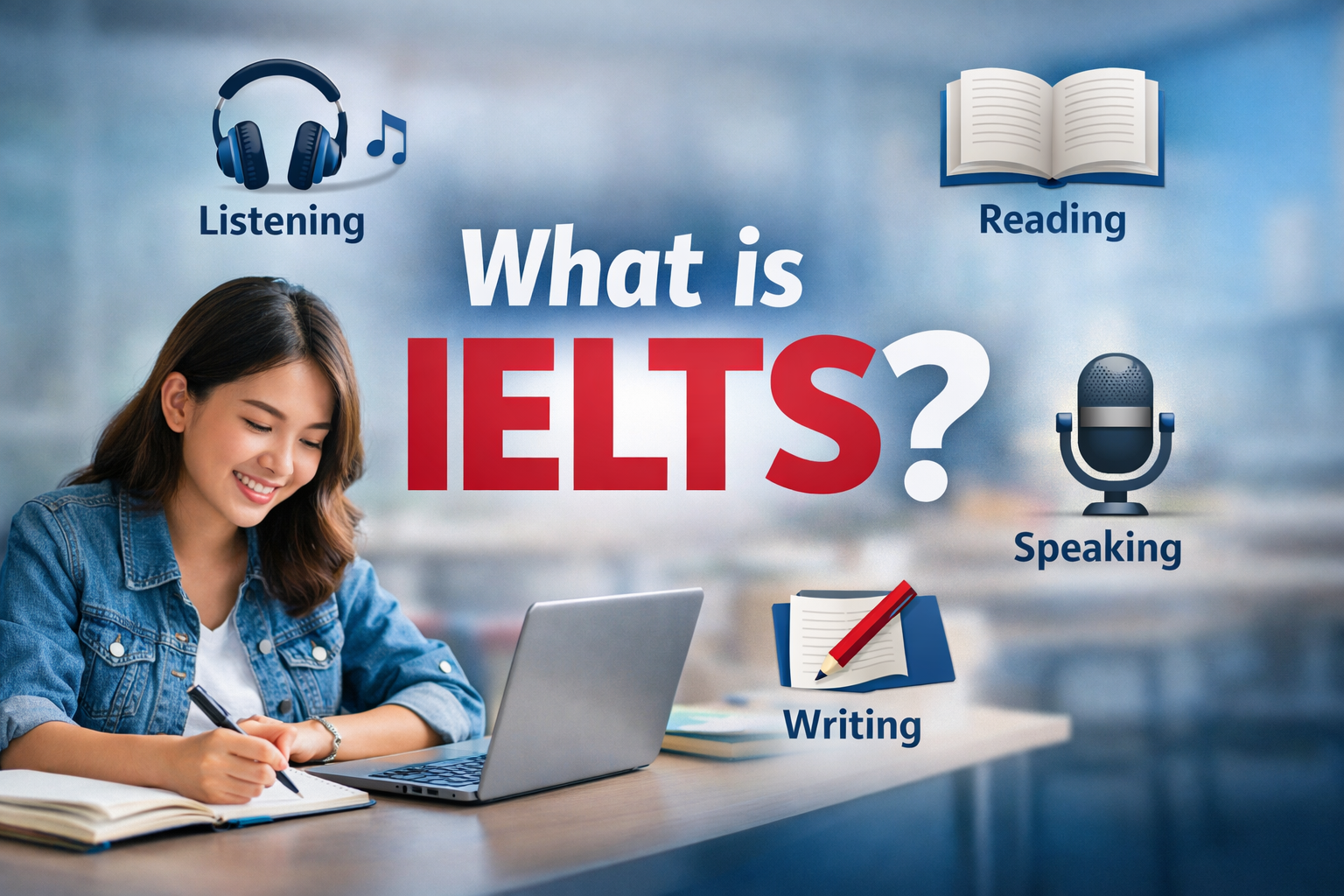
Understanding what is IELTS Exam is an important step for test takers. IELTS is the English proficiency exam conducted for educational, immigration and professional purposes. It has a unique band score system from 0-9. Most of the test takers focus on achieving a high band score in this exam, but before this, it is important to know how these scores are calculated.
The band score represents the different levels of English proficiency. Once you understand it, you can meet your language proficiency levels more easily. So whether you are applying for a work visa, study abroad or get a job in an English-speaking country, you should understand the IELTS band score. Along with it, you should also understand the IELTS exam format and how it works. To gather comprehensive information, you should read this blog.
IELTS Test Format
The IELTS test format as per the sections is given below. It consists of the duration with the number of questions for all sections.
| Section | Timing | Number of Questions |
|---|---|---|
| Listening | About 30 minutes + 10 extra minutes to transfer answers | 40 questions |
| Reading | 60 minutes | 40 questions |
| Writing | 60 minutes | Two questions |
| Speaking | 11–14 minutes | Three parts |
How does the IELTS Exam work?
IELTS Exam assesses your English proficiency in four sections: Listening, Reading, Writing, and Speaking. It is scored on a 0–9 band scale for each section and overall, testing comprehension, communication, and organization.
The IELTS 0–9 Band Scale
The IELTS Band Scale shows your English language proficiency on a scale from 0 to 9. A candidate's overall IELTS score is the average of the four sections. The table below explains what each band score means
| Band Score | Skill Level | Description |
|---|---|---|
| Band 9 | Expert User | Fully fluent, accurate, and complete understanding of English. |
| Band 8 | Very Good User | Full command with occasional inaccuracies in unfamiliar situations. |
| Band 7 | Good User | Operational command with occasional mistakes and misunderstandings. |
| Band 6 | Competent User | Effective command despite some inaccuracies in familiar situations. |
| Band 5 | Modest User | Partial command with frequent mistakes. |
| Band 4 | Limited User | Basic competence limited to familiar situations. |
| Band 3 | Extremely Limited User | Can convey general meaning only in very familiar situations. |
| Band 2 | Intermittent User | Great difficulty understanding spoken and written English. |
| Band 1 | Non-User | No ability to use the language except a few words. |
| Band 0 | Did not attempt | No answers provided. |
How are IELTS Band Scores Calculated?
Each section— Listening , Reading , Writing , and Speaking — receives its own band score. The overall score is the average of all four sections and may include half bands such as 6.5 or 7.5.
| Listening | Reading | Writing | Speaking | Overall |
|---|---|---|---|---|
| 9 | 8 | 7.5 | 7 | 8 |
Overall scores are rounded to the nearest whole or 0.5 band.
- If the average score is 7.10, it rounds down to 7.
- If the average score is 7.85, it rounds up to 8.
Tips to Improve IELTS Score
- Understand the test format thoroughly.
- Practice with real test materials and mock tests.
- Focus on improving weaker sections.
- Work on grammar and vocabulary daily.
- Record and review your speaking practice.
- Practice under timed test conditions.
Conclusion
Understanding the IELTS exam format and band scoring system is essential for your study-abroad journey. With early preparation and smart practice, IELTS becomes a manageable and achievable exam.
FAQs
What is the IELTS Exam?
IELTS (International English Language Testing System) is an English proficiency test for candidates planning to study, work, or migrate to English-speaking countries.
Why is the IELTS exam required?
IELTS proves your English proficiency for academic, professional, and daily communication in countries like the UK, Canada, USA, and Australia.
Is an IELTS score accepted worldwide?
Yes, IELTS is accepted by over 12,500 organizations in more than 140 countries.
How long is the IELTS score valid?
IELTS scores are valid for 2 years from the test date.
How is the IELTS band score calculated?
The overall band score is the average of Listening, Reading, Writing, and Speaking scores, rounded to the nearest 0.5 or whole band.