2026.06.23
문제 설명
주차장의 요금표와 차량이 들어오고(입차) 나간(출차) 기록이 주어졌을 때,
차량별로 주차 요금을 계산하려고 합니다. 아래는 하나의 예시를 나타냅니다.
-
요금표

-
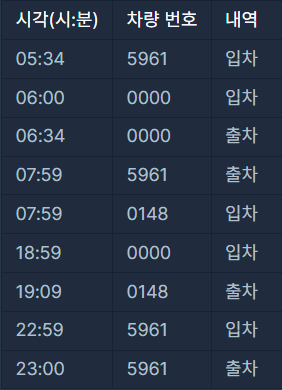
입/출차 기록
-
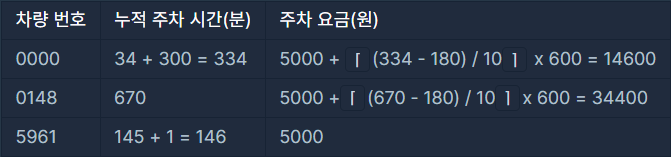
자동차별 주차 요금
-
어떤 차량이 입차된 후에 출차된 내역이 없다면, 23:59에 출차된 것으로 간주합니다.
-
- 0000번 차량은 18:59에 입차된 이후, 출차된 내역이 없습니다. 따라서, 23:59에 출차된 것으로 간주합니다.
-
00:00부터 23:59까지의 입/출차 내역을 바탕으로 차량별 누적 주차 시간을 계산하여 요금을 일괄로 정산합니다.
-
누적 주차 시간이 기본 시간이하라면, 기본 요금을 청구합니다.
-
누적 주차 시간이 기본 시간을 초과하면, 기본 요금에 더해서, 초과한 시간에 대해서 단위 시간 마다 단위 요금을 청구합니다.
-
- 초과한 시간이 단위 시간으로 나누어 떨어지지 않으면, 올림합니다.
-
- ⌈a⌉ : a보다 작지 않은 최소의 정수를 의미합니다. 즉, 올림을 의미합니다.
주차 요금을 나타내는 정수 배열 fees, 자동차의 입/출차 내역을 나타내는 문자열 배열 records가 매개변수로 주어집니다. 차량 번호가 작은 자동차부터 청구할 주차 요금을 차례대로 정수 배열에 담아서 return 하도록 solution 함수를 완성해주세요.
제한 사항
-
fees의 길이 = 4
-
- fees[0] = 기본 시간(분)
-
- 1 ≤ fees[0] ≤ 1,439
-
- fees[1] = 기본 요금(원)
-
- 0 ≤ fees[1] ≤ 100,000
-
- fees[2] = 단위 시간(분)
-
- 1 ≤ fees[2] ≤ 1,439
-
- fees[3] = 단위 요금(원)
-
- 1 ≤ fees[3] ≤ 10,000
-
1 ≤ records의 길이 ≤ 1,000
-
- records의 각 원소는 "시각 차량번호 내역" 형식의 문자열입니다.
-
- 시각, 차량번호, 내역은 하나의 공백으로 구분되어 있습니다.
-
- 시각은 차량이 입차되거나 출차된 시각을 나타내며, HH:MM 형식의 길이 5인 문자열입니다.
-
- HH:MM은 00:00부터 23:59까지 주어집니다.
-
- 잘못된 시각("25:22", "09:65" 등)은 입력으로 주어지지 않습니다.
-
- 차량번호는 자동차를 구분하기 위한, `0'~'9'로 구성된 길이 4인 문자열입니다.
-
- 내역은 길이 2 또는 3인 문자열로, IN 또는 OUT입니다. IN은 입차를, OUT은 출차를 의미합니다.
-
- records의 원소들은 시각을 기준으로 오름차순으로 정렬되어 주어집니다.
-
- records는 하루 동안의 입/출차된 기록만 담고 있으며, 입차된 차량이 다음날 출차되는 경우는 입력으로 주어지지 않습니다.
-
- 같은 시각에, 같은 차량번호의 내역이 2번 이상 나타내지 않습니다.
-
- 마지막 시각(23:59)에 입차되는 경우는 입력으로 주어지지 않습니다.
-
- 아래의 예를 포함하여, 잘못된 입력은 주어지지 않습니다.
-
- 주차장에 없는 차량이 출차되는 경우
-
- 차장에 이미 있는 차량(차량번호가 같은 차량)이 다시 입차되는 경우
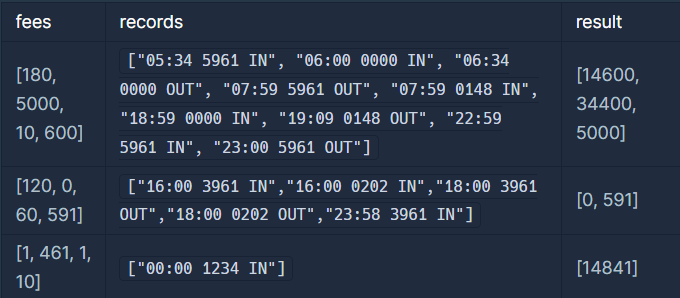
입출력 예
문제 풀이
1차 실행 오류
if (!tempMap.isEmpty()) { // 주차장이 비어 있지 않을 때
	for (String key : tempMap.keySet()) { // 남은 차량 시간 정리
    	int time = 1439 - tempMap.get(key);
    	resultMap.put(key, time + resultMap.get(key));
    }
}
현재 주차장에 있는 차량이 한 번도 나간 기록이 없을 때,
resultMap.get(key) 값은 null이 되는 경우를 고려하지 않음
import java.util.Map;
import java.util.HashMap;

class Solution {
    public int[] solution(int[] fees, String[] records) {
        Map<String, Integer> tempMap = new HashMap<>(); // 현재 주차장에 남아 있는 차량
        Map<String, Integer> resultMap = new HashMap<>(); // 차량이 사용한 총 시간

        int defaultTime = fees[0];
        int baseFee = fees[1];
        int unitTime = fees[2];
        int unitFee = fees[3];

        for (int i = 0; i < records.length; i++) {
            String[] record = records[i].split(" "); // 시간, 차량번호, 출입 내역 나누기
            String[] parts = record[0].split(":"); // 시간과 분으로 나누기
            int time = Integer.parseInt(parts[0]) * 60 + Integer.parseInt(parts[1]); // 시간과 분을 분으로 변환

            if (record[2].equals("IN")) { // 차량이 들어갈 때
                tempMap.put(record[1], time); // 차량번호와 들어간 시간 저장
            }
            else { // 차량이 나올 때
                int timeIn = tempMap.get(record[1]); // 차량이 들어간 시간
                if (resultMap.get(record[1]) != null) { // 출입 기록이 이미 있는 차량일 때
                    int timeRemain = resultMap.get(record[1]); // 남아 있던 시간 저장
                    resultMap.put(record[1], time - timeIn + timeRemain); // 원래 남아 있던 시간 + 사용한 시간
                }
                else {
                    resultMap.put(record[1], time - timeIn); // 차량이 사용한 시간 저장
                }
                tempMap.remove(record[1]); // 주차장에 주차 되어 있던 차량 빼기
            }
        }
        if (!tempMap.isEmpty()) { // 주차장이 비어 있지 않을 때
            for (String key : tempMap.keySet()) { // 남은 차량 시간 정리
                int time = 1439 - tempMap.get(key);
                resultMap.put(key, time + resultMap.get(key));
            }
        }

        int[] answer = new int[resultMap.size()];
        int index = 0;
        for (String key : resultMap.keySet()) {
            int time = resultMap.get(key);
            if (time < defaultTime) { // 사용 시간이 기본 시간보다 적을 때
                answer[index++] = baseFee;
            }
            else {
                if ((time - defaultTime) % unitTime != 0) {
                    answer[index++] = baseFee + (((time - defaultTime) / unitTime) + 1) * unitFee;
                }
                else {
                    answer[index++] = baseFee + ((time - defaultTime) / unitTime) * unitFee;
                }
            }
        }
        return answer;
    }
}
2차 실행 오류
차량 번호 순서대로 오름차순 정렬하여 출력해야 함
import java.util.Map;
import java.util.HashMap;

class Solution {
    public int[] solution(int[] fees, String[] records) {
        Map<String, Integer> tempMap = new HashMap<>(); // 현재 주차장에 남아 있는 차량
        Map<String, Integer> resultMap = new HashMap<>(); // 차량이 사용한 총 시간

        int defaultTime = fees[0];
        int baseFee = fees[1];
        int unitTime = fees[2];
        int unitFee = fees[3];

        for (int i = 0; i < records.length; i++) {
            String[] record = records[i].split(" "); // 시간, 차량번호, 출입 내역 나누기
            String[] parts = record[0].split(":"); // 시간과 분으로 나누기
            int time = Integer.parseInt(parts[0]) * 60 + Integer.parseInt(parts[1]); // 시간과 분을 분으로 변환

            if (record[2].equals("IN")) { // 차량이 들어갈 때
                tempMap.put(record[1], time); // 차량번호와 들어간 시간 저장
            }
            else { // 차량이 나올 때
                int timeIn = tempMap.get(record[1]); // 차량이 들어간 시간
                if (resultMap.get(record[1]) != null) { // 출입 기록이 이미 있는 차량일 때
                    int timeRemain = resultMap.get(record[1]); // 남아 있던 시간 저장
                    resultMap.put(record[1], time - timeIn + timeRemain); // 원래 남아 있던 시간 + 사용한 시간
                }
                else {
                    resultMap.put(record[1], time - timeIn); // 차량이 사용한 시간 저장
                }
                tempMap.remove(record[1]); // 주차장에 주차 되어 있던 차량 빼기
            }
        }
        if (!tempMap.isEmpty()) { // 주차장이 비어 있지 않을 때
            for (String key : tempMap.keySet()) { // 남은 차량 시간 정리
                int time = 1439 - tempMap.get(key);
                if (resultMap.get(key) != null) {
                    resultMap.put(key, time + resultMap.get(key));
                }
                else {
                    resultMap.put(key, time);
                }
            }
        }

        int[] answer = new int[resultMap.size()];
        int index = 0;
        for (String key : resultMap.keySet()) {
            int time = resultMap.get(key);
            if (time < defaultTime) { // 사용 시간이 기본 시간보다 적을 때
                answer[index++] = baseFee;
            }
            else {
                if ((time - defaultTime) % unitTime != 0) {
                    answer[index++] = baseFee + (((time - defaultTime) / unitTime) + 1) * unitFee;
                }
                else {
                    answer[index++] = baseFee + ((time - defaultTime) / unitTime) * unitFee;
                }
            }
        }
        return answer;
    }
}
나의 코드
소요 시간: 58분
시간 복잡도:
HashMap과 key 값을 기준으로 오름차순 정렬하는 TreeMap을 사용하여 해결
코드를 작성하기 전 코드 설계부터 하니 이전과 비교했을 때,
확실히 오류가 적어졌음.
다만 여전히 설계를 처음부터 끝까지 꼼꼼히 하는 습관과
문제를 꼼꼼히 읽는 습관이 필요함
import java.util.Map;
import java.util.HashMap;
import java.util.TreeMap;

class Solution {
    public int[] solution(int[] fees, String[] records) {
        Map<String, Integer> tempMap = new HashMap<>(); // 현재 주차장에 남아 있는 차량
        Map<String, Integer> resultMap = new TreeMap<>(); // 차량이 사용한 총 시간

        int defaultTime = fees[0];
        int baseFee = fees[1];
        int unitTime = fees[2];
        int unitFee = fees[3];

        for (int i = 0; i < records.length; i++) {
            String[] record = records[i].split(" "); // 시간, 차량번호, 출입 내역 나누기
            String[] parts = record[0].split(":"); // 시간과 분으로 나누기
            int time = Integer.parseInt(parts[0]) * 60 + Integer.parseInt(parts[1]); // 시간과 분을 분으로 변환

            if (record[2].equals("IN")) { // 차량이 들어갈 때
                tempMap.put(record[1], time); // 차량번호와 들어간 시간 저장
            }
            else { // 차량이 나올 때
                int timeIn = tempMap.get(record[1]); // 차량이 들어간 시간
                if (resultMap.get(record[1]) != null) { // 출입 기록이 이미 있는 차량일 때
                    int timeRemain = resultMap.get(record[1]); // 남아 있던 시간 저장
                    resultMap.put(record[1], time - timeIn + timeRemain); // 원래 남아 있던 시간 + 사용한 시간
                }
                else {
                    resultMap.put(record[1], time - timeIn); // 차량이 사용한 시간 저장
                }
                tempMap.remove(record[1]); // 주차장에 주차 되어 있던 차량 빼기
            }
        }
        if (!tempMap.isEmpty()) { // 주차장이 비어 있지 않을 때
            for (String key : tempMap.keySet()) { // 남은 차량 시간 정리
                int time = 1439 - tempMap.get(key);
                if (resultMap.get(key) != null) {
                    resultMap.put(key, time + resultMap.get(key));
                }
                else {
                    resultMap.put(key, time);
                }
            }
        }

        int[] answer = new int[resultMap.size()];
        int index = 0;
        for (String key : resultMap.keySet()) {
            int time = resultMap.get(key);
            if (time < defaultTime) { // 사용 시간이 기본 시간보다 적을 때
                answer[index++] = baseFee;
            }
            else {
                if ((time - defaultTime) % unitTime != 0) {
                    answer[index++] = baseFee + (((time - defaultTime) / unitTime) + 1) * unitFee;
                }
                else {
                    answer[index++] = baseFee + ((time - defaultTime) / unitTime) * unitFee;
                }
            }
        }
        return answer;
    }
}
AI 코드
시간 복잡도:
기존 if/else 문으로 null 값을 파악하던 방법과 달리,
getOrDefault()를 이용하여 한 줄로 해결
import java.util.HashMap;
import java.util.Map;
import java.util.TreeMap;

class Solution {
    public int[] solution(int[] fees, String[] records) {
        Map<String, Integer> tempMap = new HashMap<>();
        Map<String, Integer> resultMap = new TreeMap<>();

        for (String record : records) {
            String[] parts = record.split(" ");
            String[] timeParts = parts[0].split(":");
            int time = Integer.parseInt(timeParts[0]) * 60 + Integer.parseInt(timeParts[1]);
            String carNum = parts[1];

            if (parts[2].equals("IN")) {
                tempMap.put(carNum, time);
            } else {
                resultMap.put(carNum, resultMap.getOrDefault(carNum, 0) + time - tempMap.remove(carNum));
            }
        }

        for (String key : tempMap.keySet()) {
            resultMap.put(key, resultMap.getOrDefault(key, 0) + 1439 - tempMap.get(key));
        }

        int[] answer = new int[resultMap.size()];
        int idx = 0;
        for (int time : resultMap.values()) {
            int fee = fees[1];
            if (time > fees[0]) {
                fee += (int) Math.ceil((double)(time - fees[0]) / fees[2]) * fees[3];
            }
            answer[idx++] = fee;
        }

        return answer;
    }
}