How Data Cleansing Improves CRM: 7 Ways to Get Result
CRM data cleansing is essential to the health of your CRM system and the success of your business. It is a time-consuming task offering multiple benefits to your business. Automation and using third-party data cleansing services is a smart move.
If you see a dip in your marketing efforts, emails getting bounced or going to wrong contact, poor segmentation, inaccurate sales forecasting, ineffective campaigns leading to revenue leakage, then your CRM data quality needs a check.
It is CRM that directly influences forecasting, customer experience and finally your revenue. But it is not about your software; the game is all about data. And that data must be clean and updated for your CRM to work.
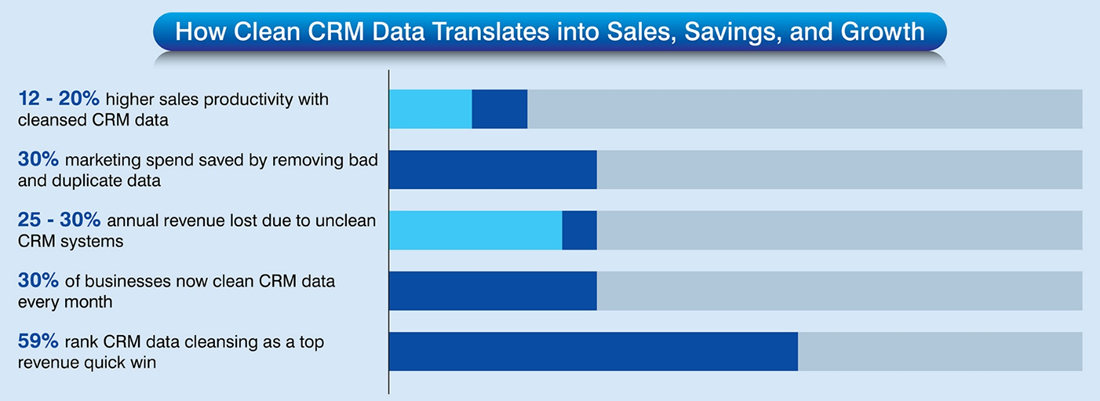
However, data decay is something of a constant and we need persistent strategies to deal with it. People change jobs, contacts get outdated, roles change, duplicate data gets added, and many such changes make the data inaccurate. And poor CRM data hits your productivity in a big way. CRM data cleansing is a must to keep your data active and accurate. Keeping your CRM data clean all the time is the key to your success. Here we discuss 7 ways that data cleansing improves CRM and benefits your business.
7 ways data cleansing improves CRM reliability and usability
CRM data helps you with quick lead generation, closing deals and personalizing your approach. But the data must be clean. Implementing data cleansing solutions helps your business in multiple ways. Here are 7 ways data cleansing improves CRM and your business.
Way 1 - Eliminate duplicate records to restore a single customer view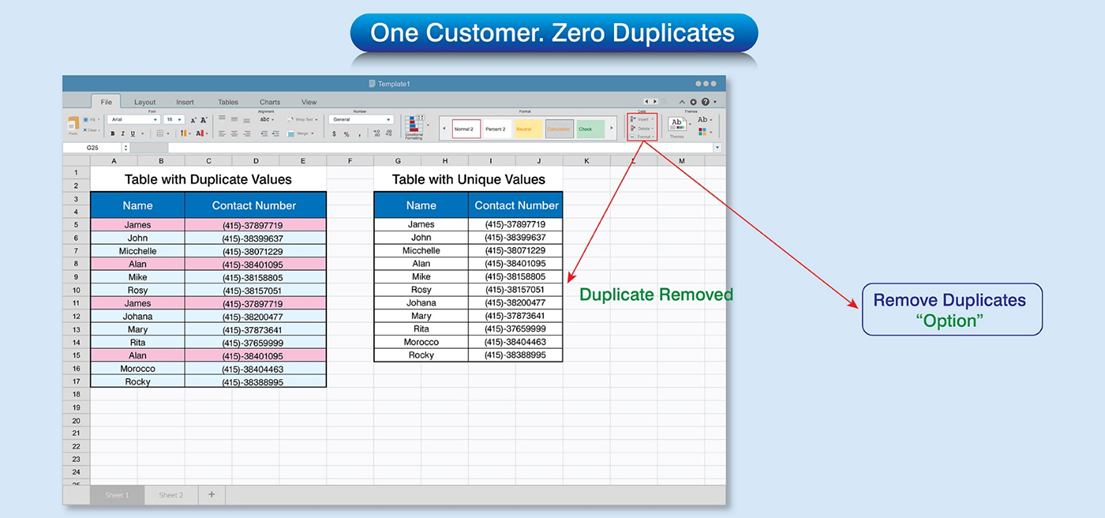
Any duplicate data in your CRM can spell disaster for your marketing efforts. Imagine sending same mail twice to the same customer listed under different mail ids or contact details captured from multiple channels referring to the same prospect. The client sees you as unprofessional, and you lose out on market credibility as well. You can’t even identify your customer.
Duplicate data removal is essential to keep a single source of truth. Data cleansing techniques help remove all duplicates from your CRM. Techniques like fuzzy matching, rule-based matching, firmographic or probabilistic matching if applied correctly, helps remove any duplicates from your system.
Now that your CRM is free from duplicates, check for data accuracy.
Way 2: Correct structural and field-level errors for data accuracy
Now that your CRM is free from duplicates but there may still be structural or incorrect field-level values. Inaccurate data correction becomes very important. Invalid data formats could creep in through email addresses with missing domains, extra characters or space or phone numbers with non-numeric values. It could be anything but highly dangerous for your CRM hygiene.
Data validation corrects all such issues through a combination of automated and governed techniques, keeping CRM accurate and updated. Field validation rules correct formats, value range etc. while regex-based cleansing automatically corrects formatting issues in contact details.
Accurate structural and field-level data improves forecasting confidence and smooth system integrations. But the game doesn’t end at accuracy; the CRM must have data that is updated and relevant.
Way 3: Continuously update outdated CRM records
You have removed all duplicates, but there is still scope for inaccurate data correction. The challenge remains as the CRM data is not static. It needs constant updates as organizations, customers and even markets evolve. Organizations go through restructuring, roles and jobs change, offices move, there are regional expansions and much more.
So here, the periodic fixes will not work, and continuous refresh mechanisms is needed. Regular monitoring and automated updates ensure that the latest records are reflected in the CRM. Data cleansing also ensures lead data enrichment where missing or outdated fields are updated through third party. Mechanisms like change detection sends alerts where there is a role change or inactivity, prompting for review of data relevance.
Organizations that ensure the relevance of records benefit in many ways like improved lead scoring accuracy and better account prioritization. You are planning better driving high sales engagement.
Way 4: Resolve missing data to improve CRM completeness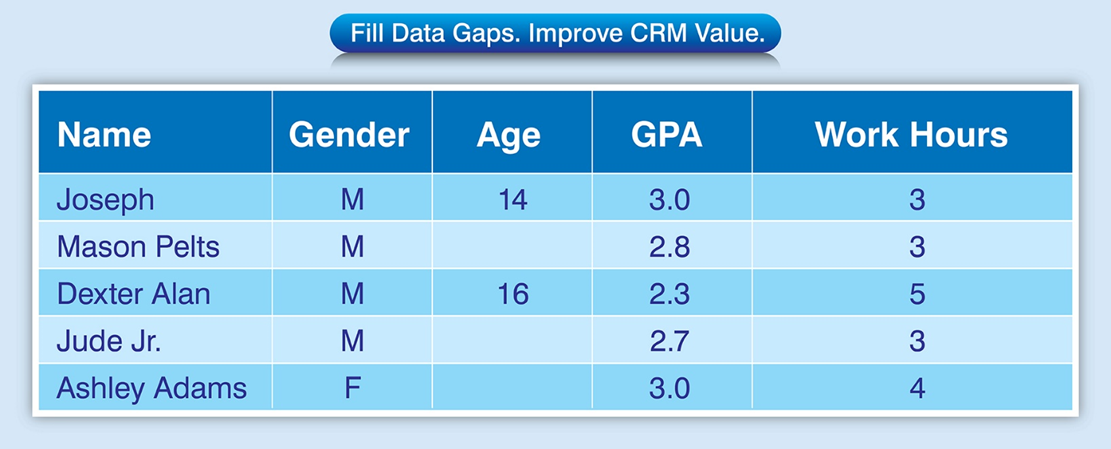
Incomplete CRM records lack complete information on your customer limiting visibility and marketing efforts. Your data is accurate and current, but if critical fields are missing, like contact records without roles or contact details without company name or even missing geographic data, makes targeting ineffective.
Data cleansing resolves the problem of missing information using multiple methods like progressive profiling, where data is collected incrementally over time rather than at once, rule-based inference, external data enrichment sources, etc. Data cleansing also ensures data completeness by flagging records with missing fields that is validated.
Complete records help with better segmentation, stronger personalization and improved analytics.
Way 5: Validate and verify CRM data for consistency and trust
Complete and accurate records improve CRM usability, but the data must be trusted, and that is where data validation and governance play a role. You can't make informed decisions if the data you have cannot be trusted. For this you need to make sure that the data is factually correct and structurally aligned across fields and systems. Validation processes do this job.
Validation methods ensure cross-field consistency checks, like country aligning with regions or referential integrity validation, such as contacts linked to correct accounts. The system also identifies records that fail validation rules. This helps correct them before they affect workflows.
Validating company details, comparing CRM records with billing systems, and using engagement data to verify records are some of the data cleansing techniques regularly used to build trust and consistency.
Way 6: Implement continuous monitoring to prevent data decay
CRM data decays at a very fast pace; we all know. You invest in data verification, deduplication, check for completeness to ensure your CRM records are perfectly fine to take ahead for any sales pitch. But what happens if you stop just there? Within days all your efforts go to waste if the process stops just there.
Your records need continuous monitoring to manage any data decay. Data cleansing is not a onetime process, without constant monitoring the data gets unusable. Having a key monitoring system in place helps keep tabs on duplicate rate, completeness score, accuracy, current data indicator and error frequency by source.
Manually doing this is not possible. It must be supported by automation, such as scheduled scans, flagging alerts in real time, keeping a check on dashboards, etc.
And lastly your data needs constant enrichment to add context transforming the data into actionable intelligence.
Way 7: Enrich CRM data to increase context and business value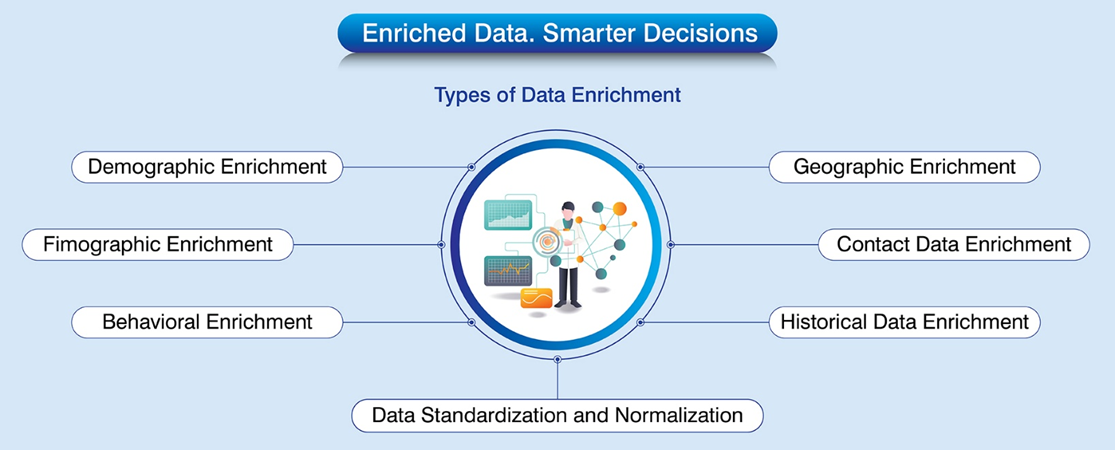
Your data is clean and updated but for high performance of CRM the data must have context to it. And that is done through lead data enrichment. Enriched records help the sales team to act beyond just basic contact. The added information helps with personalized campaigns.
Data enrichment includes adding firmographic and demographic information, technographic traits, purchase history, engagement indicators and other such information. These help the sales team understand the customer batter and approach accordingly. Unlike cleansing, which fixes data quality issues, enrichment adds intelligence to already clean and validated data.
Hitech BPO’s 4-Step data cleansing framework for CRM systems
At Hitech BPO, we approach CRM data cleansing as a scalable, repeatable discipline and not some ad hoc cleanup exercise. Our 4-step framework will fully restore trust in your CRM data.
Our 4-step process starts with collecting and analyzing quality gaps. Next, we take up data deduplication and cleanup, which gives us clean records.
Verification and validation done in the third step ensures accuracy and consistency, and lastly, we keep the process ongoing so that data always remain accurate and current.
Hitech BPO helps organizations turn their CRM data into a reliable resource by combining structure, technology, and human oversight to make it truly usable.
Conclusion
CRM systems are fully dependent on the data they have access to. Keeping your CRM data clean is not a onetime event. It is a continuous process. But you need to follow the right strategies and methods to keep your data updated, accurate and relevant. You must implement data cleansing techniques and best practices to ensure your CRM data accuracy. But data cleansing has its own challenges, and you must tackle the well to ensure the quality and reliability of your data.
CRM data cleansing is a key element in ensuring that your CRM system continues to deliver value and support your business growth. In the end, clean data leads to better results, and who doesn't want that?
Transform your CRM into a trusted growth engine - connect with us today