Why Retail Security Is About More Than Just Stopping Shoplifters
Walk into any shopping centre or standalone store today and you'll notice something: the security guard standing near the entrance isn't just there to look intimidating. In a well-run retail environment, that person is doing a dozen jobs at once — greeting customers, watching for suspicious behaviour, de-escalating tense situations, and being ready to respond the moment something goes wrong.
Retail security has changed a lot over the years, and it's worth understanding what modern, professional protection actually looks like — and why it matters for both business owners and shoppers.
Retail Is a Uniquely Difficult Environment to Secure
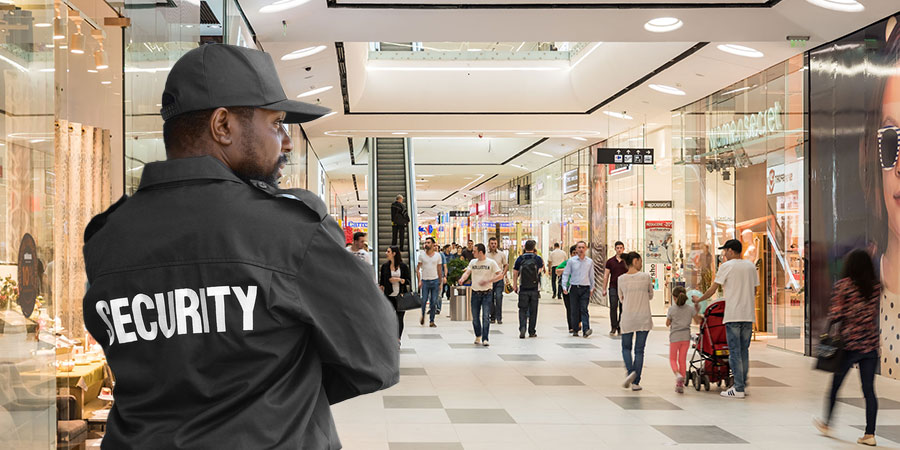
Unlike an office building or a warehouse, a retail space has to stay open, welcoming, and busy while still being protected. High foot traffic, constant staff turnover, valuable stock sitting out in the open, and a mix of genuine customers and opportunistic offenders all combine to make retail one of the trickiest environments to secure well.
That's why effective retail security relies on trained, uniformed guards who understand retail specifically — not generic security staff dropped into a store. The best guards act almost like an extension of the store team: visible enough to deter trouble, but personable enough that they don't disrupt the shopping experience.
Loss Prevention Is the Core of the Job
Theft — whether from shoplifters, organised retail crime, or internal issues — is one of the biggest drags on retail profitability. A strong loss prevention approach usually includes:
Visible deterrence — a trained guard on the floor discourages theft before it happens
Rapid incident response — when something does happen, guards need to intervene quickly and safely
Access control — making sure only authorised personnel can get into stockrooms, loading areas, and other restricted zones
Covert security — sometimes an undercover presence is more effective than a uniform, particularly for high-value stores or persistent theft issues
De-escalation Matters as Much as Deterrence
A good retail security guard isn't just watching for theft — they're also trained to handle conflict without letting it spiral. Skills in awareness, de-escalation, and handling occupational violence and aggression are essential, because retail environments can bring guards face-to-face with angry customers, confrontational offenders, or unpredictable situations. Knowing how to calm things down, rather than escalate them, protects everyone involved: customers, staff, and the guards themselves.
Shopping Centres Need a Different Level of Coordination
Standalone stores and large shopping centres don't have the same security needs. A shopping centre involves multiple tenants, shared public areas, car parks, and much higher visitor volumes — which is why centres often deploy more highly qualified guards, sometimes with advanced tactical training, to manage risk mitigation, incident response, and crisis situations across the whole site.
This coordination extends beyond a single guard's shift. Centre management typically needs security teams that can communicate across multiple entry points, work alongside CCTV control rooms, and hand over incidents cleanly between shifts so nothing falls through the cracks. During peak periods — holiday sales, school holidays, or major promotional events — the ability to scale guard numbers up quickly becomes just as important as the training those guards bring with them.
Common Retail Security Mistakes to Avoid
Even well-intentioned retailers sometimes get security wrong. A few recurring mistakes worth flagging:
Treating security as a one-off cost rather than an ongoing investment. Cutting guard hours during quiet periods often backfires, since offenders tend to target stores when they notice reduced coverage.
Hiring generic security without retail experience. A guard trained for construction sites or events won't necessarily know how to spot shoplifting behaviour or handle a retail-specific conflict.
Ignoring staff training alongside guard placement. Security works best when store staff and guards are on the same page about reporting procedures and escalation protocols.
Overlooking the customer experience. Security that feels aggressive or overly visible can make shoppers uncomfortable, which defeats the purpose of a welcoming retail environment.
Avoiding these pitfalls usually comes down to choosing a provider who treats retail security as a specialised discipline, not a generic service.
Beyond Asset Protection: The Customer Experience
It's easy to think of security purely in terms of stopping crime, but there's a second, less obvious benefit: a visible, professional security presence makes customers and staff feel safer. That sense of safety translates directly into a better shopping experience — people linger longer, spend more comfortably, and staff feel supported rather than exposed.
What to Look for in a Retail Security Provider
If you're a retail business owner evaluating security options, a few things are worth prioritising:
Retail-specific training — not just general security certification
Scalability — the ability to deploy more guards quickly if you open new stores or face a sudden spike in incidents
A national footprint — useful if you operate across multiple states or regions
A track record with similar retailers — experience with high-traffic, high-value retail environments matters
The Bottom Line
Modern retail security is a blend of visible deterrence, rapid response, customer service, and de-escalation skill. Done well, it protects a retailer's stock and staff without making the store feel like a fortress — and that balance is exactly what separates a good security provider from a great one.