Lock Condition
생산자 스레드가 대기하는 곳과, 소비사 스레드가 대기하는 곳을 나누면 비효율성 문제를 해결!
Lock, ReentrantLock을 사용
//아직 공간을 분리하지 않아 비효율성 문제는 발생
public class BoundedQueueV4 implements BoundedQueue {

    private final Lock lock = new ReentrantLock();
    private final Condition condition = lock.newCondition(); //ReentrantLock을 사용하는 스레드가 기다리는 대기 집합

    private final Queue<String> queue = new ArrayDeque<>();
    private final int max;

    public BoundedQueueV4(int max) {
        this.max = max;
    }

    @Override
    public void put(String data) {
        lock.lock();

        try {
            while (queue.size() == max) {
                log("[put] 큐가 가득 참, 생산자 대기");
                try {
                    condition.await(); //condition이라는 곳에 들어가서 대기 WAITING
                    log("[put] 생산자가 깨어남");
                } catch (InterruptedException e) {
                    throw new RuntimeException(e);
                }
            }
            queue.offer(data);
            log("[put] 생산자 데이터 저장, signal() 호출");
            condition.signal(); //signal을 주면 대기하던 스레드가 깨어난다.
        } finally {
            lock.unlock();
        }
    }

    @Override
    public String take() {
        lock.lock();
        try {
            while (queue.isEmpty()) {
                log("[take] 큐에 데이터가 없음, 소비자 대기");
                try {
                    condition.await();
                    log("[take] 소비자 깨어남");
                } catch (InterruptedException e) {
                    throw new RuntimeException(e);
                }
            }

            String data = queue.poll();
            log("[take] 소비자 데이터 획득, signal() 호출");
            condition.signal();
            return data;
        } finally {
            lock.unlock();
        }
    }

    @Override
    public String toString() {
        return queue.toString();
    }
}
-
Condition
ReentrantLock이 스레드가 대기하는 공간.
lock.newCondition() 메서드를 호출, 스레드 대기 공간 형성 -
condition.await()
현재 스레드를 대기상태로 보관
ReentrantLock에서 획득한 락을 반납하고 대기 상태로 condition에 보관 -
condition.signal()
condition에서 대기중인 스레드를 하나 깨움.
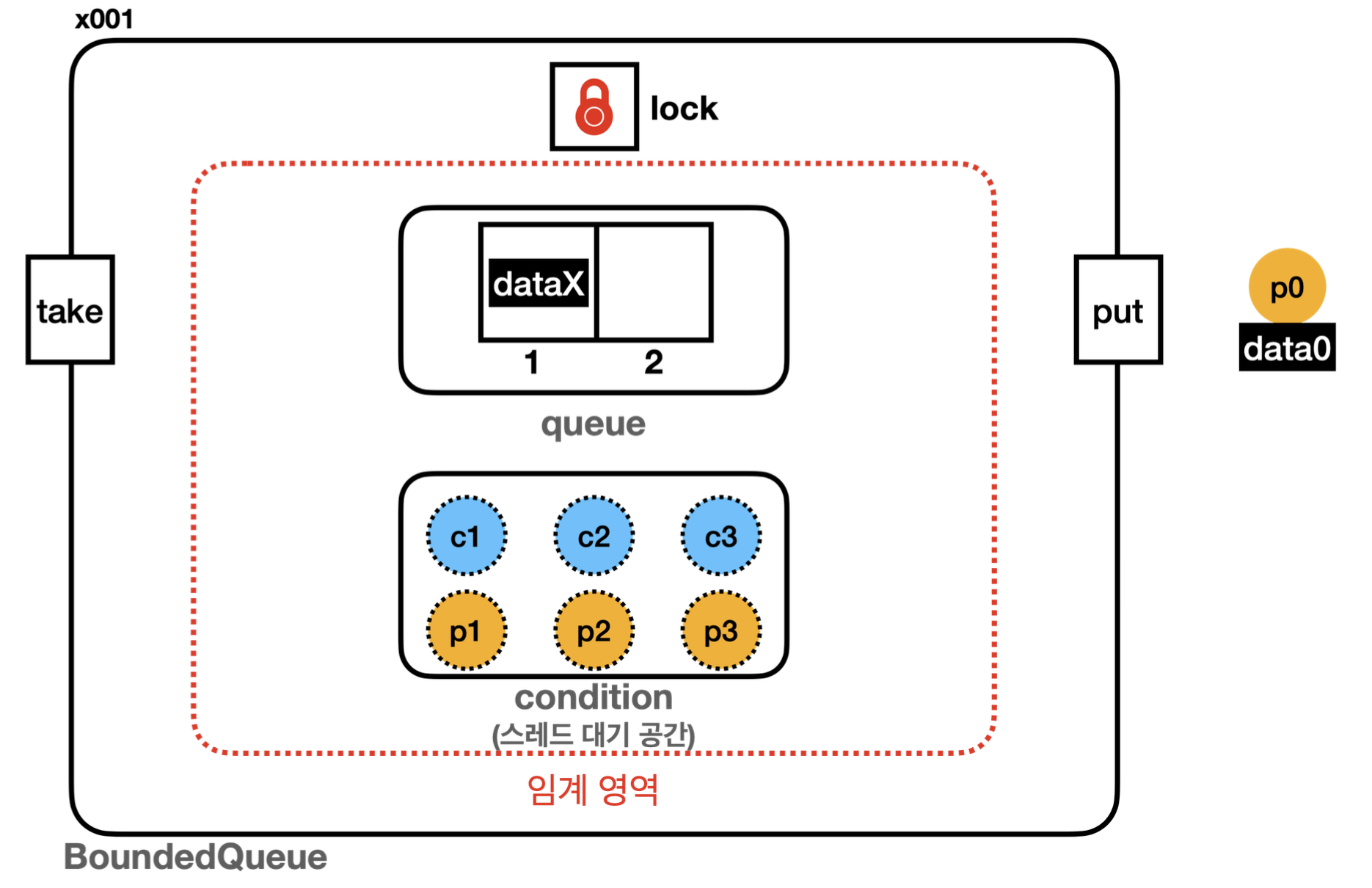
lock은 synchornized에서 사용하는 객체 내부에 있는 모니터 락이 아니라, ReentrantLock을 의미
생산자 소비자 대기 공간 분리
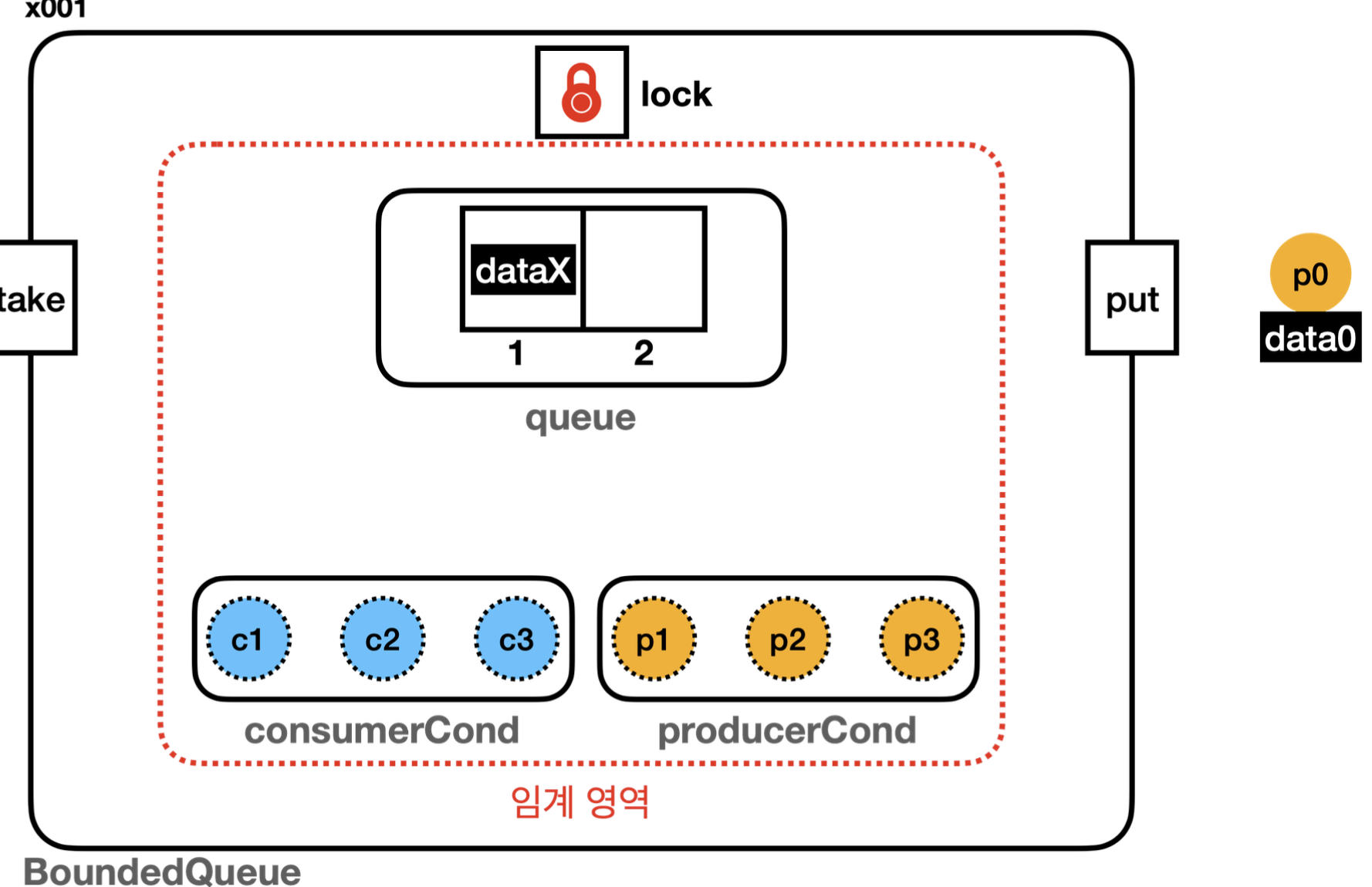
//생산자는 소비자를 깨우고, 소비자는 생산자를 깨운다.
public class BoundedQueueV5 implements BoundedQueue {

    private final Lock lock = new ReentrantLock();
    private final Condition producerCond = lock.newCondition(); //생산자 대기 공간
    private final Condition consumerCond = lock.newCondition(); //소비자 대기 공간

    private final Queue<String> queue = new ArrayDeque<>();
    private final int max;

    public BoundedQueueV5(int max) {
        this.max = max;
    }

    @Override
    public void put(String data) {
        lock.lock();

        try {
            while (queue.size() == max) {
                log("[put] 큐가 가득 참, 생산자 대기");
                try {
                    producerCond.await(); //condition이라는 곳에 들어가서 대기 WAITING
                    log("[put] 생산자가 깨어남");
                } catch (InterruptedException e) {
                    throw new RuntimeException(e);
                }
            }
            queue.offer(data);
            log("[put] 생산자 데이터 저장, consumerCond() 호출");
            consumerCond.signal(); //signal을 주면 대기하던 스레드가 깨어난다.
        } finally {
            lock.unlock();
        }
    }

    @Override
    public String take() {
        lock.lock();
        try {
            while (queue.isEmpty()) {
                log("[take] 큐에 데이터가 없음, 소비자 대기");
                try {
                    consumerCond.await();
                    log("[take] 소비자 깨어남");
                } catch (InterruptedException e) {
                    throw new RuntimeException(e);
                }
            }

            String data = queue.poll();
            log("[take] 소비자 데이터 획득, producerCond() 호출");
            producerCond.signal();
            return data;
        } finally {
            lock.unlock();
        }
    }

    @Override
    public String toString() {
        return queue.toString();
    }
}
-
Condition 분리
consumerCond : 생산자를 위한 스레드 대기 공간
producerCond : 소비자를 위한 스레드 대기 공간 -
put(data) - 생산자 스레드 호출
producerCond.await() 호출을 통해 생산자 스레드를 생산자 전용 스레드 대기 공간에 보관
consumerCond.signal() 호출해서 소비자 전용 스레드 대기 공간에 신호 보냄 -
take() - 소비자 스레드가 호출
consumerCond.await() : 큐가 비었을 경우 소비자 스레드를 소비자 전용 스레드 대기 공간에 보관
producerCond.signal() : 소비자가 데이터를 소비한 경우, 큐에 여유공간이 생김. 생산자 전용 스레드 대기 공간에 신호를 보냄
Object.notify() vs Condition.signal()
-
Object.notify
대기중인 스레드 중 임의의 스레드를 선택해서 깨움, 순서 보장 X
synchronized block 내에서 모니터 락을 갖고 잇는 스레드가 호출 -
Condition.signal
대기중인 스레드중 하나를 깨우며, 일반적으로 FIFO 순서로 깨움
스레드 대기
synchronized 대기
락 획득 대기
- BLOCKED 상태로 락 획득 대기
- synchronzied 시작할때 락이 없으면 대기
- 다른 스레드가 synchronized를 빠져 나갈때 대기가 풀리면서 락 획득 시도
wait
- WAITING 상태로 대기
- wait()을 호출했을때 스레드 대기 집합에서 대기
- notify 호출시 빠져나감
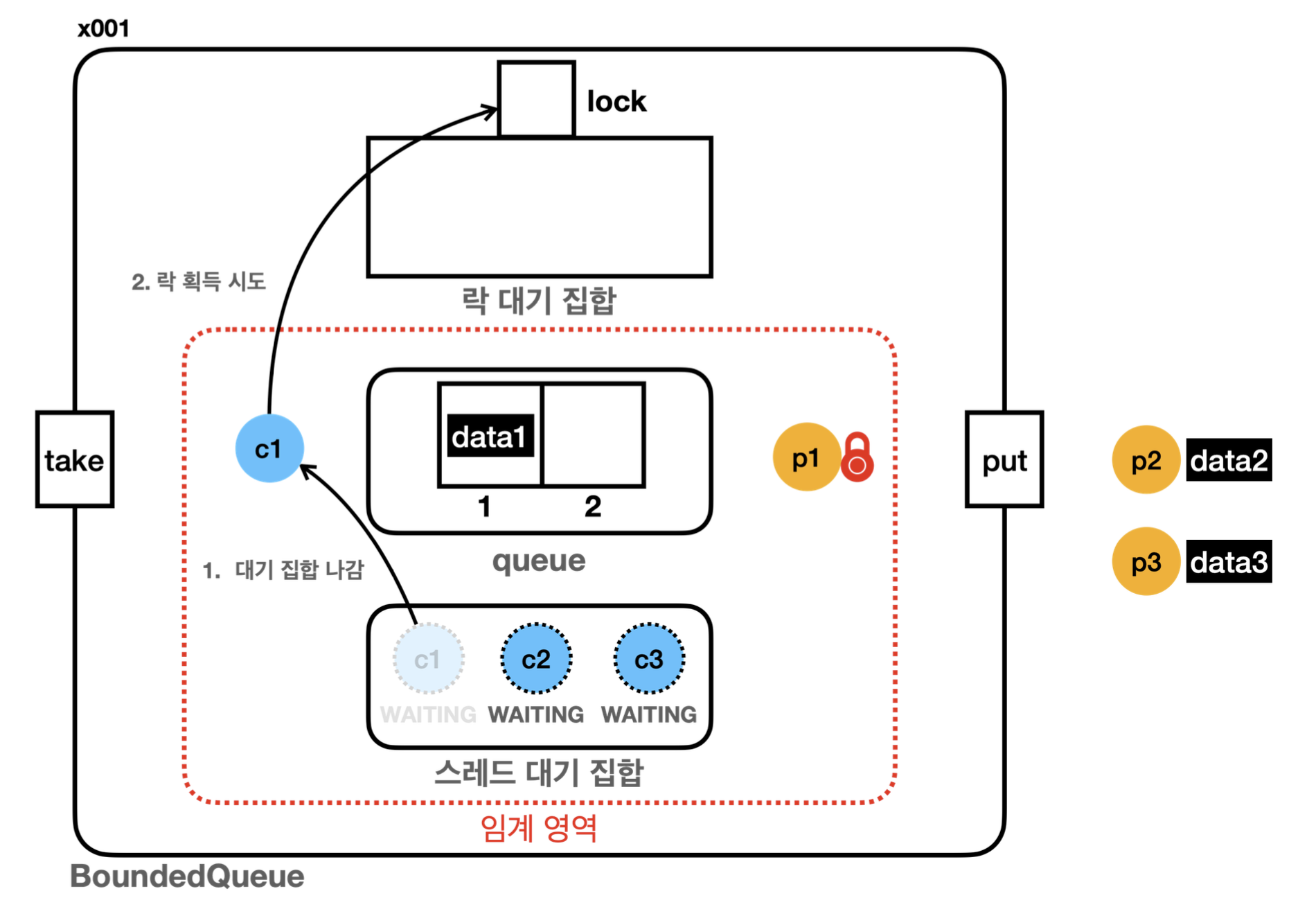
개념상으로 보면, 락 대기 집합이 1차 대기소, 스레드 대기 집합이 2차 대기소
2차를 거쳐 1차 대기소까지 나와야 임계영역에서 로직을 수행 할 수 있다.
ReentrantLock 대기
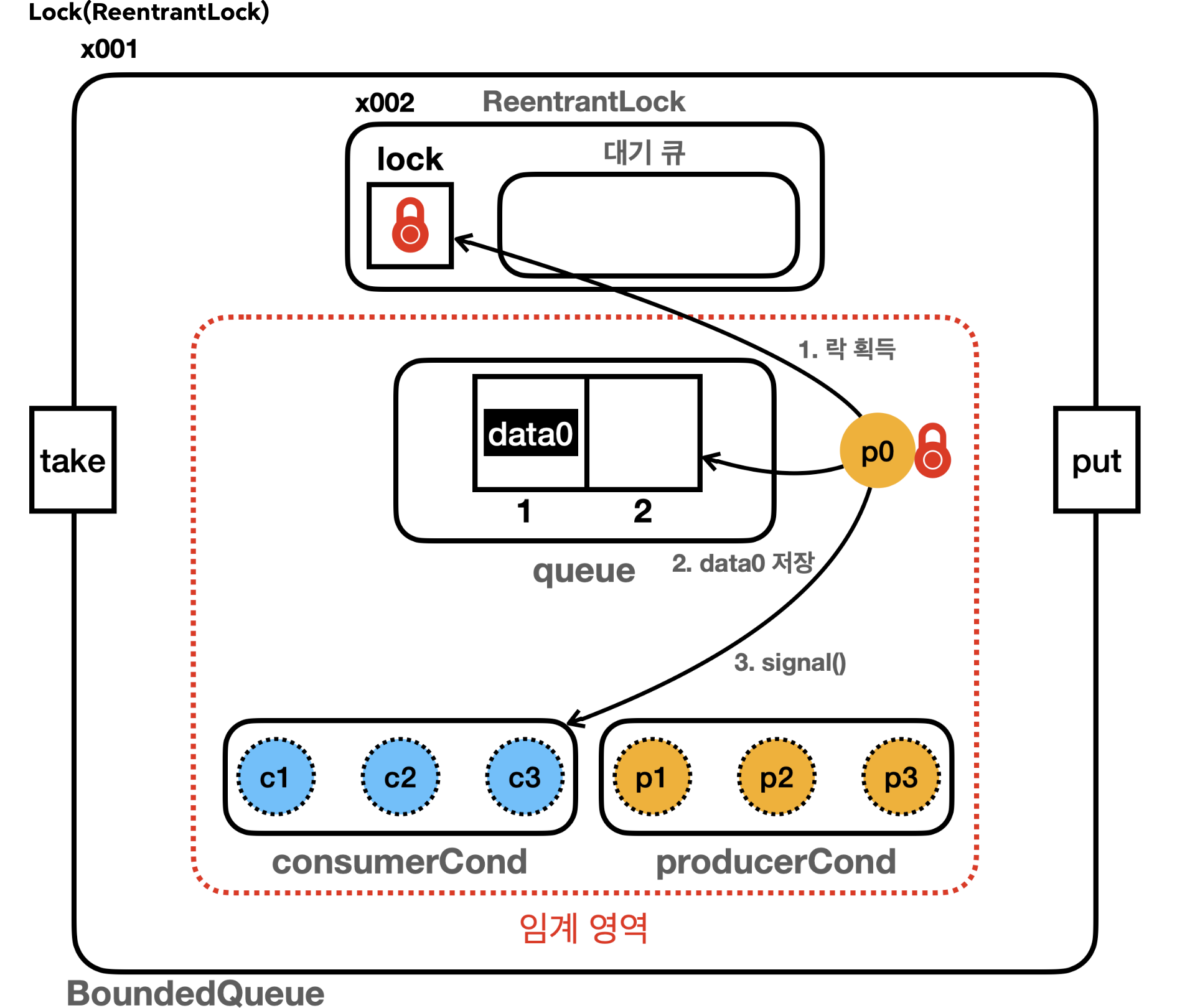
ReentrantLock 락 획득 대기
- ReentrantLock의 대기 큐에서 관리
- WAITING 상태로 락 획득 대기
- lock.lock을 호출시 락이 없다면 대기
- lock.unlock()을 호출 했을 때 대기가 풀리며 락 획득 시도, 락을 획득하면 대기 큐를 빠르게 빠져나감
await() 대기
- condition.await()를 호출 했을 때 condition 객체의 스레드 대기 공간에서 관리
- WAITING 상태로 대기
- condition.signal()을 호출했을때 condition 객체의 스레드 대기 공간에서 빠져나감
ReentrantLock 또한 2차 대기소
Blocking Queue
데이터 추가 차단
- 큐가 가득 차면 데이터 추가 작업 put을 시도하는 스레드는 공간이 생길 때 까지 차단
데이터 획득 차단 - 큐가 비어있으면, 획득 잡업 take을 시도하는 스레드는 큐에 데이터가 들어올때 까지 차단
BlockingQueue API
package java.util.concurrent;
public interface BlockingQueue<E> extends Queue<E> {
boolean add(E e);
boolean offer(E e);
void put(E e) throws InterruptedException;
boolean offer(E e, long timeout, TimeUnit unit) throws InterruptedException;
E take() throws InterruptedException;
E poll(long timeout, TimeUnit unit) throws InterruptedException;
boolean remove(Object o);
/
대표적 구현체
- ArrayBlockingQueue : 배열 기반 구현, 버퍼의 크기가 고정
- LinkedBlockingQueue : 링크 기반 구현, 버퍼의 크기가 고정. 무한하게 사용
public class BoundedQueueV6_1 implements BoundedQueue {

    private BlockingQueue<String> queue; //스레드를 강제로 block 시킬 수 있는 것

    public BoundedQueueV6_1(int max) {
        queue = new ArrayBlockingQueue<String>(max); //size를 넣어줘야 함
    }

    @Override
    public void put(String data) {
        try {
            queue.put(data);
        } catch (InterruptedException e) {
            throw new RuntimeException(e);
        }
    }

    @Override
    public String take() {
        try {
            return queue.take();
        } catch (InterruptedException e) {
            throw new RuntimeException(e);
        }
    }

    @Override
    public String toString() {
        return queue.toString();
    }
}
ArrayBlockingQueue.put()
public class ArrayBlockingQueue {
final Object[] items;
int count;
ReentrantLock lock;
Condition notEmpty; //소비자 스레드가 대기하는 condition
Condition notFull; //생산자 스레드가 대기하는 condition
public void put(E e) throws InterruptedException {
lock.lockInterruptibly();
try {
while (count == items.length) {
notFull.await();
}
enqueue(e);
} finally {
lock.unlock();
}
}
private void enqueue(E e) {
items[putIndex] = e;
count++;
notEmpty.signal();
}
}- ArrayBlockingQueue는 내부에서 ReentrantLock을 사용 -> 생산자 전용 대기실과 , 소비자 전용 대기실이 구현
기능 설명
실무에서 멀티스레드를 사용할 때는 응답성이 중요
큐가 가득 찼을 때 생각할 수 있는 선택지는 4가지가 있다.
1. 예외를 던진다. 예외를 받아서 처리한다.
2. 대기하지 않는다. 즉시 false를 반환한다.
3. 대기한다.
4. 특정 시간 만큼만 대기한다.
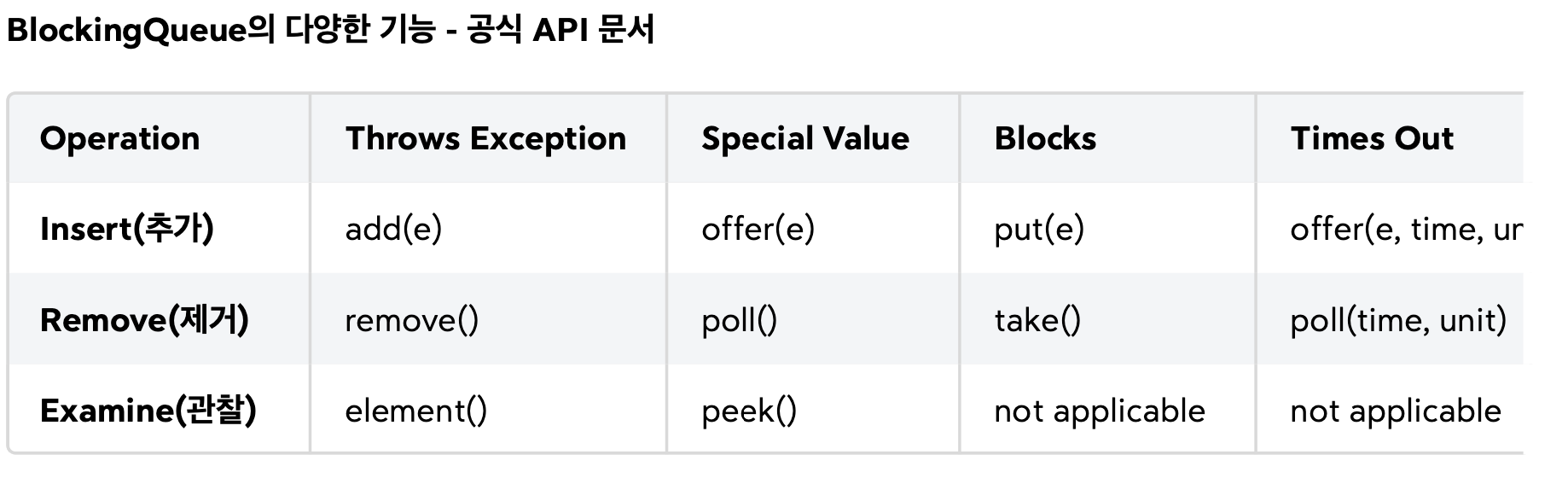
Throws Exception - 대기시 예외
- add(e) : 저장된 요소를 큐에 추가, 큐가 가득 차면
IllegalStateException예외를 던짐 - remove() : 큐에서 요소를 제거 반환, 큐가 비어있으면
NoSuchElementException을 던짐 - element() : 큐의 머리 요소를 반환, 요소를 큐에서 제거하지는 않음, 큐가 비었다면
NoSuchElementException를 반환
Special Value - 대기시 즉시 반환
- offer(e) : 지정된 요소를 큐에 추가하려고 시도하며, 큐가 가득 차면
false를 반환 - poll() : 큐에서 요소를 제거하고 반환한다. 큐가 비어 있으면
null을 반환 - peek() : 큐의 머리 요소를 반환하지만, 요소를 큐에서 제거하지 않는다. 큐가 비어 있으면
null을 반환.
Blocks - 대기
- put(e) : 지정된 요소를 큐에 추가할 때까지 대기한다. 큐가 가득 차면 공간이 생길 때까지 대기
- take() : 큐에서 요소를 제거하고 반환한다. 큐가 비어 있으면 요소가 준비될 때까지 대기
- Examine (관찰) : 해당 사항 없음
Times Out - 시간 대기
- offer(e, time, unit) : 지정된 요소를 큐에 추가하려고 시도하며, 지정된 시간 동안 큐가 비워지기를 기다리다가 시간이 초과되면
false를 반환한다. - poll(time, unit) : 큐에서 요소를 제거하고 반환한다. 큐에 요소가 없다면 지정된 시간 동안 요소가 준비되기를 기다리다가 시간이 초과되면
null을 반환한다. - Examine (관찰) : 해당 사항 없음.
public class BoundedQueueV6_2 implements BoundedQueue {

    private BlockingQueue<String> queue; //스레드를 강제로 block 시킬 수 있는 것

    public BoundedQueueV6_2(int max) {
        queue = new ArrayBlockingQueue<String>(max); //size를 넣어줘야 함
    }

    @Override
    public void put(String data) {
        boolean rst = queue.offer(data);
        // 버퍼가 가득 차있는 경우 데이터를 추가하지 않고 바로 false
        log("저장 시도 결과 = " + rst);
    }

    @Override
    public String take() {
        // 버퍼가 비어있는 경우 null
        return queue.poll();
    }

    @Override
    public String toString() {
        return queue.toString();
    }
}
public class BoundedQueueV6_3 implements BoundedQueue {

    private BlockingQueue<String> queue; //스레드를 강제로 block 시킬 수 있는 것

    public BoundedQueueV6_3(int max) {
        queue = new ArrayBlockingQueue<String>(max); //size를 넣어줘야 함
    }

    @Override
    public void put(String data) {
        try {
            //대기 시간 설정 가능
            boolean rst = queue.offer(data, 1, TimeUnit.NANOSECONDS);
            log("저장 시도 결과 = " + rst);
        } catch (InterruptedException e) {
            throw new RuntimeException(e);
        }
    }

    @Override
    public String take() {
        try {
            //대기 시간 설정 가능
            return queue.poll(2, TimeUnit.SECONDS);
        } catch (InterruptedException e) {
            throw new RuntimeException(e);
        }
    }

    @Override
    public String toString() {
        return queue.toString();
    }
}
public class BoundedQueueV6_4 implements BoundedQueue {

    private BlockingQueue<String> queue; //스레드를 강제로 block 시킬 수 있는 것

    public BoundedQueueV6_4(int max) {
        queue = new ArrayBlockingQueue<String>(max); //size를 넣어줘야 함
    }

    @Override
    public void put(String data) {
        queue.add(data); //IllegalStateException : Queue full
    }

    @Override
    public String take() {
        return queue.remove(); //NoSuchElementException
    }

    @Override
    public String toString() {
        return queue.toString();
    }
}