Futureproofing Streaming: How OTT Video Personalization Boosts Retention
Introduction
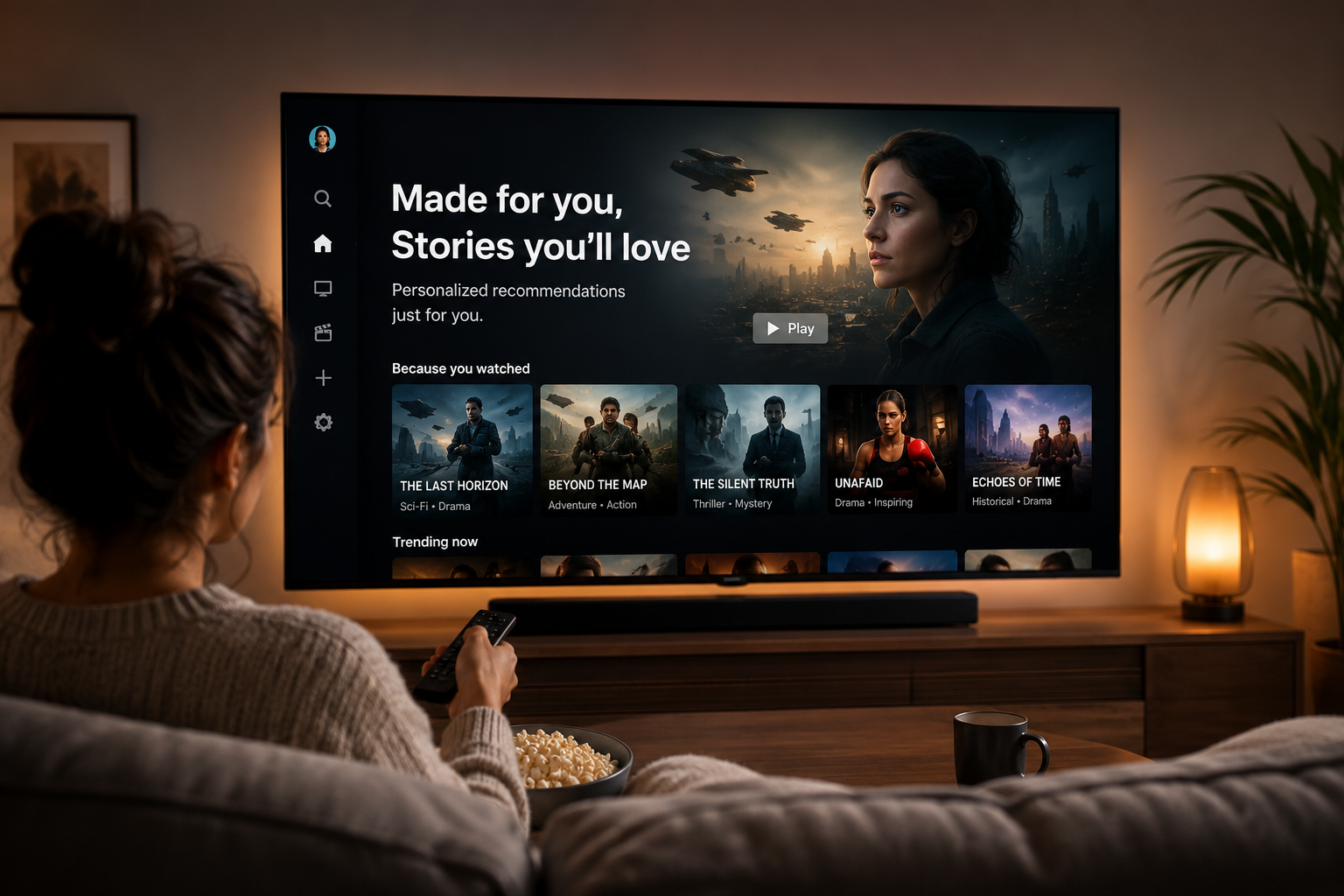
Audience attention is the scarcest resource for streaming services today. As the number of OTT platforms rises, viewers expect content that feels tailored to their tastes and context. Implementing thoughtful personalization sits at the heart of improved engagement, higher retention, and better lifetime value. This article outlines practical approaches and design principles for teams aiming to make ott video personalization central to the viewer experience.
Personalization that respects context
Personalization isn't only about recommending titles. It begins with understanding when and why a viewer opens an app. Context includes time of day, device type, whether the viewer is alone or sharing a screen, and even connection speed. When you map these signals to content and UI choices, viewers encounter options that feel relevant rather than intrusive. Prioritizing contextual relevance reduces friction, making discovery feel effortless instead of overwhelming.
Data strategy that scales
A reliable data foundation makes consistent personalization possible. Collect both explicit signals, such as ratings and watchlists, and implicit signals, like watch duration and browsing patterns. Stitch these signals into profiles that are sharable across services while maintaining privacy controls. A single source of truth for user engagement avoids conflicting recommendations and supports A/B testing of personalization strategies. This foundation allows teams to iterate fast and measure impact precisely.
Models and hybrid approaches
Purely algorithmic recommendations work well for many viewers, but combining algorithmic models with editorial curation often produces better results. Hybrid systems blend collaborative filtering, content-based similarity, and session-based models to suggest titles that align with both long-term taste and immediate intent. Introducing simple business rules—such as promoting timely releases or preventing spoilers—keeps recommendations relevant and safe. The right mix depends on your catalog size, audience diversity, and product goals.
Experimentation rather than guesswork
Effective personalization depends on systematic experimentation. Run controlled tests to measure how changes affect session length, completion rates, and churn. Small UX tweaks, like reordering rows or changing thumbnail art, can shift behavior more than algorithmic changes. Track both short-term engagement and long-term retention to avoid optimizing for instant clicks at the expense of viewer loyalty. Use experiments to validate hypotheses and retire stale features that no longer add value.
Balancing surprises and familiarity
A good recommendation system balances familiar favorites and novel suggestions. Recommending known genres or creators builds comfort, while carefully selected surprises expand discovery. Personalization strategies should intentionally mix safe bets and exploratory content. When viewers encounter a well-timed surprise that still fits their profile, they feel understood and delighted—two emotions that strengthen habit formation.
Design and creative adaptation
Personalization extends into creative assets. Thumbnails, short trailers, and metadata that adapt to viewer segments increase click-through without misleading promises. For example, emphasizing character-driven scenes for viewers who prefer drama, and action sequences for fans of thrillers, improves relevance. Test variations of creative assets to learn what resonates with specific cohorts and surface the best-performing combinations.
Privacy and trust
Sustainable personalization depends on trust. Be transparent about data uses and offer clear controls for personalization levels. Minimal, privacy-first designs that let users opt into richer personalization usually perform better than aggressive collection strategies. Anonymized or aggregated approaches can still enable strong personalization while reducing regulatory and reputational risk. Treat consent as part of the product experience, not an afterthought.
Operational considerations
Personalization at scale places demands on engineering and product processes. Latency constraints mean models must be both fast and efficient. Streaming platforms often need hybrid pipelines where offline training updates models regularly while online services score requests in milliseconds. Observability is critical—teams should trace recommendation decisions to data inputs and model versions so anomalies can be diagnosed quickly. Operational maturity determines whether personalization changes translate into reliable viewer experiences.
Measuring success beyond clicks
Clicks matter, but long-term success comes from retention, session depth, and increased satisfaction. Use a balanced set of KPIs that include viewing time, repeat visits, churn rate, and net promoter score. Qualitative feedback, such as short surveys or in-app prompts, can reveal why recommendations feel right or wrong. Combine quantitative and qualitative signals to refine both algorithms and product surfaces.
Organizational alignment
Personalization is a cross-functional effort. Product, data science, content programming, creative, and engineering need shared goals and a common measurement framework. Regular cross-team reviews of experiment outcomes and content performance keep efforts aligned with business objectives. When editorial teams can see the impact of personalization on discovery, they contribute better metadata and curated ideas that amplify algorithmic results.
Future directions
Emerging capabilities—contextual multi-modal models, real-time personalization across devices, and improved privacy-preserving techniques—will make ott video personalization more subtle and powerful. The platforms that invest in robust, ethical personalization practices now will be better positioned to retain audiences as competition increases and viewer expectations evolve.
Conclusion
Personalization for streaming is not a single technology but a continuous blend of data strategy, modeling, creative adaptation, and product design. When executed respectfully and measured thoughtfully, ott video personalization becomes a differentiator that deepens engagement and builds loyal viewers over time. Focus on context, privacy, operational excellence, and cross-functional collaboration to turn personalized experiences into sustainable growth.