Java 가 실행되는 과정 정리
C/C++ 의 경우, 소스코드가 실행되기 위해선 컴파일, 어셈블 과정 등이 필요하다. 그런데 Java 에서는 어떻게 돌아가는지 몰랐어서 이를 찾아서 정리했다.
아래 그림은 전체 동작이 어떻게 이뤄지는지 간단히 나타낸 그림이다.
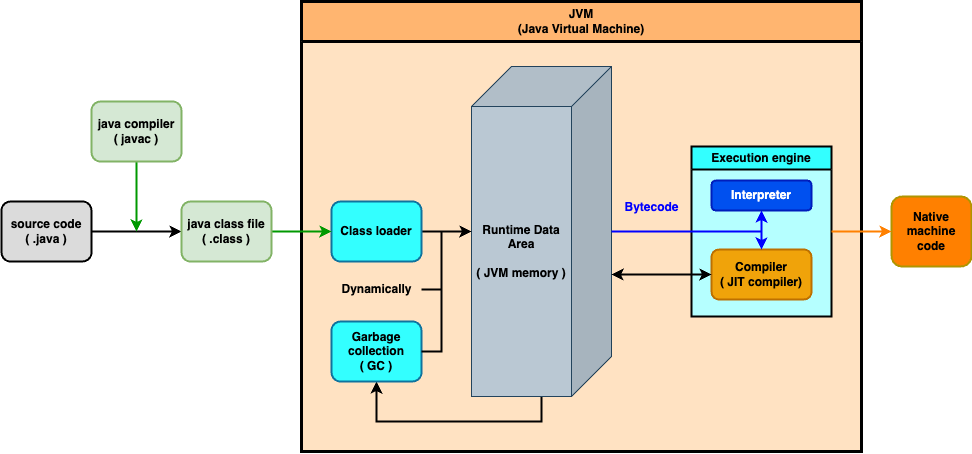
먼저 JVM 에 대한 설명이 필요할 듯 하다.
JVM 은 Java Virtual Machine 의 준말로, 하드웨어 플랫폼에 관계없이 Java Bytecode 를 실행할 수 있게 해주는 가상머신이다. [1] JVM 의 간략한 구조는 다음 그림과 같다. [2]

1. Source code to class file
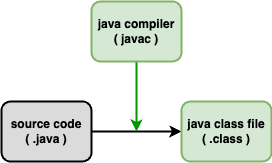
우리가 작성한 소스코드 (.java) 를 실행하기 위해선 먼저 코드를 class file (.class) 로 변환해야 한다.
이 때 class file 이란 Java Bytecode 를 포함하는 파일로서, 바이트 코드 외 "추가적인 정보" 가 포함된 이진 파일 (binary file) 이다. [3]
- 여기서 추가적인 정보란 코드 내 생성한
class에 대한 메타데이터, 정보 등을 말한다. - 클래스의 이름, 메서드, 구현된 인터페이스, 상수 풀 등이 포함되어 있다.
- 이진 파일이기에 그대로 볼 수 없지만 아래 명령어를 이용해 직접 볼 수 있다.
$ java ${SourCode}.java && javap -c ${ClassName}.class소스코드는 자바 컴파일러 (javac) 를 통해 클래스 파일로 변환되고, 클래스 파일은 JVM 으로 넘겨진다.
덧붙여 클래스 파일과 Bytecode 는 하드웨어 플랫폼과 독립적이다. 이러한 이유 때문에 Java 의 표어는 "한번 쓰고 어디서든 실행하세요" (WORA, Write Once, Run Anywhere) 이다. [4]
2. JVM - Class file to Bytecode
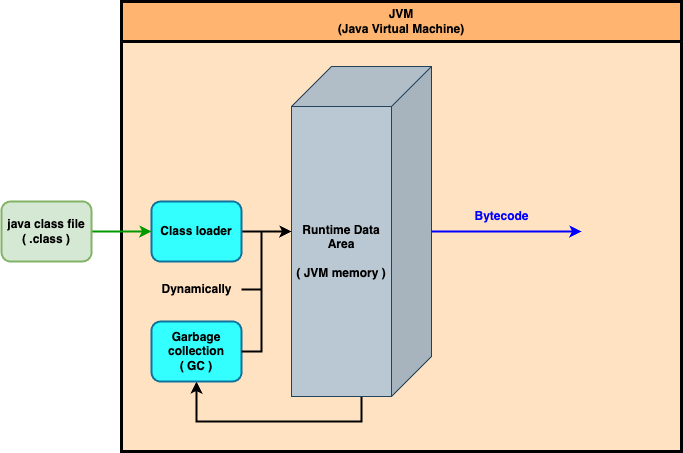
프로그램을 실행시키기 위해선, 우리가 작성한 코드 (명령어) 를 메모리에 올려야 한다.
Java 는 클래스 파일을 JVM 내 Runtime Data Area 에 올리는 방식으로 구현한다.
우리가 변환한 클래스 파일은 JVM 의 Class loader 를 통해 Runtime Data Area 에 적재된다. (Class loader 에 대한 설명은 생략한다.) 이 때의 특징은 "동적으로 적재된다" 는 것이다.
-
C/C++를 예로 들어 생각해보자.C/C++에서 메모리 할당 또는 해제는 전적으로 개발자의 묷이다.(malloc, free, new, delete) -
하지만
Java의 경우JVM이 이를 맡게된다. 새로운 메모리 할당은 물론, 메모리 해제 또한 자동으로 이뤄진다. -
더 자세히 말하자면
Runtime Data Area는 또다시 여러 부분으로 나뉘는데, 이 중Heap영역이 존재한다. 만약 어떤 객체가Heap영역에서 참조되지 않았다면, 이는Garbage collection의 대상이 되고,"언젠가는"Garbage collection에 의해 메모리가 해제된다. -
JVM memory overview:[2]

Runtime Data Area 에 클래스 파일이 적재되면, JVM 은 클래스 파일 내 Bytecode 를 Execution engine 으로 전달한다.
3. Bytecode to machine code
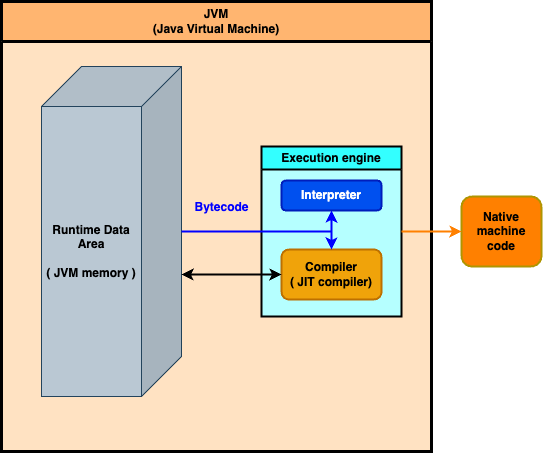
Execution engine 은 Bytecode 를 기계어 (Machine code) 로 변환한다. 이 때, Execution engine 은 Interpreter 를 쓰기도 하고, Compiler 를 사용하기도 한다. [5]
- 어느
Bytecode가 처음 실행될 때는Interpreter를 통해 기계어로 번역된다. - 하지만 어느
Bytecode가 여러번 수행 될 시,JVM은 해당Bytecode를Native code로 바꿔Native method stack에 저장한다. - 이제 해당
Bytecode가 수행될 때,Interpreter말고JIT comipler를 사용해 기계어로 번역한다.
이렇게 기계어로 번역된 코드는 이제 하드웨어에 맞춰 실행된다.
Reference
-
Java virtual machine - Wikipedia[1]: A Java virtual machine (JVM) is a virtual machine that enables a computer to run Java programs as well as programs written in other languages that are also compiled to Java bytecode.[2],link: Overview of a Java virtual machine (JVM) architecture based on The Java Virtual Machine Specification Java SE 7 Edition
-
Is .class file byte code? or Does .class file include bytecode? - stackoverflow[3]: A Java class file is usually produced by a Java compiler from Java programming language source files (.java files) containing Java classes (alternatively, other JVM languages can also be used to create class files).
-
Write once, run anywhere - Wikipedia[4]: Write once, run anywhere (WORA), or sometimes Write once, run everywhere (WORE), was a 1995 slogan created by Sun Microsystems to illustrate the cross-platform benefits of the Java language.

JIT vs interpreters - stackoverflow[5]: The difference is in how they generate the native code, how optimized it is as well how costly the optimization is.