https://www.acmicpc.net/problem/18352
문제
어떤 나라에는 1번부터 *N*번까지의 도시와 `M개의 단방향 도로`가 존재한다. 모든 도로의 거리는 1이다.
이 때 특정한 도시 `X로부터 출발하여 도달할 수 있는 모든 도시중에서,최단 거리가 정확히 K인 모든 도시들의 번호를 출력하는 프로그램`을 작성하시오. 또한 출발 도시 X에서 출발 도시 X로 가는 최단 거리는 항상 0이라고 가정한다.
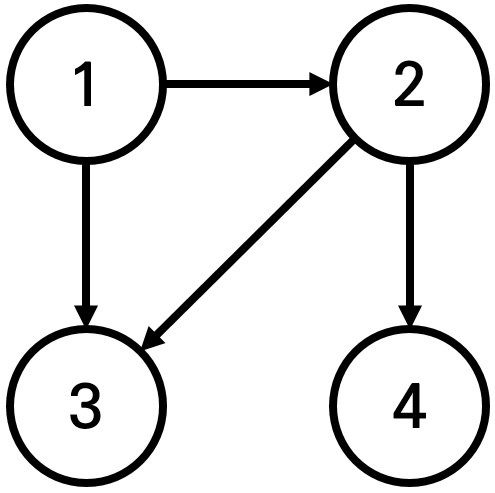
예를 들어 N=4, K=2, X=1일 때 다음과 같이 그래프가 구성되어 있다고 가정하자.
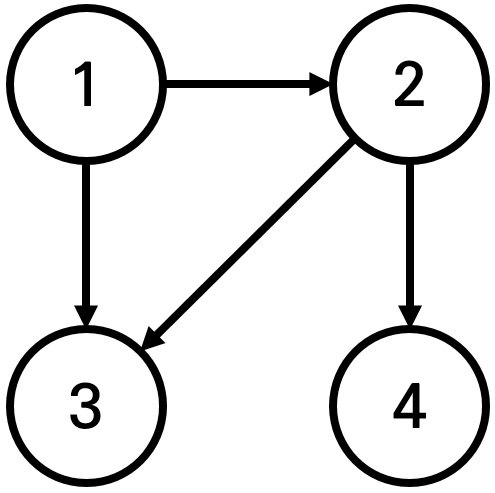
이 때 1번 도시에서 출발하여 도달할 수 있는 도시 중에서, 최단 거리가 2인 도시는 4번 도시 뿐이다. 2번과 3번 도시의 경우, 최단 거리가 1이기 때문에 출력하지 않는다.
입력
첫째 줄에 도시의 개수 *N*, 도로의 개수 *M*, 거리 정보 *K*, 출발 도시의 번호 *X*가 주어진다. (2 ≤ N ≤ 300,000, 1 ≤ M ≤ 1,000,000, 1 ≤ K ≤ 300,000, 1 ≤ X ≤ N)
둘째 줄부터 *M*개의 줄에 걸쳐서 두 개의 자연수 `A, B가 공백을 기준으로 구분되어 주어진다. 이는 *A번 도시에서 B번 도시로 이동하는 단방향 도로가 존재`한다는 의미다. (1 ≤ A, B ≤ N) 단, A와 B*는 서로 다른 자연수이다.
출력
X로부터 출발하여 도달할 수 있는 도시 중에서, 최단 거리가 *K*인 모든 도시의 번호를 한 줄에 하나씩 오름차순으로 출력한다.
이 때 도달할 수 있는 도시 중에서, 최단 거리가 K인 도시가 하나도 존재하지 않으면 -1을 출력한다.
예제 입력 1
4 4 2 1
1 2
1 3
2 3
2 4
예제 출력 1
4
예제 입력 2
4 3 2 1
1 2
1 3
1 4
예제 출력 2
-1
예제 입력 3
4 4 1 1
1 2
1 3
2 3
2 4
예제 출력 3
2
3
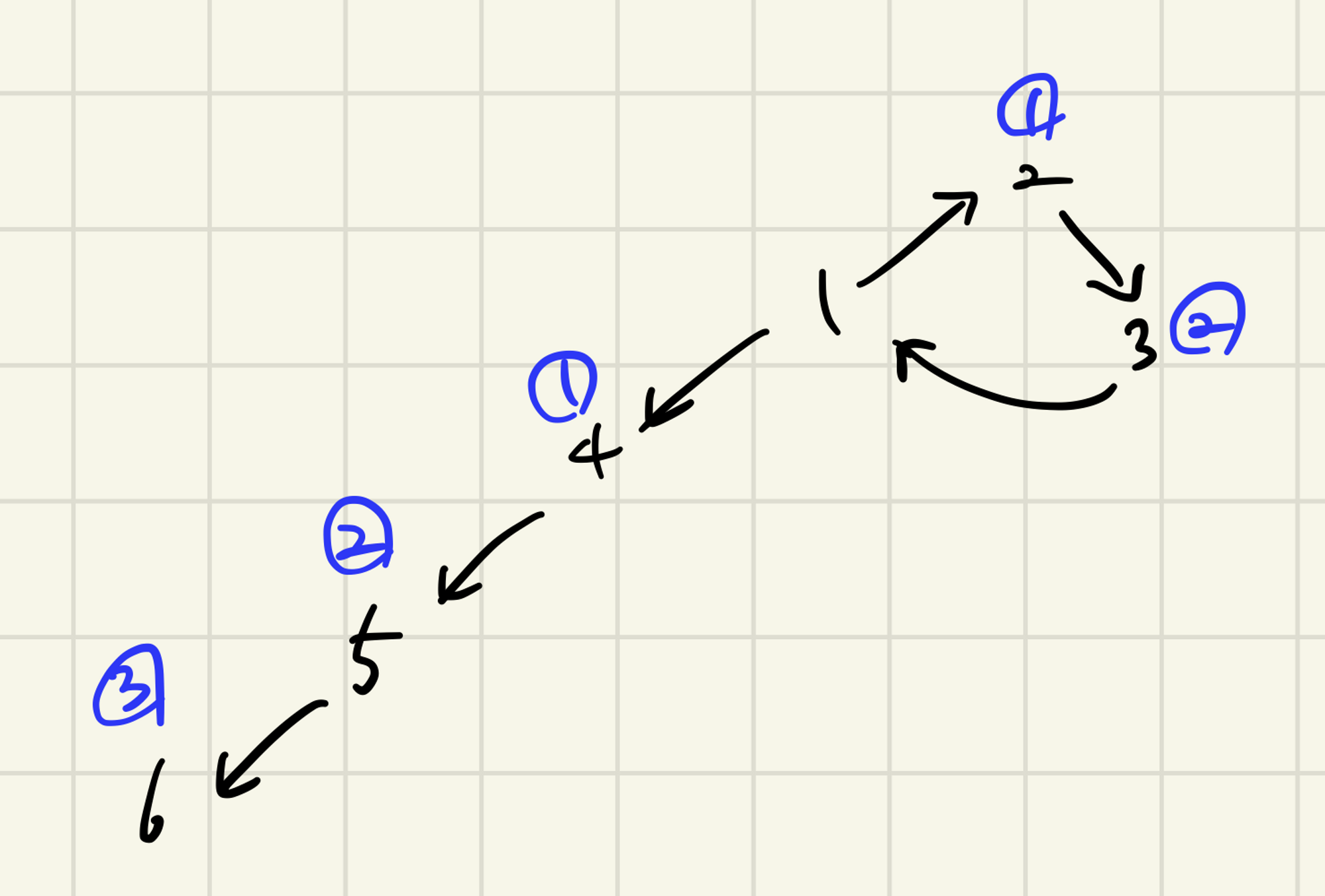
+) 예제 입력 4
6 6 3 1
1 2
1 4
2 3
3 1
4 5
5 6
+) 예제 출력 4
6풀이
- cyclic한 상황 고려해야 함
BFS
package shortest_path;

import java.io.BufferedReader;
import java.io.IOException;
import java.io.InputStreamReader;
import java.util.*;

public class Main_18352 {

    private static int numberOfVertex;
    private static int numberOfEdge;
    private static int targetDistance;
    private static int startVertex;
    private static int[] distance;
    private static ArrayList<Integer> result = new ArrayList<>();
    private static ArrayList<Integer>[] adjacencyList;

    public static void main(String[] args) throws IOException {
        input();
        process();
        output();
    }

    private static void input() throws IOException {
        BufferedReader br = new BufferedReader(new InputStreamReader(System.in));
        StringTokenizer st;

        st = new StringTokenizer(br.readLine());

        numberOfVertex = Integer.parseInt(st.nextToken());
        numberOfEdge = Integer.parseInt(st.nextToken());
        targetDistance = Integer.parseInt(st.nextToken());
        startVertex = Integer.parseInt(st.nextToken());

        distance = new int[numberOfVertex + 1];
        adjacencyList = new ArrayList[numberOfVertex + 1];

        for (int i = 1; i <= numberOfVertex; i++) {
            adjacencyList[i] = new ArrayList<>();
        }

        for (int i = 0; i < numberOfEdge; i++) {
            st = new StringTokenizer(br.readLine());
            int a = Integer.parseInt(st.nextToken());
            int b = Integer.parseInt(st.nextToken());

            adjacencyList[a].add(b);
        }
    }

    private static void process() {
        Queue<Integer> queue = new LinkedList<>();

        queue.add(startVertex);

        while (!queue.isEmpty()) {
            Integer vertex = queue.poll();

            for (Integer nextVertex : adjacencyList[vertex]) {
                if (distance[nextVertex] != 0) {
                    continue;
                }

                if (nextVertex == startVertex) {
                    continue;
                }

                distance[nextVertex] = distance[vertex] + 1;
                queue.add(nextVertex);
            }
        }

        for (int vertex = 1; vertex <= numberOfVertex; vertex++) {
            if (distance[vertex] == targetDistance) {
                result.add(vertex);
            }
        }

        if (result.isEmpty()) {
            result.add(-1);
        }

        Collections.sort(result);
    }

    private static void output() {
        for (Integer vertex : result) {
            System.out.println(vertex);
        }
    }

}
Dijkstra
- 가중치가 없는 그래프에서는 굳이 Dijkstra를 사용할 필요 없을 듯
package shortest_path;

import java.io.BufferedReader;
import java.io.IOException;
import java.io.InputStreamReader;
import java.util.*;

public class Main_18352_dijkstra {

    private static int numberOfCity;
    private static int numberOfRoad;
    private static int targetDistance;
    private static int startCity;
    private static int[] minDistance;
    private static ArrayList<Integer> result = new ArrayList<>();
    private static ArrayList<City>[] adjacencyList;

    static class City {

        int number;
        int distance;

        public City(int number, int distance) {
            this.number = number;
            this.distance = distance;
        }

    }

    public static void main(String[] args) throws IOException {
        input();
        process();
        output();
    }

    private static void input() throws IOException {
        BufferedReader br = new BufferedReader(new InputStreamReader(System.in));
        StringTokenizer st;

        st = new StringTokenizer(br.readLine());
        numberOfCity = Integer.parseInt(st.nextToken());
        numberOfRoad = Integer.parseInt(st.nextToken());
        targetDistance = Integer.parseInt(st.nextToken());
        startCity = Integer.parseInt(st.nextToken());

        minDistance = new int[numberOfCity + 1];
        adjacencyList = new ArrayList[numberOfCity + 1];

        for (int i = 1; i <= numberOfCity; i++) {
            adjacencyList[i] = new ArrayList<>();
        }

        for (int i = 0; i < numberOfRoad; i++) {
            st = new StringTokenizer(br.readLine());
            int start = Integer.parseInt(st.nextToken());
            int destination = Integer.parseInt(st.nextToken());

            adjacencyList[start].add(new City(destination, 1));
        }
    }

    private static void process() {
        dijkstra(startCity);

        for (int city = 1; city <= numberOfCity; city++) {
            if (minDistance[city] == targetDistance) {
                result.add(city);
            }
        }

        if (result.isEmpty()) {
            result.add(-1);
        }
    }

    private static void dijkstra(int startCity) {
        Queue<City> queue = new PriorityQueue<>(Comparator.comparingInt(city -> city.distance));

        initDistance();
        queue.add(new City(startCity, 0));

        while (!queue.isEmpty()) {
            City city = queue.poll();
            int cityNumber = city.number;
            int cityDistance = city.distance;

            if (cityDistance > minDistance[cityNumber]) {
                continue;
            }

            for (City nextCity : adjacencyList[cityNumber]) {
                int nextCityNumber = nextCity.number;
                int newDistance = minDistance[cityNumber] + nextCity.distance;

                if (newDistance >= minDistance[nextCityNumber]) {
                    continue;
                }

                minDistance[nextCityNumber] = newDistance;
                queue.add(new City(nextCityNumber, newDistance));
            }
        }
    }

    private static void initDistance() {
        for (int city = 1; city <= numberOfCity; city++) {
            minDistance[city] = Integer.MAX_VALUE;

            if (city == startCity) {
                minDistance[city] = 0;
            }
        }
    }

    private static void output() {
        result.forEach(System.out::println);
    }

}