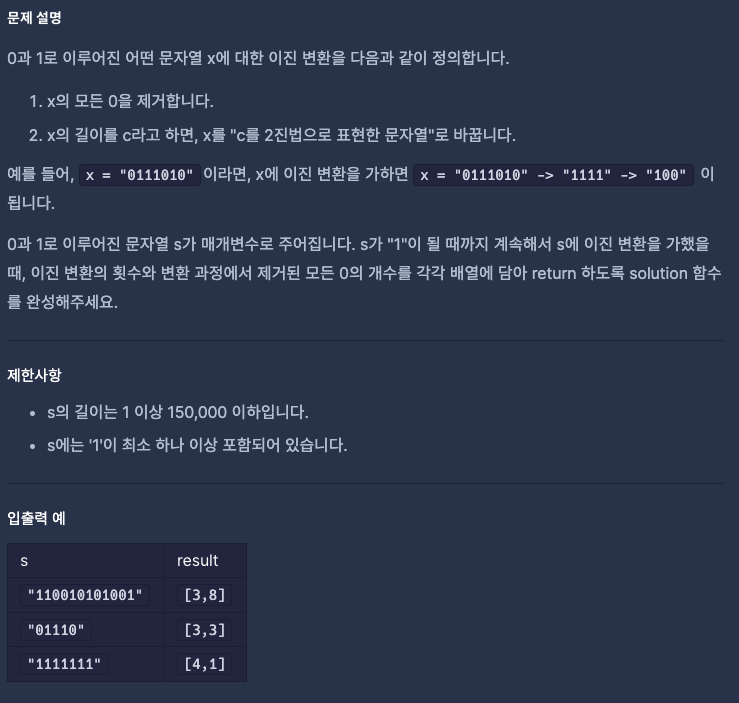
문제
로직
answer는 {0, 0}의 int 배열로 초기화한다.
s가 "1"이 될 때까지 반복문을 수행한다.
1. 반복문을 들어오면 이진 변환을 한 번 실행하는 것이기 때문에 answer[0]에 1을 더한다.
2. s의 0의 개수를 센다. string에서 특정 문자의 개수를 세기 위해서 chars() 메서드를 이용한다.
2. 1번에서 구한 0의 개수는 answer[1]에 더해준다.
3. s의 길이에서 1번에서 구한 0의 개수를 뺀 수를 이진 변환을 해준다.
이진 변환
- 변환하려는 수가 0이 될 때까지 수를 2로 나눈 나머지는 list에 넣고 해당 수는 2로 나누어 준다.
- 마지막 수부터 list에 들어가 있기 때문에 list를 역순으로 바꾼다.
- list를 string으로 변환한 후 return 한다.
코드
import java.util.*;
import java.util.stream.Collectors;


class Solution {
    public int[] solution(String s) {
        int[] answer = {0, 0};

        while(!s.equals("1")) {
            answer[0] += 1;

            long cnt = s.chars().filter(ch -> ch == '0').count();

            answer[1] += (int) cnt;

            s = toBinary(s.length() - (int)cnt);
        }


        return answer;
    }

    private String toBinary (int num) {
        List<Integer> binaryList = new ArrayList<Integer>();
        while (num > 0) {
            binaryList.add(num%2);
            num /= 2;
        }

        Collections.reverse(binaryList);

        String result = binaryList.stream()
            .map(String::valueOf)
            .collect(Collectors.joining());

        return result;
    }
}
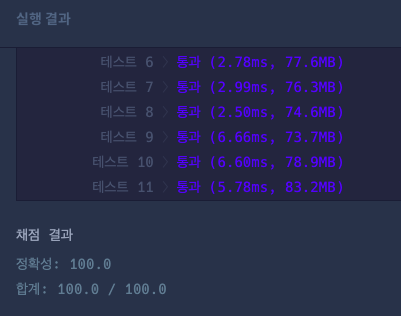
결과
새롭게 알게 된 점
toBinaryString()
다른 사람의 풀이를 보면서 숫자를 이진수로 변환해주는 메서드가 존재한다는 것을 알게 되었다.
이진 변환을 이번 문제를 통해 연습했다고 생각하고 다음에는 toBinaryString()을 이용해야겟다.

백엔드 개발자 지망생