코드 카타
문제 & 제출 답안
- 코딩테스트 연습 - 자동차 대여 기록에서 장기/단기 대여 구분하기 | 프로그래머스 스쿨 (programmers.co.kr)
SELECT history_id, car_id, date_format(start_Date, '%Y-%m-%d') as start_date, date_format(end_date, '%Y-%m-%d') as end_Date, case when Datediff(end_date ,start_date) + 1 >= 30 then '장기 대여' else '단기 대여' end as RENT_TYPE from CAR_RENTAL_COMPANY_RENTAL_HISTORY where start_date like '2022-09%' order by 1 desc - 코딩테스트 연습 - 자동차 평균 대여 기간 구하기 | 프로그래머스 스쿨 (programmers.co.kr)
SELECT car_id, round(avg(datediff(end_date, Start_Date)+1),1) as AVERAGE_DURATION FROM CAR_RENTAL_COMPANY_RENTAL_HISTORY group by 1 having AVERAGE_DURATION >= 7 order by 2 desc, 1 desc - 코딩테스트 연습 - 헤비 유저가 소유한 장소 | 프로그래머스 스쿨 (programmers.co.kr)
select * from places where host_id in ( SELECT host_id from places group by 1 having count(id) >= 2 ) order by 1 - 코딩테스트 연습 - 우유와 요거트가 담긴 장바구니 | 프로그래머스 스쿨 (programmers.co.kr)
select a.cart_id from ( SELECT distinct(cart_id) from cart_products where name = 'milk' ) a inner join ( select distinct(cart_id) from cart_products where name = 'yogurt' ) b on a.cart_id = b.cart_id order by 1 asc - 코딩테스트 연습 - 조회수가 가장 많은 중고거래 게시판의 첨부파일 조회하기 | 프로그래머스 스쿨 (programmers.co.kr)
SELECT concat('/home/grep/src/', b.board_id,'/', f.file_id, f.file_name, f.file_ext) from used_goods_board b left join used_goods_file f on b.board_id = f.board_id where b.views = (SELECT b.views from used_goods_board b left join used_goods_file f on b.board_id = f.board_id order by 1 desc limit 1) order by f.file_id desc - 코딩테스트 연습 - 주문량이 많은 아이스크림들 조회하기 | 프로그래머스 스쿨 (programmers.co.kr)
select f.flavor from first_half f left join ( select flavor, sum(total_order) as sum_tot from july group by 1 ) a on f.flavor = a.flavor group by 1 order by sum(total_order+sum_tot) desc limit 3 - 코딩테스트 연습 - 저자 별 카테고리 별 매출액 집계하기 | 프로그래머스 스쿨 (programmers.co.kr)
select a.author_id, a.author_name, b.category, sum(Total_sales) as sales from ( SELECT s.book_id, s.sales_date, s.sales, b.price, s.sales * b.price as Total_sales, b.category, b.author_id, b.published_date from book_sales s inner join book b on s.book_id = b.book_id where s.sales_date like '2022-01%' ) b inner join author a on b.author_id = a.author_id group by 1, 3 order by 1, 3 desc - 코딩테스트 연습 - 대여 횟수가 많은 자동차들의 월별 대여 횟수 구하기 | 프로그래머스 스쿨 (programmers.co.kr)
select month(start_Date), car_id, count(history_id) as RECORDS from CAR_RENTAL_COMPANY_RENTAL_HISTORY where (month(start_date) between 8 and 10) and car_id in (SELECT car_id from CAR_RENTAL_COMPANY_RENTAL_HISTORY where month(start_date) between 8 and 10 group by 1 having count(history_id) >= 5) group by 1,2 having count(history_id) <>0 order by 1,2 desc - 코딩테스트 연습 - 그룹별 조건에 맞는 식당 목록 출력하기 | 프로그래머스 스쿨 (programmers.co.kr)
select m.member_name, r.review_text, date_format(r.review_date, '%Y-%m-%d') from rest_review r inner join member_profile m on r.member_id = m.member_id where m.member_id in (select member_id from rest_review group by 1 having count(review_text) = (SELECT count(review_text) from rest_review group by member_id order by 1 desc limit 1)) order by 3, 2 - 코딩테스트 연습 - 오프라인/온라인 판매 데이터 통합하기 | 프로그래머스 스쿨 (programmers.co.kr)
(SELECT date_format(sales_date,'%Y-%m-%d') as sales_date, product_id, user_id, sales_amount
from online_sale
where sales_date like '2022-03%')
union all
(SELECT date_format(sales_date,'%Y-%m-%d') as sales_date, product_id, NULL, sales_amount
from offline_sale
where sales_date like '2022-03%')
order by 1,2,3
오답노트
- join 두 번 사용
- 내가 쓴 답
select m.member_name, r.review_text, date_format(r.review_date, '%Y-%m-%d') from rest_review r inner join member_profile m on r.member_id = m.member_id where m.member_id in (select member_id from rest_review group by 1 having count(review_text) = (SELECT count(review_text) from rest_review group by member_id order by 1 desc limit 1)) order by 3, 2 - Join 두 번
SELECT c.member_name , a.review_text , date_format(a.review_date, '%Y-%m-%d') FROM rest_review a INNER JOIN (SELECT member_id FROM rest_review GROUP BY member_id ORDER BY COUNT(*) DESC LIMIT 1) b ON a.member_id = b.member_id LEFT JOIN member_profile c ON a.member_id = c.member_id ORDER BY a.review_date, a.review_text-
Inner Join : review 테이블 + 가장 많이 review 작성한 멤버 ID 테이블
⇒ review 테이블에 가장 많이 review 작성한 멤버들만 남음
-
Left Join : review 테이블 + member 테이블
⇒ review 테이블에 member 테이블 합침으로써 name 출력 가능
-
- 내가 쓴 답
- Union : 없는 컬럼에 Null 값 넣기
(SELECT date_format(sales_date,'%Y-%m-%d') as sales_date, product_id, user_id, sales_amount from online_sale where sales_date like '2022-03%') union all (SELECT date_format(sales_date,'%Y-%m-%d') as sales_date, product_id, NULL, sales_amount from offline_sale where sales_date like '2022-03%') order by 1,2,3- User_id 컬럼
- Online_Sale 테이블 O
- Offline_sale 테이블 X
- 이 상황에서 Union 했을 때 Offline_sale 테이블에 user_id 를 Null 값으로 표기하고 싶다면 Null 로 기입하면 됨.
- ‘NULL’ 로 표기할 경우 텍스트로 NULL 이라는 값이 채워짐.
- 단, Offline_sale 테이블을 Union 위에 쓰면 컬럼명이 Null 로 표기됨
- User_id 컬럼
강의 스터디
수강할 강의
스터디를 진행할 강의를 링크해주세요.
강의에서 필수 사용되는 문법 요약
강의에서 필수로 사용되는 문법에 대한 개념을 요약해주세요.
-
Union
-
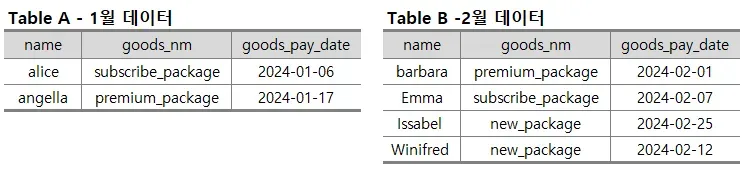
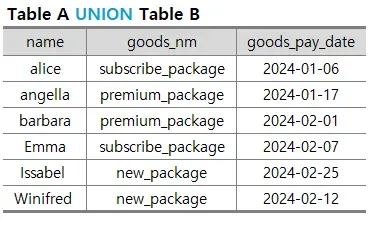
기능 : 수직 결합 (Join은 수평 결합)
-
Ex.) 1월, 2월 매출 데이터 결합할 때
-
동일 컬럼으로 구성되어 1월 데이터에 2월꺼 붙이면 될 때
-
컬럼의 이름, 순서, 형식 모두 동일해야 함.
-
단, 테이블 자체의 컬럼이 모두 동일해야 하는 것은 아님
-
2월 테이블 원본에 다른 컬럼이 있어도 union 쓸 때만 컬럼 맞추면 됨.
# union/union all 기본구조
# 컬럼 순서가 같고, 그 형식이 같아야 함

select 컬럼1, 컬럼2, 컬럼3..
from 테이블명1
union (all) #수직결합 명시
select 컬럼1, 컬럼2, 컬럼3..
from 테이블명2
-
-
-
Union Vs. Union all
- Union : 중복이 있으면 제거
- Union all : 중복 제거 없이 출력
-
-
Join
-
기능 : 수평 결합
-
두 테이블에서 공통 컬럼을 보유 시 가능
-
2개의 공통 컬럼으로 확인할 수 있음
# JOIN 기본 구문 # 공통컬럼이 1개인 경우 select 컬럼1, 컬럼2.. from 테이블 a join # join의 종류는 아래에서 설명할 예정입니다. select 컬럼1, 컬럼2.. from 테이블 b on a.공통컬럼=b.공통컬럼 --------------------------------------------------------------------------- # JOIN 기본 구문 # 공통컬럼이 2개 이상인 경우 select 컬럼1, 컬럼2.. from 테이블 as a join # join의 종류는 아래에서 설명할 예정입니다. select 컬럼1, 컬럼2.. from 테이블 as b on a.공통컬럼=b.공통컬럼 and a.공통컬럼2=b.공통컬럼2 -
(복습)SQL이 내부적으로 인지하고 작동하는 순서
- FROM → ON → JOIN → WHERE → GROUP BY → HAVING → SELECT → DISTINCT → ORDER BY
-
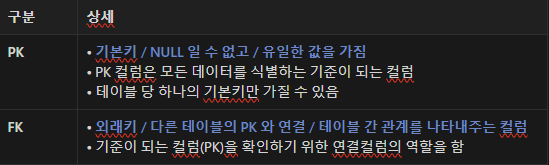
PK Vs. FK
-
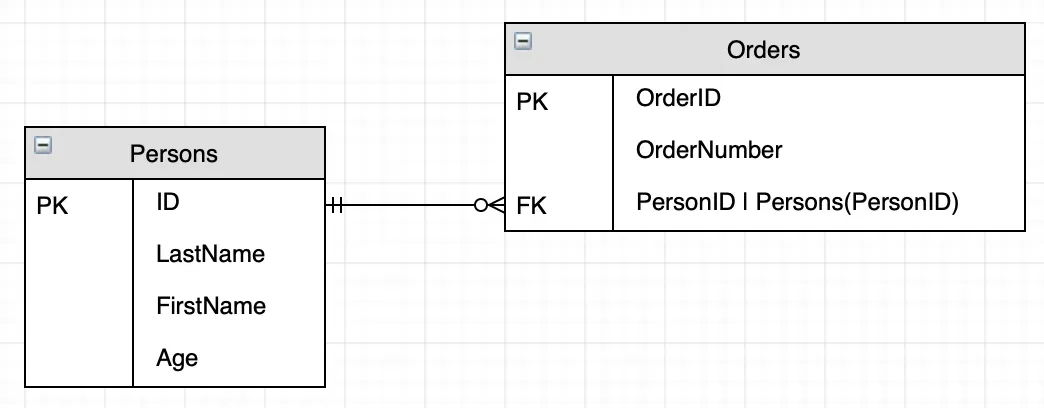
ERD
-
Mapping Cardinality
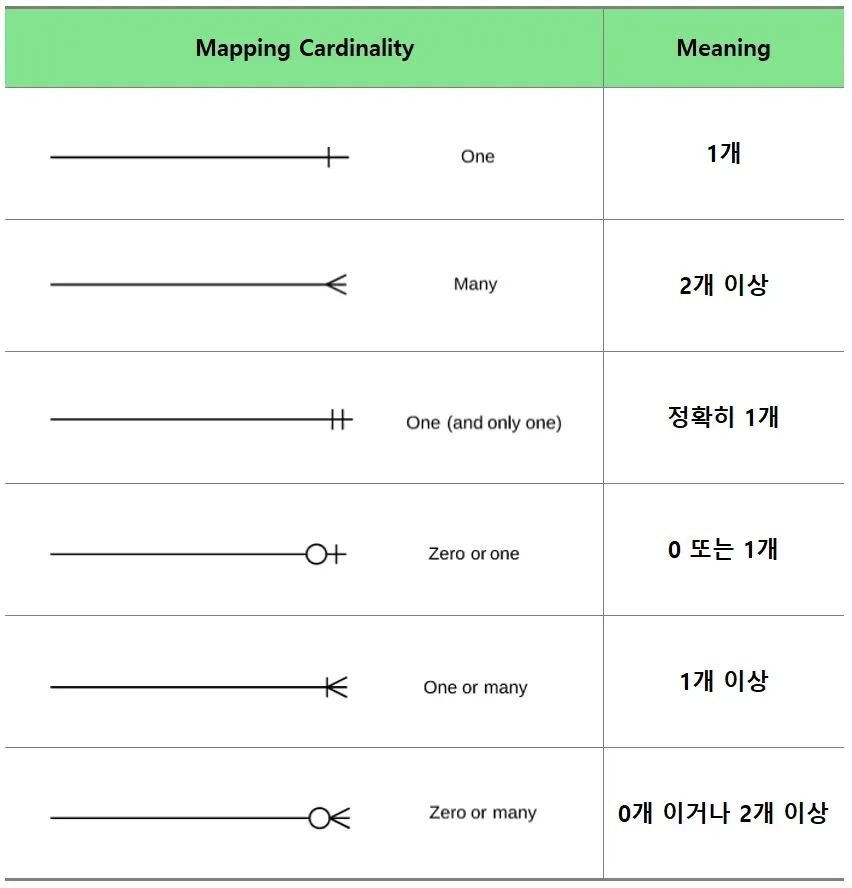
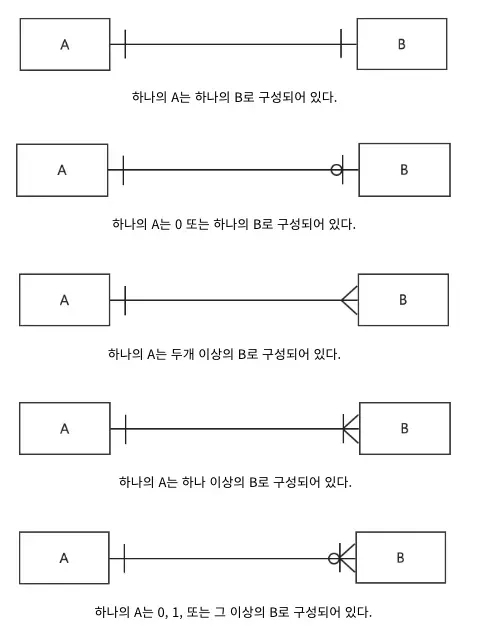
- One Vs. One and Only one

- 예시
A student, Alice, can only have one dorm room at at time. A dorm room can only house one student at a time (for the sake of this example).
Next year, Alice will be assigned a new dorm room, and at that point her dorm room from this year will be assigned to a new student.
Alice can have one and only one login (e.g. a11235) and that login can only be assigned to Alice. When Alice graduates, no one else can be assigned the login a11235.
- One Vs. One and Only one
-
-
Join 종류
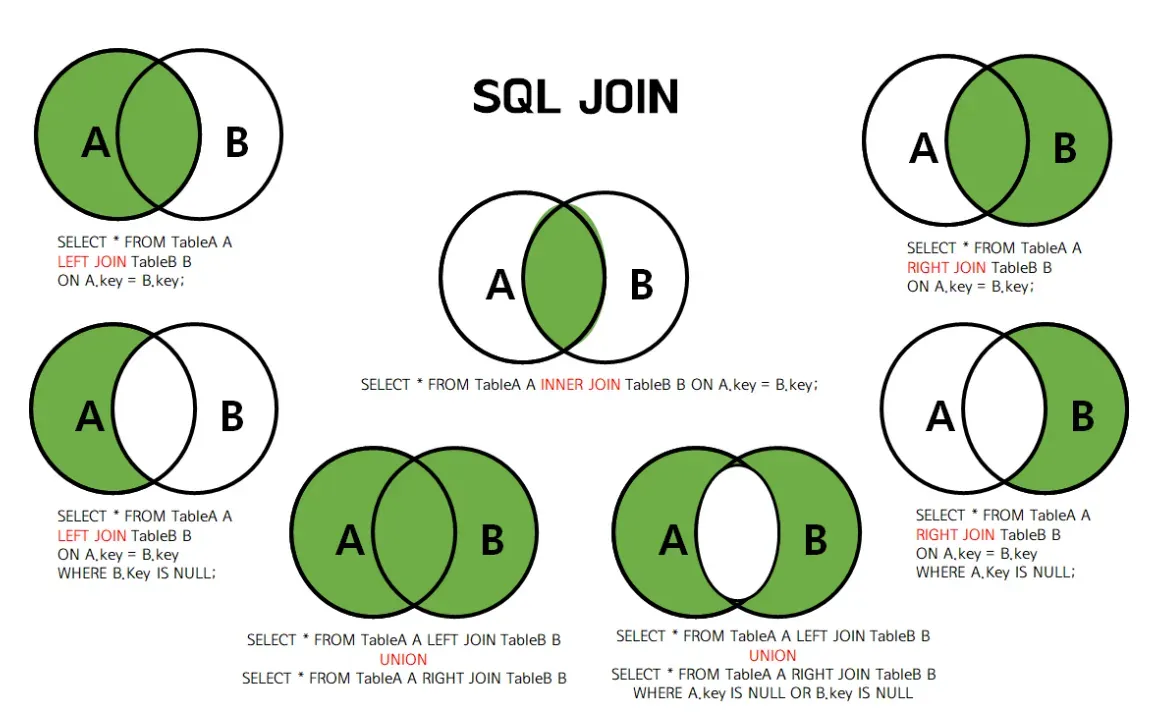
-

represent ojeong-dong