개요
연습문제를 풀어보며 헷갈렸던 개념과 오답노트를 작성해보았습니다.
연습문제
ch02. 자료형
[2-9] 다음 중 형 변환을 생략할 수 있는 것은? (모두 고르시오)
byte b = 10;
char ch = 'A';
int i = 100;
long l = 1000L;

a. b = (byte)i;
b. ch = (char)b;
c. short s = (short)ch;
d. float f = (float)l;
e. i = (int)ch;
1차 답 (25.03.30.)
✅ d, e
맞았지만 e가 확실하지 않았었음
해답
d, e
[2-10] char 타입의 변수에 저장될 수 있는 정수 값의 범위는?
1차 답 (25.03.30.)
❌ 0~256
- 2byte인 것은 알고 있었지만 범위를 잘못 생각
해답
0~65535
- 2byte = 2*8bit =16bit =2의 16승
[2-11] 다음 중 변수를 잘못 초기화 한 것은? (모두 고르시오)
a. byte b = 256;
b. char c = '';
c. char answer = 'no';
d. float f = 3.14;
e. double d = 1.4e3f;
1차 답 (25.03.30.)
❌ a, c, d
- 당시에는 생각 못했음
해답
a, b, c, d
- char는 반드시 공백이라도 저장해야 함
[2-12] 다음 중 main 메서드의 선언부로 알맞은 것은? (모두 고르시오)
a. public static void main(String[] args)
b. public static void main(String args[])
c. public static void main(String[] arv)
d. public void static main(String[] args)
e. static public void main(String[] args)
1차 답 (25.03.30.)
❌ a, b
해답
a, b, c, e
a. public static void main(String[] args) // a와 b는 배열 선언 방식 차이
b. public static void main(String args[])
c. public static void main(String[] arv) // 매개변수 이름은 중요하지 않음
d. public void static main(String[] args) // void는 main 앞에 와야 함
e. static public void main(String[] args) //
헷갈렸거나 몰랐던 개념
- int보다 작은 값은 int로 자동 형변환된다는 뜻
- a+b의 경우 a를 int로 치환, b를 int로 치환 후 a+b 수행
- 계산 후 해당 자료형에 저장이 가능하다면 묵시적 형변환이 일어남
char ch = 'A'+ 1 // 65 + 1 = 66, 66은 ch에 담을 수 있으므로 'B'로 자동 형변환
char ch = 'A' + 1000 // 1065는 ch에 담을 수 없으므로 컴파일 에러 발생
- 아무리 타입이 float이더라도 연산 중 int ex) 5/9를 만나면 int 연산으로 처리, 0이 되어버림
- 키워드 조건
- 제어자의 순서는 상관 없음
- 제어자는 반환형 + 메소드 명 앞에 위치해야 함
Ch03.
[3-1] 다음 연산의 결과를 적으시오
class Exercise3_1 {
	public static void main(String[] args){
		int x = 2;
		int y = 5;
		char c = 'A'; // A의 문자코드는 65

		System.out.println(1 + x << 33);
		System.out.println(y >= 5 || x < 0 && x > 2);
		System.out.println(y += 10 - x++);
		System.out.println(x+=2);
		System.out.println(!('A' <= c && c <= 'z'));
		System.out.println('C' - c);
		System.out.println('5' - '0');
		System.out.println(c+1);
		System.out.println(++c);
		System.out.println(c++);
		System.out.println(c);
	}
}
1차 답
class Exercise3_1 {
	public static void main(String[] args){
		int x = 2;
		int y = 5;
		char c = 'A'; // A의 문자코드는 65

		System.out.println(1 + x << 33); // ?
		System.out.println(y >= 5 || x < 0 && x > 2); // true
		System.out.println(y += 10 - x++); // 13
		System.out.println(x+=2); // 5
		System.out.println(!('A' <= c && c <= 'z')); // false
		System.out.println('C' - c); // 2
		System.out.println('5' - '0'); // 5
		System.out.println(c+1); // 66
		System.out.println(++c); // 66
		System.out.println(c++); //66
		System.out.println(c); // 67
	}
}
해답
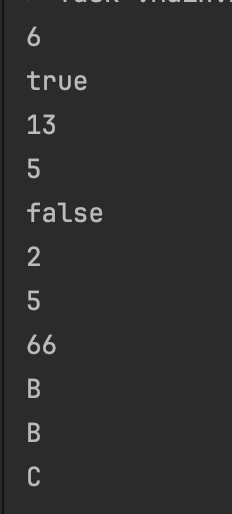
헷갈렸거나 몰랐던 개념
- 비트연산은 shift시 0으로 채움
- 비트 연산은 자릿수만 옮기므로 CPU 부하를 줄일 수 있습니다.
- 증감연산자는 계산 시 자료형을 보존하며 진행합니다.
회고
조건문과 반복문, 그리고 배열부분은 틀린 것이 없었지만 자료형과 연산자 부분에서 문제가 있었습니다. 'IDE가 해주니까 그냥 넘겨버리자', '뭐 대충 다 아는데' 이런 생각으로 넘겼던 부분입니다. 이번 계기를 통해 기초를 튼튼히 공부하자 라는 마음가짐을 되새기게 되었습니다.
두두두두..